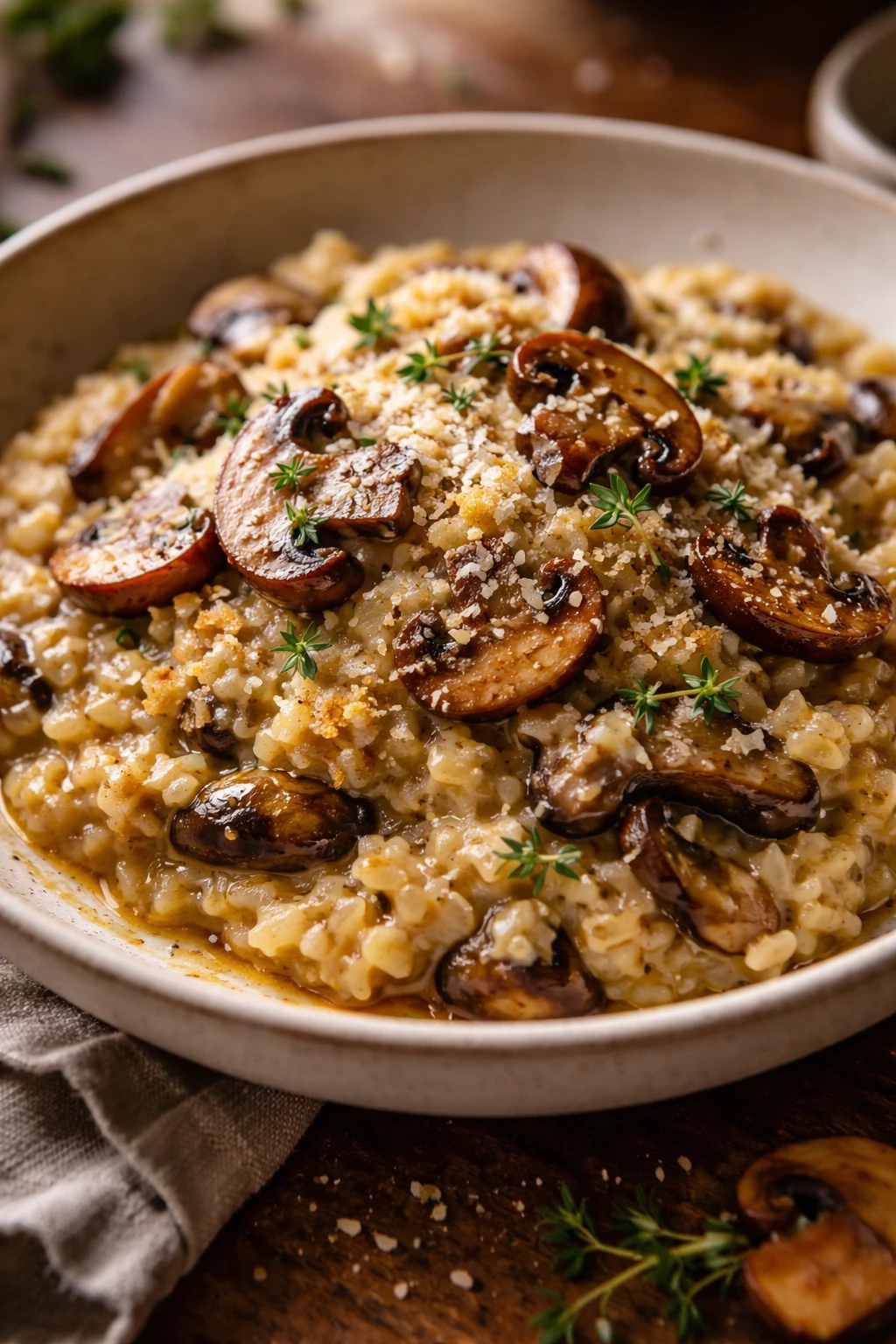
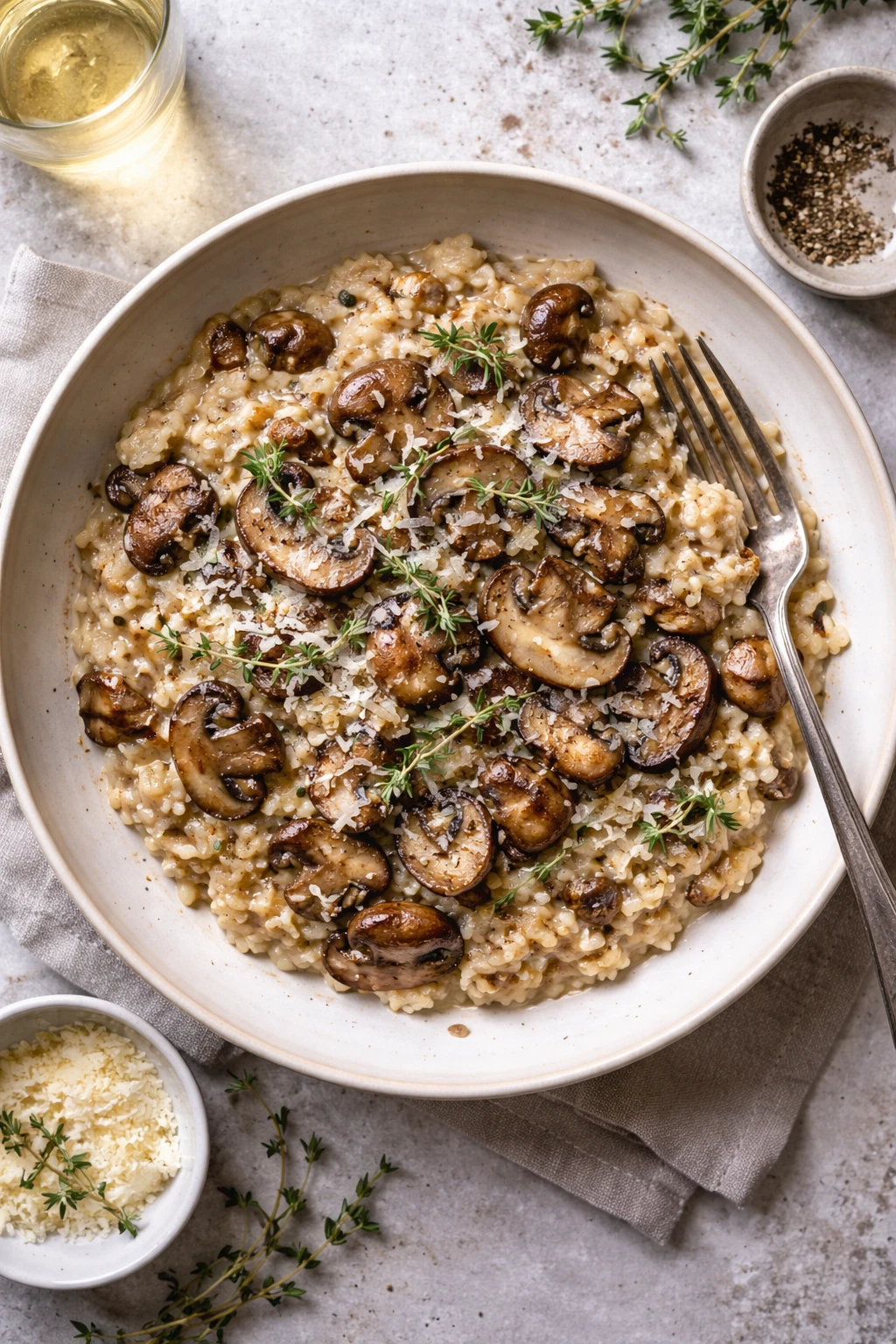
This mushroom and thyme risotto is pure comfort in a bowl. The fresh thyme adds a lovely aroma, while sautéed mushrooms bring earthiness and depth. It’s a perfect cozy dinner for chilly evenings or when you want something soothing.
Introduction
I first made this mushroom and thyme risotto on a chilly autumn evening when I craved something warm and comforting but a little special. Risotto can feel intimidating, but this recipe is actually pretty forgiving once you get the hang of stirring and adding broth gradually. What sets this version apart is the fresh thyme—it adds such a fragrant, herbal lift to the deep, earthy mushrooms. I’ve tried risottos with dried herbs before, but fresh thyme makes a noticeable difference in flavor. The secret to getting that creamy texture is patience and a little butter stirred in at the end. I remember the first time I rushed through the broth additions and ended up with a clumpy mess, so don’t skip the slow pour! The finished dish is rich and velvety, with tender mushrooms and a subtle thyme aroma that makes it feel like a cozy hug in a bowl. It’s perfect for a weeknight dinner when you want to treat yourself without fussing over complicated ingredients.
What You'll Need
Approximately 4 generous servings
- 1 1/2 cups Arborio rice, uncooked
- 4 cups vegetable broth, kept warm
- 2 tablespoons olive oil
- 1 small onion, finely chopped
- 3 cloves garlic, minced
- 10 ounces cremini mushrooms, sliced
- 2 teaspoons fresh thyme leaves
- 1/2 cup dry white wine
- 1/2 cup grated Parmesan cheese
- 2 tablespoons unsalted butter
- Salt and freshly ground black pepper, to taste
- Fresh parsley for garnish (optional)
How To Do It
Step 1
Heat the olive oil in a large skillet or heavy-bottomed pan over medium heat. Add the chopped onion and sauté gently until translucent and soft, about 5 minutes. This slow cooking releases the onion’s natural sweetness, which forms a subtle base flavor for the risotto. Avoid browning the onion too much as it will change the risotto’s delicate balance.
⏱ Time: 5
✓ Doneness: Onions are soft, translucent, and fragrant without any browning.
Step 2
Add the minced garlic and sliced mushrooms to the pan. Cook, stirring occasionally, until the mushrooms release their moisture and begin to brown, about 7-8 minutes. This step deepens the mushroom flavor through gentle caramelization. Make sure not to overcrowd the pan to allow proper browning instead of steaming.
⏱ Time: 8
✓ Doneness: Mushrooms are golden brown and reduced in size with a rich aroma.
Step 3
Stir in the Arborio rice and fresh thyme leaves, coating the grains with the mushroom mixture. Toast the rice for about 2 minutes, stirring constantly. Toasting the rice slightly enhances its nutty flavor and helps the grains maintain a nice texture during cooking.
⏱ Time: 2
✓ Doneness: Rice grains look glossy and slightly translucent at the edges.
Step 4
Pour in the white wine and stir continuously until the liquid is mostly absorbed. The wine adds acidity that balances the richness of the dish, and allowing it to fully absorb prevents a harsh alcohol taste. Don’t rush this step, as it builds layers of flavor.
⏱ Time: 3
✓ Doneness: Wine is almost completely evaporated, and rice looks creamy but not wet.
Step 5
Begin adding the warm vegetable broth one ladle at a time, stirring frequently. Wait until each addition is mostly absorbed before adding the next. This gradual absorption and stirring release the rice’s starch, creating the creamy texture risotto is known for. Rushing this step or adding too much broth at once will result in unevenly cooked rice.
⏱ Time: 20
✓ Doneness: Rice is creamy and tender but still slightly firm to the bite (al dente).
Step 6
Once the rice is cooked through and creamy, remove the pan from heat. Stir in the butter and grated Parmesan cheese until melted and combined. This enriches the risotto’s texture and adds a silky finish. Season with salt and freshly ground black pepper to taste.
⏱ Time: 2
✓ Doneness: Risotto is glossy, rich, and evenly seasoned.
Step 7
Let the risotto rest for a minute or two before serving. This brief resting allows flavors to meld and the texture to settle perfectly. Garnish with fresh parsley if desired for a pop of color and freshness.
⏱ Time: 2
✓ Doneness: Risotto holds its shape slightly when scooped, with a creamy consistency.
Step 8
Serve immediately while warm. Risotto is best enjoyed fresh as it thickens upon cooling. Pair it with a crisp green salad or roasted veggies for a balanced meal.
⏱ Time: 0
✓ Doneness: Dish is steaming hot and visually inviting.
Step 9
Clean up your cooking space while enjoying a glass of the wine you used in the recipe. This keeps the kitchen manageable and lets you relax with your delicious creation.
⏱ Time: 0
✓ Doneness: Kitchen is tidy and ready for the next culinary adventure.
Variations
Add Crispy Pancetta
For a smoky, savory twist, stir in crispy pancetta pieces just before serving. This adds a wonderful salty crunch that contrasts nicely with the creamy risotto.
Note: Cook the pancetta separately until crisp and drain on paper towels to avoid excess grease in the risotto.
Use Porcini Mushrooms
Swap cremini for dried porcini mushrooms soaked in warm water. This boosts umami and adds a deeper mushroom flavor, perfect for a more intense risotto.
Note: Reserve the soaking liquid, strain it to remove grit, and use it in place of some broth for richer flavor.
Make it Vegan
Replace butter with olive oil and omit Parmesan or use a vegan cheese alternative. Use nutritional yeast for a cheesy flavor boost while keeping it plant-based.
Note: Add vegan cheese off heat to prevent separation and maintain creaminess.
Add Peas and Lemon Zest
Stir in fresh or frozen peas and a bit of lemon zest near the end for a bright, fresh contrast that lightens the dish and adds color.
Note: Add peas in the last few minutes of cooking to keep their texture tender but not mushy.
Turn it into a One-Pot Meal
Add cooked chicken or sausage pieces along with mushrooms for a heartier, protein-packed risotto that works as a full meal.
Note: Ensure protein is fully cooked before adding to the risotto and warm through gently at the end.
Pro Tips
Always use warm broth when making risotto.
Adding cold broth slows the cooking process and shocks the rice, which can make the texture uneven. Warm broth helps the rice absorb liquid gradually and cook evenly, which is essential for that signature creamy risotto texture.
Stir frequently but gently during cooking.
Stirring encourages starch release from the rice, creating creaminess. However, vigorous stirring can break grains and make the risotto gluey. Gentle, frequent stirring strikes the perfect balance for creamy yet distinct grains.
Don’t skip toasting the rice before adding liquid.
Toasting the rice slightly in oil or butter coats the grains, adding a subtle nutty flavor and helping them maintain a firm texture during cooking. Skipping this step can result in a bland risotto with mushy rice.
Use fresh herbs instead of dried whenever possible.
Fresh herbs like thyme release more aromatic oils during cooking, providing a brighter, fresher flavor. Dried herbs can be bitter or muted and may overwhelm the delicate balance in risotto.
Add butter and cheese off the heat.
Adding these ingredients after removing the pan from the heat prevents the cheese from clumping and helps emulsify the fat into the risotto, giving it a smooth, rich finish.
Season gradually and taste often.
Risotto’s flavor builds in layers, so seasoning bit by bit ensures you don’t over-salt early on. Tasting frequently helps you adjust salt and pepper to perfect balance.
Don’t overcook the mushrooms.
Overcooked mushrooms become rubbery and lose flavor. Cooking them just until golden and tender preserves their texture and deepens their taste, which is key to a flavorful risotto.
Common Mistakes to Avoid
Adding all the broth at once
Why it happens Many cooks think pouring all the liquid at once will speed up the process, assuming the rice will absorb it evenly.
Fix Add broth gradually, one ladle at a time, stirring frequently. Wait until the liquid is mostly absorbed before adding more. This allows the rice to release starch slowly, creating the creamy texture risotto is known for.
Using cold broth
Why it happens People often use whatever broth is on hand without warming it, not realizing it affects cooking.
Fix Heat your broth in a separate pot to a simmer before adding. Cold broth cools the rice and disrupts the cooking process, resulting in uneven texture.
Skipping the stirring
Why it happens Some assume risotto can be left alone like regular rice and neglect stirring.
Fix Stir frequently but gently. This helps release starch from the rice and prevents sticking or burning on the pan’s bottom.
Overcooking the rice
Why it happens Rushing the process or adding too much broth can leave the rice mushy.
Fix Cook until rice is al dente—tender but with a slight bite. Overcooked risotto loses its texture and becomes gluey.
Using the wrong rice
Why it happens Sometimes cooks substitute long-grain rice, thinking it will work fine.
Fix Always use Arborio or other risotto-specific short-grain rice. Its starch content is essential for creaminess and texture.
Nutrition
Per Serving:
Nutritional values are estimates and may vary based on specific ingredients used.
Storage & Tips
Room Temperature
Risotto can be safely left out covered for up to 2 hours. Beyond this, bacteria growth increases, so it’s best to refrigerate promptly.
Refrigerator
Store leftovers in an airtight container for up to 3 days. The risotto will thicken and lose some creaminess when cold but reheats well with a splash of broth or water.
Freezer
Freeze risotto in airtight containers for up to 2 months. To avoid freezer burn, press plastic wrap directly onto the surface before sealing. Thaw overnight in the fridge before reheating.
Reheating
Reheat gently on the stovetop over low heat, stirring frequently and adding a splash of broth or water to loosen texture. Avoid microwaving at high power as it can dry out the risotto.
Make Ahead
You can prepare the mushroom mixture and broth ahead of time. Cook the risotto up to the point before adding butter and cheese, then cool and refrigerate. Finish with butter and cheese fresh before serving.
FAQ
Can I use regular long-grain rice instead of Arborio?
Long-grain rice lacks the high starch content needed for creamy risotto, so the texture will be drier and less creamy. For best results, stick to Arborio or other short-grain risotto rice.
What if I don’t have white wine? Can I skip it?
You can omit the wine and replace it with an equal amount of broth or a splash of lemon juice for acidity. The flavor will be slightly less complex but still tasty.
How do I know when the risotto is done?
The rice should be tender but still have a slight bite (al dente). It should be creamy and not dry or mushy. Taste frequently starting around 18 minutes to check texture.
Can I make risotto in a rice cooker or Instant Pot?
Yes, both can be used with adapted recipes and timing. However, traditional stovetop method offers more control over texture and flavor development.
Why is my risotto too thick or sticky?
Likely too much broth was absorbed without stirring or the rice was overcooked. Stirring releases starch gradually, preventing stickiness. Add broth slowly and stir often.
Can I prepare risotto ahead of time?
You can prep ingredients and partially cook risotto but it’s best enjoyed fresh. If made ahead, reheat gently with added liquid to restore creaminess.
What’s the best way to store leftover risotto?
Store in airtight containers in the fridge for up to 3 days. Reheat gently with broth to loosen texture before serving.
How can I make this risotto vegan?
Use vegetable broth, omit butter or replace with olive oil, and substitute Parmesan with nutritional yeast or vegan cheese alternatives.
Final Thoughts
I hope you enjoy making this mushroom and thyme risotto as much as I do! It’s a comforting, flavorful dish that’s worth every stir—let me know how it turns out!