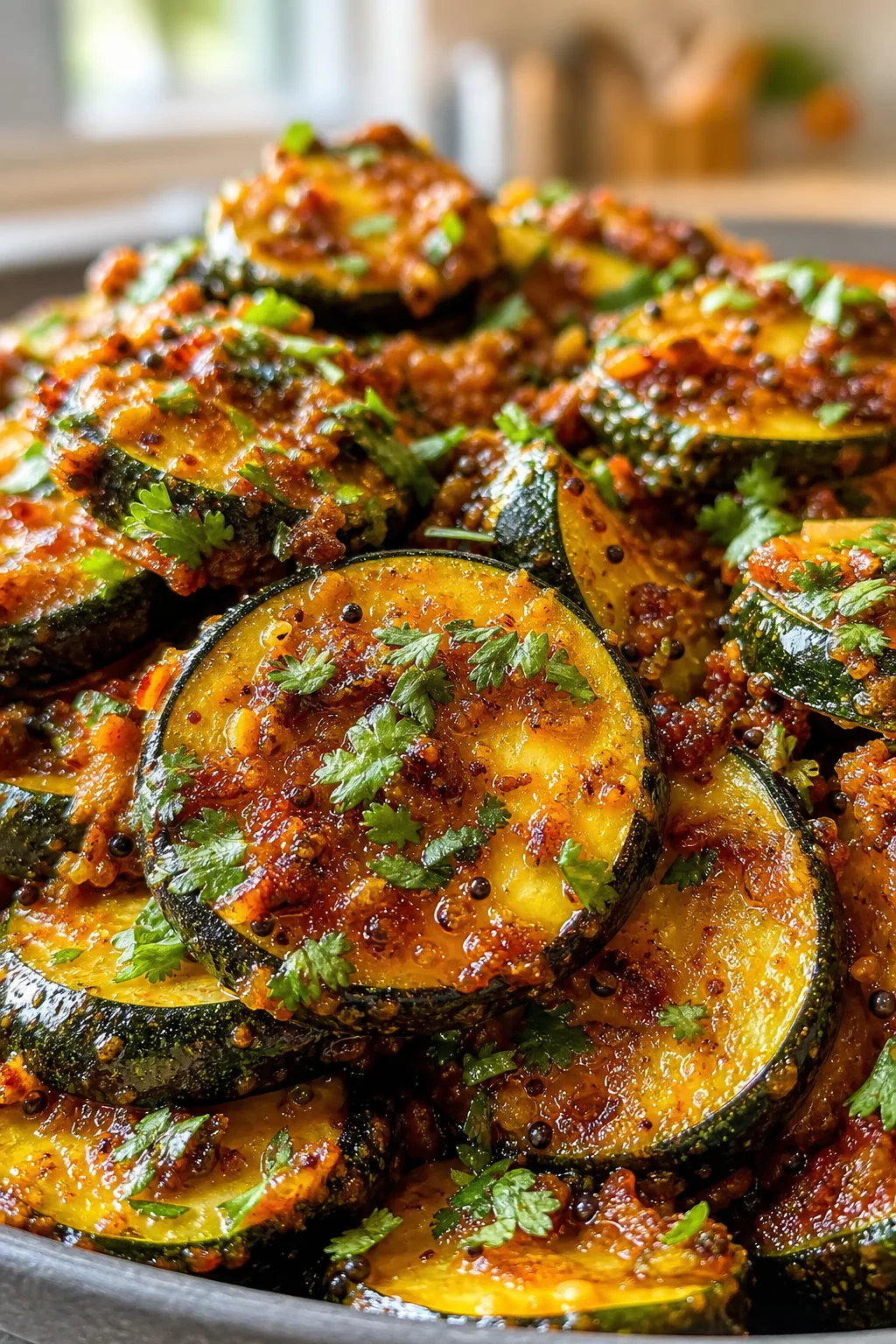
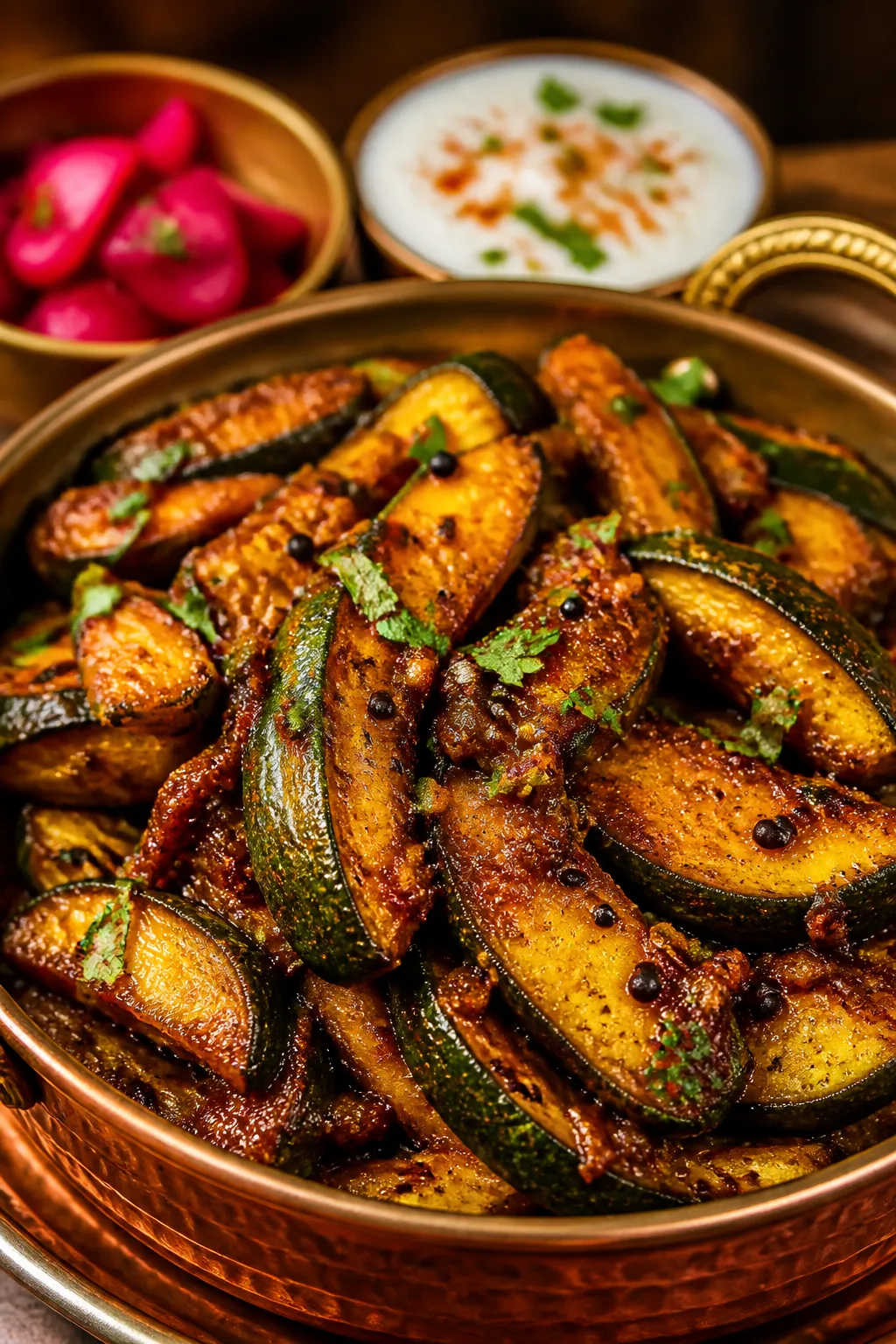
This zucchini sabzi is a quick and tasty Indian-inspired side dish. The mustard seeds and turmeric give it a warm, earthy flavor without overpowering the fresh zucchini. Perfect for busy weeknights or with rice and dal.
Introduction
I stumbled upon this Indian-style zucchini sabzi while trying to jazz up my usual veggie sides. It was one of those 'throw together what you have' moments, but it turned out so flavorful that I’ve been making it regularly ever since. What makes this version special is the tempering of mustard and cumin seeds in hot oil, which adds a lovely depth and warmth to the fresh zucchini. I also like adding turmeric for that beautiful golden color and subtle earthiness. The trick I learned is to cook the zucchini just until tender but still a little crisp — it keeps the dish vibrant and fresh instead of mushy. Plus, the green chilies and ginger give it a gentle kick without overwhelming the natural flavor. It’s a simple recipe, but it feels like a bit of an adventure on your plate. Whether you’re new to Indian cooking or a seasoned fan, this sabzi is super easy and satisfying. It pairs beautifully with rice or flatbreads and is perfect for a quick weeknight dinner or as a colorful side at a larger meal. I hope you enjoy making it as much as I do!
How To Do It
Step 1
Heat the vegetable oil in a large skillet over medium heat until shimmering but not smoking. Add the mustard seeds and cumin seeds. You'll know they're ready when they start to pop and sizzle — this releases their essential oils and flavors into the oil, which forms the base of your sabzi. Be careful not to burn them, as burnt seeds can taste bitter. This tempering step is crucial for authentic flavor.
⏱ Time: 3 minutes
✓ Doneness: Seeds begin to pop and release a nutty aroma
Step 2
Add the finely chopped onion, green chilies, and grated ginger to the skillet. Stir frequently and cook until the onions turn translucent and soft, about 5-7 minutes. This slow cooking brings out the natural sweetness of the onions, balancing the spices. If you rush this step, the onions won’t soften properly and the sabzi won’t have that rich, layered flavor.
⏱ Time: 7 minutes
✓ Doneness: Onions are translucent and tender without browning
Step 3
Sprinkle in the turmeric powder and stir well to coat the onion mixture evenly. Turmeric adds a warm color and subtle earthiness, so it’s important to mix it thoroughly. Cook for another 30 seconds to toast the turmeric lightly — this helps reduce any raw bitterness and enhances its flavor.
⏱ Time: 1 minute
✓ Doneness: Mixture turns bright golden yellow and smells earthy
Step 4
Add the chopped zucchini to the pan and stir to combine with the spiced onion mixture. The zucchini should be fresh and firm to hold up during cooking. Stirring well ensures the spices coat every piece. Avoid overcrowding the pan to allow even cooking and prevent the zucchini from steaming instead of sautéing.
⏱ Time: 2 minutes
✓ Doneness: Zucchini pieces are well coated with the spice mixture
Step 5
Season with salt to taste, then cover the pan with a lid and reduce the heat to medium-low. Let the zucchini cook gently for about 10-12 minutes, stirring occasionally. Cooking with the lid on traps steam and cooks the zucchini evenly while retaining moisture. Be careful not to overcook, or it will turn mushy.
⏱ Time: 12 minutes
✓ Doneness: Zucchini is tender when pierced with a fork but still holds shape
Step 6
Remove the lid and increase the heat to medium-high. Stir the sabzi occasionally for 3-4 minutes to evaporate excess moisture and let the edges develop a slight golden color. This step adds texture and a bit of caramelized flavor, which makes the dish more interesting. Watch closely to avoid burning.
⏱ Time: 4 minutes
✓ Doneness: Moisture mostly evaporated and some pieces have light browning
Step 7
Taste and adjust seasoning if needed. Sometimes a pinch more salt or a squeeze of lemon juice brightens the flavors beautifully. This final taste check ensures the dish is perfectly balanced and fresh. Don’t skip this step!
⏱ Time: 1 minute
✓ Doneness: Flavors are balanced and vibrant
Step 8
Turn off the heat and sprinkle freshly chopped cilantro over the sabzi. Cilantro adds a fresh herbal note that complements the warm spices perfectly. Mix gently and cover for a minute to let the flavors meld before serving.
⏱ Time: 2 minutes
✓ Doneness: Cilantro is fresh and vibrant, aroma is enhanced
Step 9
Serve the zucchini sabzi hot as a side dish with steamed rice or Indian flatbreads like chapati or naan. It also works great as a light main with some yogurt on the side. Enjoy the warm, comforting flavors and fresh textures!
⏱ Time: Immediate
✓ Doneness: Dish is warm, flavorful, and ready to eat
Variations
Spicy Tomato Zucchini Sabzi
Add 1 chopped tomato while cooking the onions for a tangy twist. Increase chili quantity for more heat. The tomatoes add moisture and a slight acidity that brightens the dish.
Note: Cook tomatoes until soft and oil separates before adding zucchini to avoid excess moisture.
Zucchini Sabzi with Peas
Stir in 1 cup fresh or frozen peas with the zucchini for added sweetness and texture. This variation adds color and extra nutrients, making the sabzi more filling.
Note: Add peas along with zucchini and adjust cooking time to ensure peas are tender but not mushy.
Coconut Zucchini Sabzi
Sprinkle 1/4 cup grated fresh coconut at the end for a subtle sweetness and crunch. This version is inspired by South Indian flavors and pairs well with coconut chutney.
Note: Add coconut off heat to preserve its texture and freshness.
Zucchini Sabzi with Mustard Greens
Mix chopped mustard greens or spinach with zucchini for a leafy green boost. This variation adds earthiness and increases the vegetable variety in the dish.
Note: Add greens midway through cooking zucchini to ensure even wilting without overcooking.
Lemon Zucchini Sabzi
Finish with a squeeze of fresh lemon juice and a pinch of black pepper for a bright, zesty flavor. This simple tweak lifts the sabzi and adds freshness.
Note: Add lemon juice just before serving to maintain its brightness.
Pro Tips
Always temper the mustard and cumin seeds in hot oil before adding other ingredients.
Tempering releases the essential oils and flavors locked inside the seeds, creating a fragrant base. Skipping this step means missing out on the authentic aroma and depth of flavor that define Indian sabzi.
Cook the zucchini covered on medium-low heat to retain moisture and tenderness.
Covering traps steam, which cooks the zucchini evenly and prevents drying out. Cooking uncovered or on high heat risks drying or burning the zucchini before it becomes tender.
Add turmeric powder after the onions have softened and sauté it briefly in oil.
This technique activates turmeric’s flavor compounds and reduces its raw bitterness. Adding turmeric too early or skipping this step can result in a dull or harsh taste.
Don’t overcook the zucchini; aim for tender but still slightly firm pieces.
Overcooking leads to mushy texture and loss of fresh flavor. Slightly firm zucchini ensures a pleasant bite and visual appeal in the finished sabzi.
Use fresh green chilies for a mild, fresh heat instead of dried chili powder.
Green chilies impart a gentle warmth and fresh flavor that blends well with the other spices. Dried chili powder can overpower or make the dish too hot.
Add fresh cilantro just before serving to preserve its bright flavor.
Cilantro’s delicate leaves lose aroma quickly when cooked. Adding it at the end keeps the dish fresh and vibrant.
Use a wide skillet or pan to avoid overcrowding and encourage even cooking.
Overcrowding traps moisture and causes the zucchini to steam rather than sauté, resulting in soggy texture. A wide pan promotes evaporation and slight browning.
Common Mistakes to Avoid
Burning the mustard seeds during tempering
Why it happens Many cooks leave the seeds on too high heat or unattended, causing them to burn quickly.
Fix Keep the heat medium and watch closely. Once the seeds start popping, immediately add the onions to cool the pan and prevent burning.
Overcooking the zucchini until mushy
Why it happens In a rush, some cook the zucchini too long or at too high heat, losing texture.
Fix Cook covered on medium-low heat and check for tenderness early. Remove from heat as soon as zucchini is fork-tender but still firm.
Skipping the turmeric toasting step
Why it happens Some add turmeric directly without sautéing, missing flavor development.
Fix Add turmeric after the onions soften and cook it briefly in oil to unlock its aroma and reduce rawness.
Using old or low-quality spices
Why it happens Spices lose potency over time or if stored improperly.
Fix Use fresh, high-quality mustard seeds, cumin, and turmeric stored in airtight containers away from light and heat.
Adding cilantro too early
Why it happens Some add cilantro during cooking, causing loss of flavor and color.
Fix Add cilantro just before serving to keep its fresh aroma and vibrant green color.
Nutrition
Per Serving:
Nutritional values are estimates and may vary based on specific ingredients used.
Storage & Tips
Room Temperature
The zucchini sabzi can be kept at room temperature for up to 4 hours if covered properly. Beyond that, bacterial growth increases, so it’s best to refrigerate promptly.
Refrigerator
Store in an airtight container for up to 3 days. The flavors deepen overnight but the zucchini may soften slightly. Reheat gently before serving to restore texture.
Freezer
Freeze in a sealed container for up to 1 month. To prevent freezer burn, wrap the container in foil or a freezer bag. Thaw overnight in the fridge before reheating.
Reheating
Reheat in a skillet over medium heat with a splash of water or oil to prevent drying out. Microwave on medium power is fine but stir halfway through. Avoid overheating to keep zucchini tender, not mushy.
Make Ahead
Prepare the tempering and onion base 1 day ahead and refrigerate. Add zucchini and cook fresh on the day of serving for best texture and flavor.
FAQ
Can I use frozen zucchini for this sabzi?
Frozen zucchini tends to release excess water and can become mushy when cooked. If using frozen, thaw and drain well, then cook uncovered to evaporate moisture. Fresh zucchini is best for optimal texture.
What can I substitute for mustard seeds if I don’t have any?
You can use nigella seeds or fenugreek seeds as alternatives, but they have different flavors. For a milder taste, skip tempering mustard seeds and increase cumin slightly, though it won’t be quite the same.
How spicy is this sabzi? Can I adjust the heat?
The recipe uses mild green chilies for a gentle kick. You can remove seeds for less heat or add extra chilies or chili powder for more spice. Always taste and adjust gradually.
Can I make this sabzi vegan?
Yes! This recipe is naturally vegan, using vegetable oil and no dairy. Just ensure your cooking oil is plant-based and you’re good to go.
Why is my zucchini turning mushy when I cook it?
Overcooking or cooking on too high heat causes zucchini to break down quickly. Cook covered on medium-low heat just until tender, then uncover and briefly sauté to remove excess moisture.
Can I add other vegetables to this sabzi?
Absolutely! Peas, tomatoes, spinach, or bell peppers work well. Adjust cooking times to add vegetables that require longer or shorter cooking accordingly.
What is the best oil to use for tempering?
Neutral oils like vegetable or sunflower oil work best as they don’t overpower the spices. Some use mustard oil for authentic flavor, but it has a strong taste that may not suit everyone.
How do I store leftover sabzi?
Refrigerate leftovers in an airtight container within 2 hours of cooking. Consume within 3 days. Reheat gently to avoid drying out.
Final Thoughts
Give this zucchini sabzi a try — it’s a simple way to add some Indian flavor to your meals. I’d love to hear how it turns out for you!