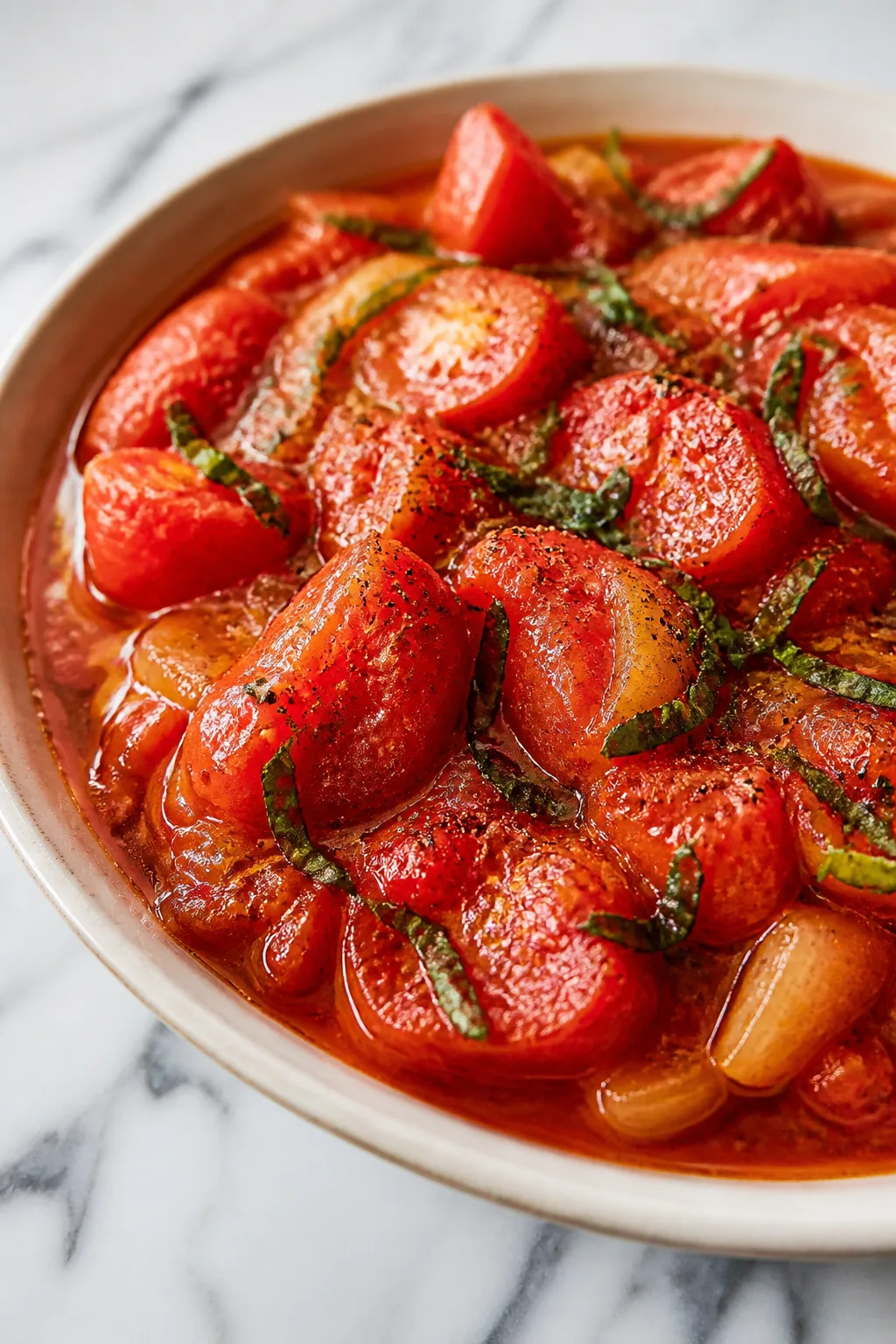
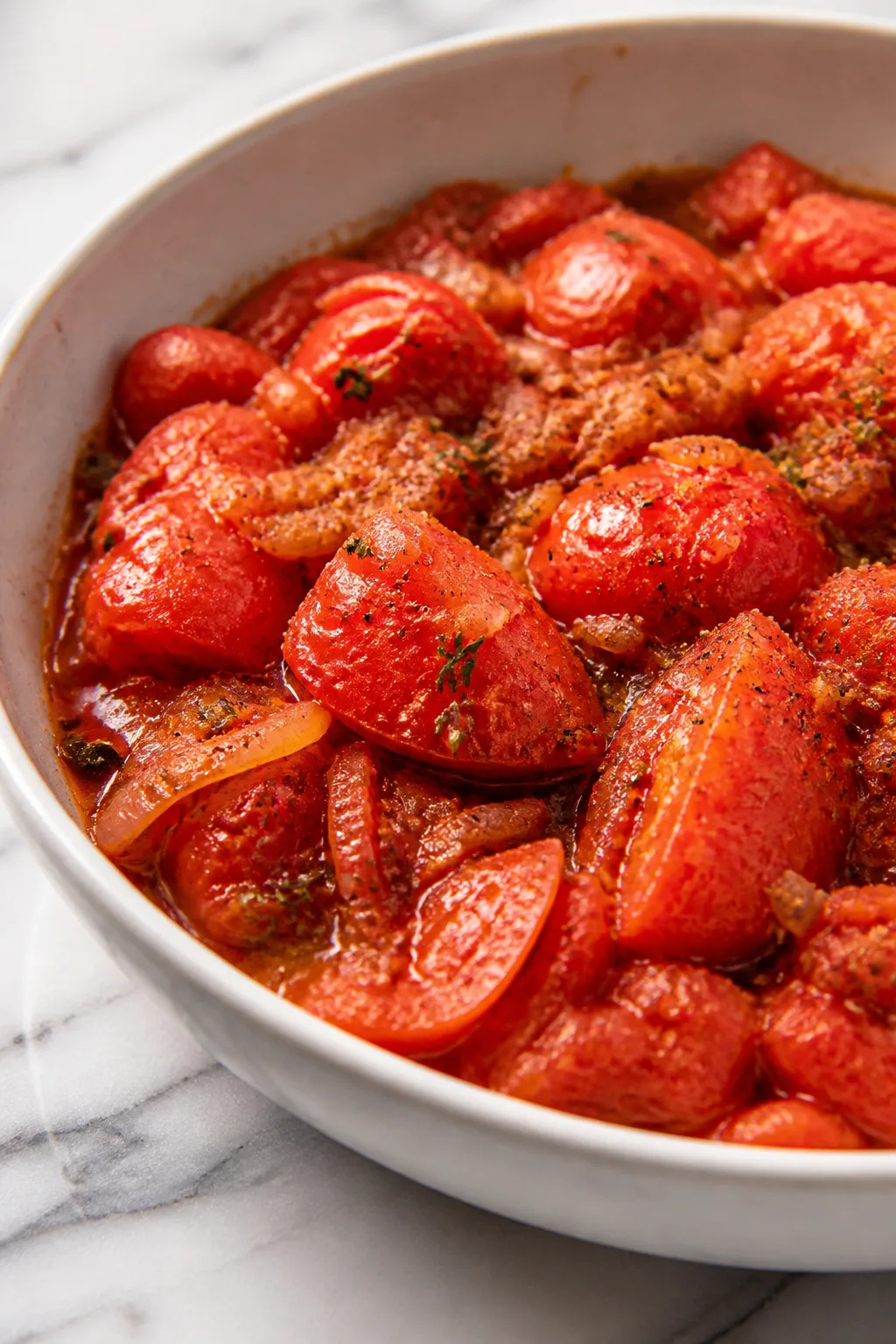
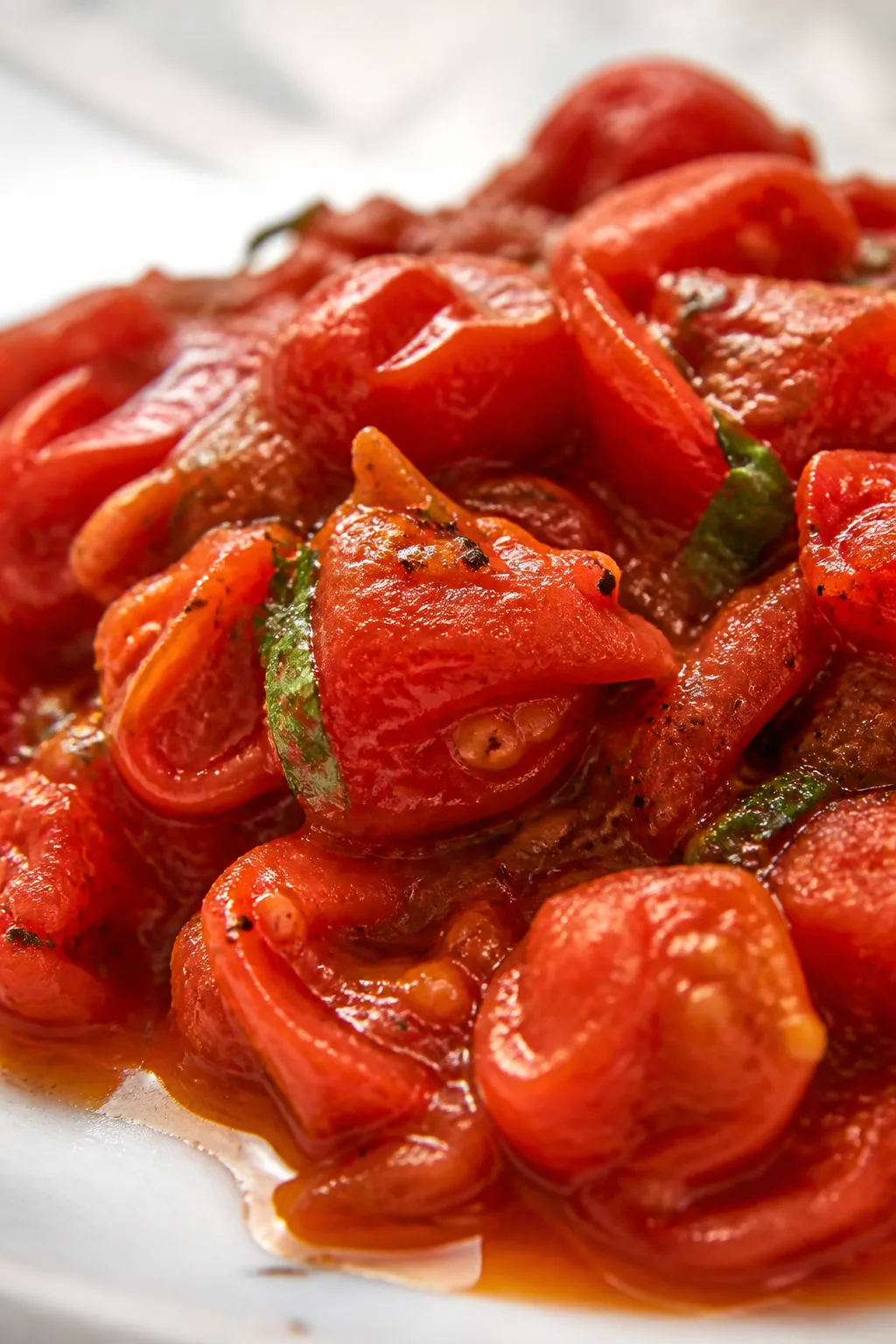
These stewed tomatoes are pure comfort—slow-simmered with onions and a hint of sugar to bring out their natural sweetness. They’re the perfect cozy side for Sunday roasts or any meal that needs a little homey love.
Introduction
I first stumbled upon this old-fashioned stewed tomatoes recipe while helping my grandmother in her kitchen as a kid. She always said it was the perfect way to enjoy tomatoes when fresh summer produce was at its peak, and I couldn’t agree more. What makes this recipe stand out is its simplicity—just tomatoes, a bit of onion, a pinch of sugar, and butter—and the slow, gentle simmer that lets all those flavors meld beautifully. Over the years, I’ve tweaked it slightly to balance sweetness and acidity just right, making it a versatile side for everything from Sunday roasts to weeknight dinners. The trick I learned is to peel the tomatoes before cooking; it keeps the texture silky smooth and avoids any bitterness from the skins. When it’s done, the tomatoes are tender and bursting with natural sweetness, with just a hint of buttery richness. It’s the kind of dish that feels like a warm hug on a plate, and I love serving it alongside roasted meats or even with a simple grilled cheese sandwich. Trust me, once you make these stewed tomatoes, you’ll find yourself craving this humble, comforting side dish again and again.
What You'll Need
Approximately 6 cups, serves 6
- 4 pounds fresh ripe tomatoes, peeled and chopped
- 1 medium onion, finely chopped
- 1 tablespoon sugar
- 2 tablespoons butter
- 1/2 teaspoon salt
- 1/4 teaspoon freshly ground black pepper
- 1/4 cup water
- Fresh basil or parsley for garnish (optional)
How To Do It
Step 1
Start by peeling your tomatoes. The easiest way is to score a small 'X' on the bottom of each tomato, then blanch them in boiling water for about 30 seconds until the skin starts to loosen. Immediately transfer them to ice water to stop the cooking. This step is essential because it removes the tough skins that can make the stew bitter and uneven in texture. Once cooled, peel off the skins gently and chop the tomatoes into medium-sized chunks. Peeling the tomatoes ensures a smoother, more tender final dish.
⏱ Time: 15 minutes
✓ Doneness: Tomato skins slip off easily and tomatoes are chopped evenly
Step 2
In a large, heavy-bottomed pot, melt the butter over medium heat. Add the finely chopped onion and cook gently until soft and translucent, about 7-10 minutes. This step is key for building flavor; cooking the onion slowly releases its natural sweetness without browning it, which keeps the final stew light and fresh. Avoid rushing this step by turning the heat too high, as that can cause the onions to burn and add a bitter note.
⏱ Time: 10 minutes
✓ Doneness: Onions are soft, translucent, and fragrant without any browning
Step 3
Add the peeled and chopped tomatoes to the pot along with the sugar, salt, pepper, and water. Stir everything gently to combine. The pinch of sugar balances the natural acidity of the tomatoes, enhancing their sweetness without making the dish overly sweet. The water helps create a bit of steam and prevents the tomatoes from sticking to the pot as they cook down.
⏱ Time: 5 minutes
✓ Doneness: Ingredients are mixed well and the pot begins to steam gently
Step 4
Bring the mixture to a gentle simmer over medium heat, then reduce the heat to low. Let the tomatoes cook uncovered, stirring occasionally, for about 30-40 minutes. This slow simmer allows the tomatoes to break down fully and the flavors to meld. Keep an eye on the pot to ensure it doesn’t dry out; add a splash of water if it looks too thick. Avoid boiling rapidly, as that can toughen the tomatoes and cause them to lose their bright flavor.
⏱ Time: 30-40 minutes
✓ Doneness: Tomatoes are soft, the mixture is thickened but still saucy
Step 5
Taste the stewed tomatoes and adjust seasoning as needed—sometimes a little more salt or sugar can balance the flavors perfectly. If the stew tastes too acidic, a tiny pinch more sugar can help mellow it out without making it sweet. Stir well to incorporate any adjustments.
⏱ Time: 5 minutes
✓ Doneness: Balanced sweet and savory flavor with no harsh acidity
Step 6
Remove the pot from heat and let the stewed tomatoes cool slightly before serving. This resting time helps the flavors settle and intensify. If you like, sprinkle some fresh chopped basil or parsley on top for a pop of color and fresh herbal note that complements the richness of the tomatoes.
⏱ Time: 5 minutes
✓ Doneness: Stew is warm, flavorful, and ready to serve
Step 7
Serve your stewed tomatoes warm as a side dish alongside roasted meats, grilled chicken, or even over toasted bread for a rustic snack. This dish also pairs beautifully with simple mashed potatoes or rice, soaking up the flavorful juices. I love how versatile it is—perfect for cozy family dinners or holiday meals.
⏱ Time: Immediate
✓ Doneness: Stewed tomatoes complement and enhance the main dish
Step 8
If storing leftovers, let the tomatoes cool completely before transferring to an airtight container. Refrigerate and enjoy within 3-4 days. The flavors deepen as it sits, so leftovers often taste even better the next day. When reheating, warm gently on the stove to preserve the fresh tomato flavor.
⏱ Time: N/A
✓ Doneness: Properly cooled and stored for freshness
Step 9
For an extra touch, you can blend the stewed tomatoes slightly with an immersion blender if you prefer a smoother texture. This is optional but great if you want a sauce-like consistency without losing that homemade charm. Just pulse a few times—don’t overblend or it will become too watery.
⏱ Time: 2-3 minutes
✓ Doneness: Texture is slightly smoother but still thick and chunky
Variations
Spicy Stewed Tomatoes
Add a pinch of red pepper flakes or a small diced jalapeño when cooking the onions for a subtle kick. This variation pairs wonderfully with grilled meats or spicy dishes, adding warmth without overpowering the tomato’s sweetness.
Note: Monitor spice level carefully; the slow simmer mellows heat but adding too much can dominate the dish.
Herbed Stewed Tomatoes
Incorporate fresh thyme or oregano during the simmering stage for an earthy, aromatic twist. This is perfect for Mediterranean-inspired meals or as a topping for toasted bread with goat cheese.
Note: Add herbs early to infuse flavor, but remove woody stems before serving for a smoother texture.
Creamy Stewed Tomatoes
Stir in a splash of heavy cream or coconut milk at the end of cooking for a rich, velvety texture. This variation turns the dish into a luscious sauce great for pasta or roasted vegetables.
Note: Add cream off the heat to prevent curdling and maintain a smooth consistency.
Chunky Garden Stew
Add diced zucchini, bell peppers, or fresh corn kernels along with the tomatoes for a heartier vegetable stew. This makes a colorful, nutritious side that’s great for summer dinners.
Note: Adjust simmer time to ensure added vegetables are tender but not mushy.
Smoky Stewed Tomatoes
Add a teaspoon of smoked paprika or a small splash of liquid smoke for a deep, smoky flavor. This version complements BBQ dishes and grilled meats beautifully.
Note: Use smoked ingredients sparingly to avoid overwhelming the fresh tomato flavor.
Pro Tips
Always peel your tomatoes for the smoothest stew.
Tomato skins are tough and can separate during cooking, leading to a less pleasant texture and sometimes bitterness. Peeling ensures the stew is silky and allows the tomatoes to break down evenly, creating a harmonious texture.
Cook onions slowly over low heat before adding tomatoes.
Slow cooking onions releases their natural sweetness without browning, which can add unwanted bitterness. This step builds a subtle flavor base that complements the tomatoes instead of overpowering them.
Simmer the stew uncovered to thicken naturally.
Leaving the pot uncovered helps excess liquid evaporate, concentrating flavors and giving the stew a nice, rich consistency. Covering it traps steam, which can make the stew watery and dilute the taste.
Use a pinch of sugar to balance tomato acidity.
Tomatoes vary in acidity, and a touch of sugar rounds out sharp notes without making the dish sweet. This small addition enhances natural flavors and makes the stew more palatable, especially with less ripe tomatoes.
Stir occasionally but gently to avoid breaking tomatoes too much.
Gentle stirring prevents the tomatoes from turning into mush, keeping some texture and body in the stew. Over-stirring can cause the tomatoes to lose shape and become too watery.
Add fresh herbs at the end for brightness.
Delicate herbs like basil or parsley lose their flavor quickly when cooked. Adding them just before serving preserves their fresh aroma and adds a lovely contrast to the rich stew.
Cool the stew before refrigerating to avoid condensation.
Hot food trapped in a container creates condensation, which can water down the stew and affect texture. Cooling it first helps maintain the stew’s thickness and flavor when stored.
Common Mistakes to Avoid
Skipping the tomato peeling step
Why it happens Peeling can seem tedious, and many assume it’s unnecessary, thinking cooking will soften the skins enough.
Fix Take the time to blanch and peel the tomatoes. It’s quick and makes a huge difference in texture and flavor, preventing bitterness and tough bits in the finished stew.
Cooking onions too quickly or at high heat
Why it happens In a rush, cooks might crank the heat to speed things up, which causes onions to brown or burn.
Fix Cook onions slowly over medium-low heat until translucent. This releases sweetness without bitterness, forming the perfect flavor base.
Covering the pot during simmering
Why it happens Some think covering keeps flavors in or speeds cooking.
Fix Leave the pot uncovered so moisture evaporates, thickening the stew naturally and concentrating flavors.
Adding too much sugar
Why it happens Trying to balance acidity by over-sweetening.
Fix Add sugar sparingly—a pinch goes a long way. Taste as you go to avoid turning the stew overly sweet.
Over-stirring the tomatoes
Why it happens Concerned about sticking or uneven cooking, cooks may stir too often or vigorously.
Fix Stir gently and only occasionally to keep tomato chunks intact and maintain a nice texture.
Nutrition
Per Serving:
Nutritional values are estimates and may vary based on specific ingredients used.
Storage & Tips
Room Temperature
Stewed tomatoes can safely sit out for up to 2 hours covered on the counter. Beyond that, bacteria growth increases, so refrigerate promptly for safety and freshness.
Refrigerator
Store in an airtight container for up to 4 days. Flavor deepens over time, but texture may thicken. Reheat gently on the stove or microwave, adding a splash of water if too thick.
Freezer
Freeze in a freezer-safe container for up to 3 months. Leave some headspace to allow expansion. Thaw overnight in the fridge and reheat slowly to restore texture.
Reheating
Warm on the stovetop over low heat, stirring occasionally. Avoid high heat to prevent breaking down the tomatoes too much. Add a little water or broth if the stew thickened excessively after chilling.
Make Ahead
You can prepare the stewed tomatoes a day or two ahead and refrigerate. The flavors improve with time. Reheat gently before serving. Avoid adding fresh herbs until just before serving to keep them bright.
FAQ
Can I use canned tomatoes instead of fresh?
Yes, but fresh tomatoes give the best flavor and texture for this recipe. If using canned, choose whole peeled tomatoes and drain excess liquid. The stew will cook faster, so reduce simmering time to avoid overcooking.
What’s the best way to peel tomatoes quickly?
Score a small 'X' on the bottom of each tomato, blanch them in boiling water for 30 seconds, then plunge into ice water. The skins should slip off easily without damaging the flesh.
Can I make this recipe vegan?
Absolutely! Just replace the butter with a plant-based oil or vegan butter. The flavor will be slightly different but still delicious and comforting.
How do I store leftovers?
Let the stew cool completely, then store in an airtight container in the fridge for up to 4 days. Reheat gently on the stove or microwave, adding a splash of water if needed to loosen the texture.
Is it okay to freeze stewed tomatoes?
Yes, freeze in a suitable container for up to 3 months. Thaw in the fridge overnight and reheat gently. The texture may change slightly but the flavor remains great.
Can I add other vegetables to the stew?
Definitely! Diced peppers, zucchini, or corn work well and add texture and nutrition. Add them early in the simmering process so they cook through evenly.
Why does my stew taste too acidic sometimes?
Tomato acidity varies by season and variety. Adding a small pinch of sugar balances this out. Also, cooking longer helps mellow acidity naturally.
Can I use this stew as a pasta sauce?
Yes, it makes a lovely rustic sauce. For a creamier texture, stir in some cream or cheese at the end. Adjust seasoning to taste.
Final Thoughts
Give this old-fashioned stewed tomatoes recipe a try—you’ll love how it brings simple ingredients to life with cozy, comforting flavor. Don’t forget to share how it turns out!