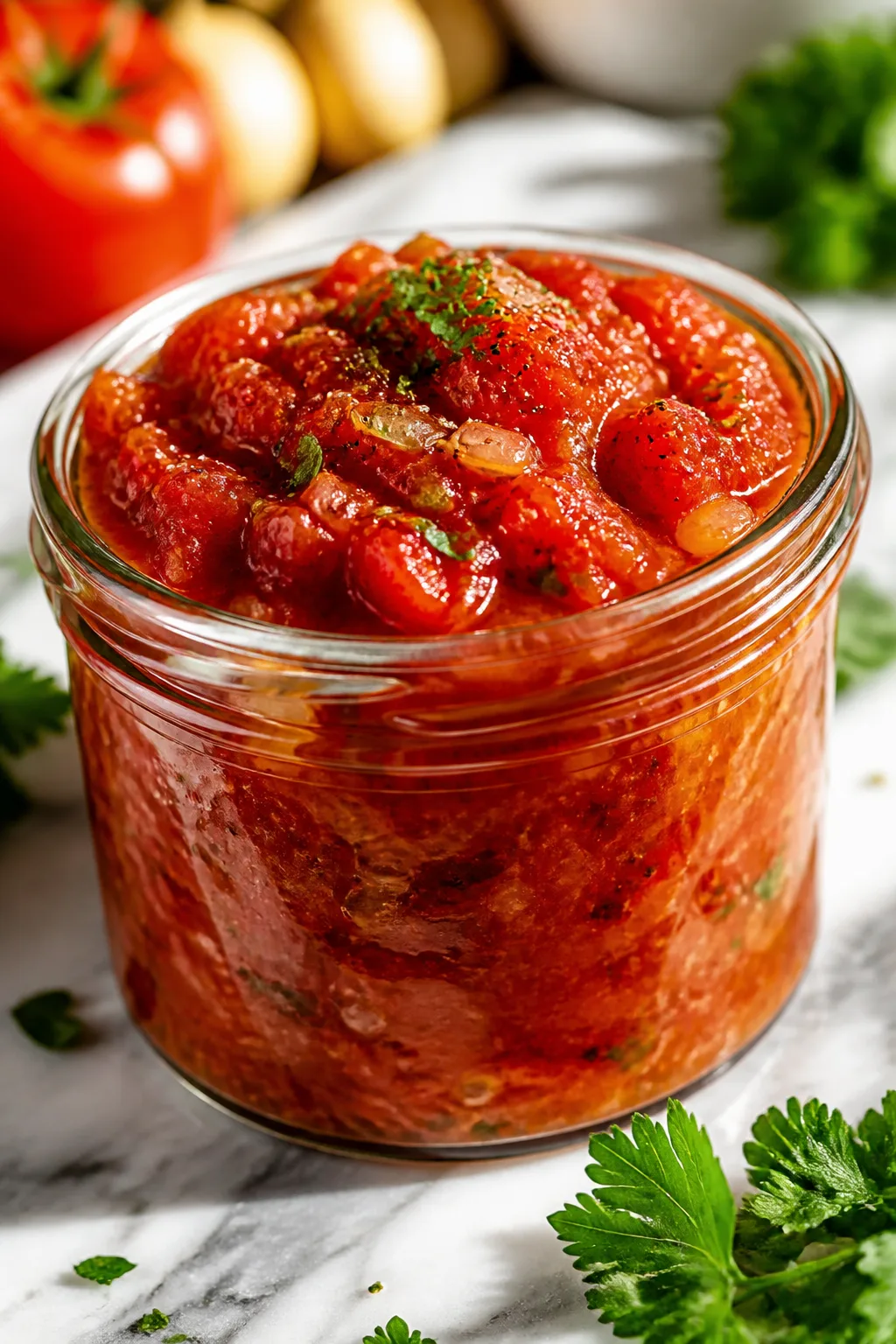
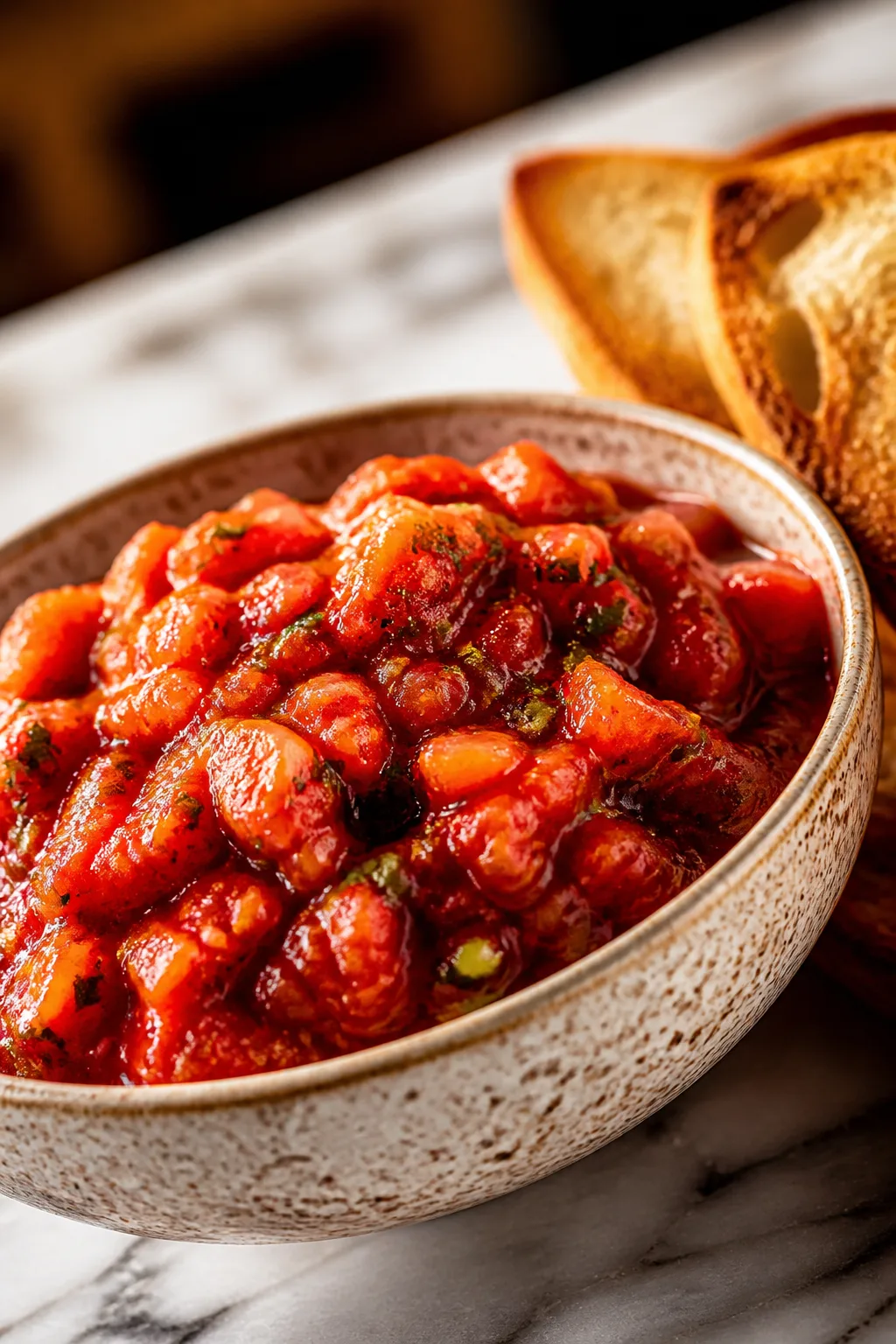
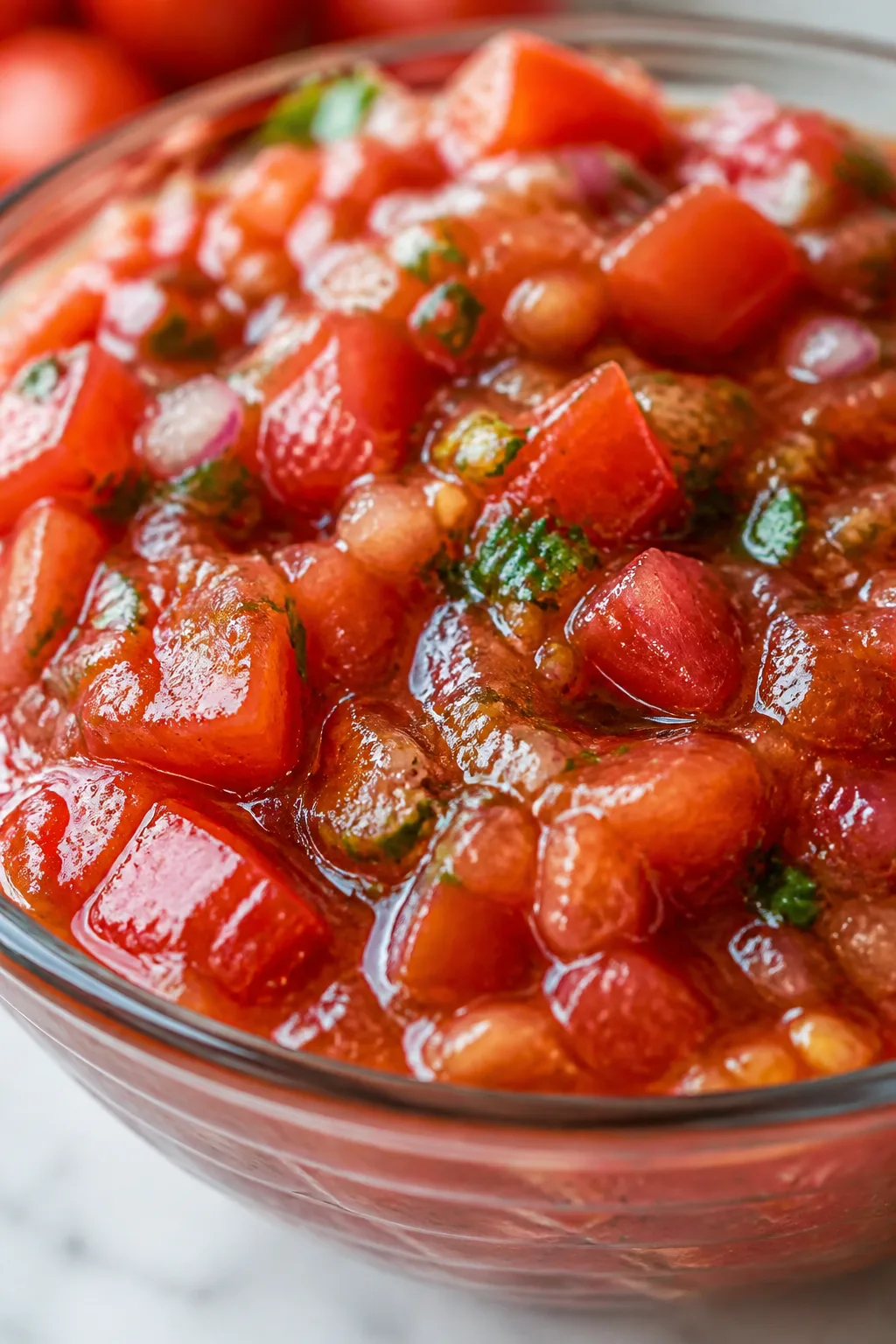
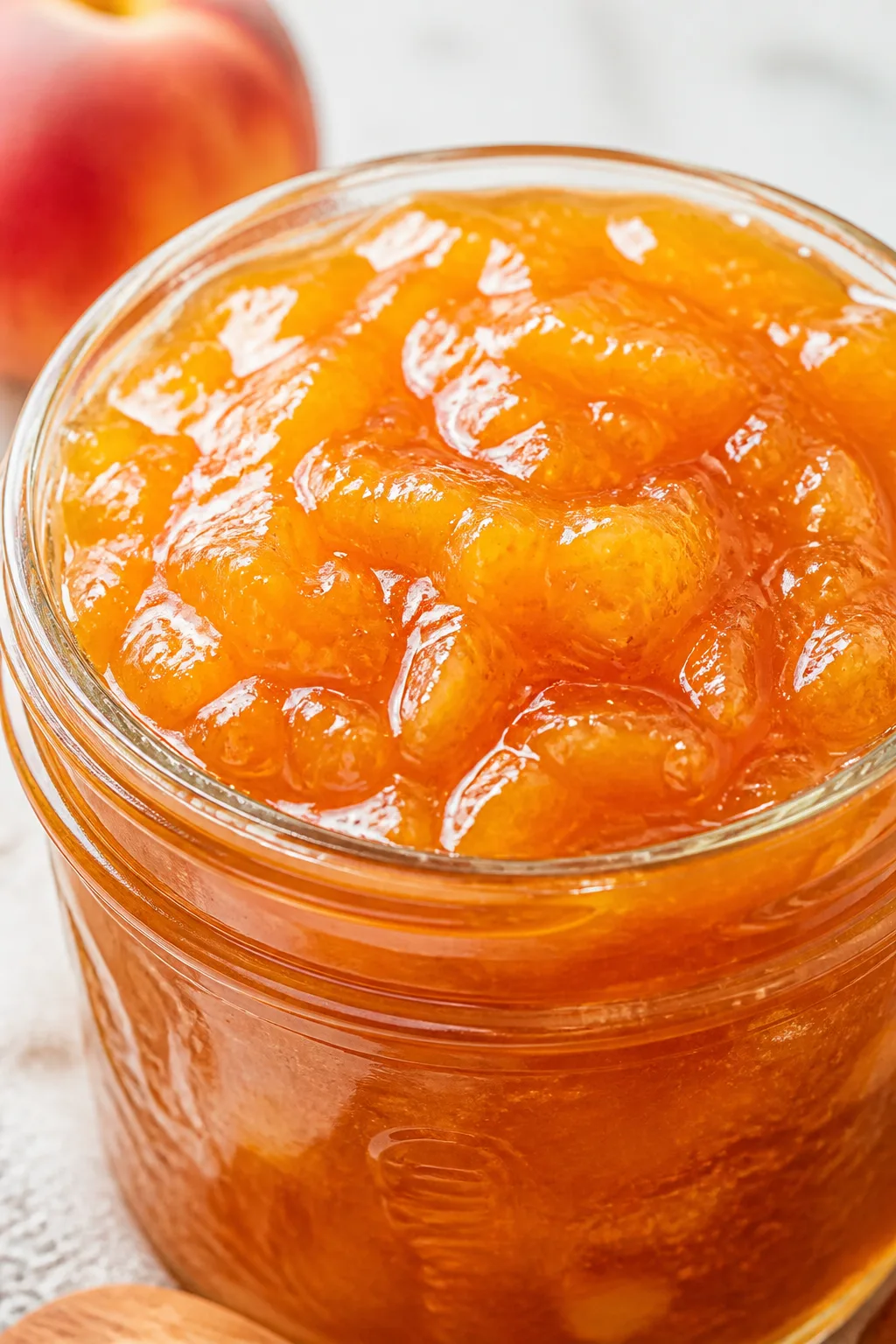
This tomato relish is a sweet and tangy classic that brings a nostalgic touch to any meal. Slow simmering really deepens the flavors, making it perfect for grilled meats or sandwiches. I love how it adds a homemade charm!
Introduction
I first stumbled upon this tomato relish recipe years ago when I wanted something homemade to elevate my grilled sandwiches. What hooked me was the slow simmering process that transforms simple ingredients into a rich, deeply flavorful condiment. Unlike quick relishes that taste a bit raw or sharp, this one mellows out beautifully over time. The trick I learned is to let it gently bubble away on low heat, stirring occasionally so it thickens without burning. It’s a simple step but makes all the difference. The finished relish has a perfect balance of sweet and tangy with a hint of warmth from cinnamon and mustard seeds. It’s chunky but not watery and adds the kind of comforting, nostalgic flavor you just can’t get from store-bought jars. My family loves it slathered on grilled chicken sandwiches or alongside a juicy burger. Honestly, it’s become my go-to condiment for any backyard cookout. If you’ve ever tried making tomato sauces that felt too acidic or flat, this recipe will pleasantly surprise you. It’s forgiving and so rewarding. Give it a try—you might find yourself spooning it straight from the jar like I do when no one’s looking!
What You'll Need
Approximately 2 cups, 4 servings
- 4 cups chopped ripe tomatoes
- 1 medium onion, finely chopped
- 1/2 cup brown sugar
- 1/2 cup apple cider vinegar
- 1 teaspoon mustard seeds
- 1/2 teaspoon ground cinnamon
- 1/2 teaspoon salt
- 1/4 teaspoon black pepper
- 1/4 teaspoon chili flakes (optional)
How To Do It
Step 1
Start by prepping your ingredients: chop the ripe tomatoes and finely dice the onion. This step ensures even cooking and helps the flavors meld better. Using ripe tomatoes is key because they bring natural sweetness and body to the relish. Avoid overripe or underripe tomatoes as they can affect texture and taste. The onion adds a subtle savory depth that balances the sweetness. Once chopped, set them aside while you gather the spices and other ingredients.
⏱ Time: 10 minutes
✓ Doneness: Evenly chopped tomatoes and onions ready for cooking
Step 2
In a large, heavy-bottomed saucepan, combine the chopped tomatoes, onions, brown sugar, and apple cider vinegar. Add the mustard seeds, ground cinnamon, salt, black pepper, and chili flakes if you like a little heat. Stir everything together well to distribute the spices evenly. This mixture is the flavor base, so getting a good mix helps the spices infuse throughout during simmering.
⏱ Time: 5 minutes
✓ Doneness: Ingredients fully combined, mixture looks wet but chunky
Step 3
Place the saucepan over low heat and bring the mixture just to a gentle simmer. It’s important not to rush this by using high heat, as that can cause burning or uneven cooking. Slow simmering allows the sugars to caramelize slightly and the vinegar to mellow, delivering that perfect sweet-tangy balance. Stir frequently to prevent sticking, especially on the bottom where it can scorch.
⏱ Time: 30 minutes
✓ Doneness: Mixture thickens and reduces, bubbling gently with a glossy finish
Step 4
As the mixture simmers, keep an eye on the texture. You want it to reduce until it’s thick but still spoonable—like a chunky jam. If it gets too dry, you can add a splash of water or vinegar to loosen it. Avoid rushing the process; patience here means deeper flavor development. The mustard seeds should pop slightly, releasing their aroma, and the cinnamon will add a warm undertone.
⏱ Time: 30 minutes
✓ Doneness: Thickened relish with a glossy, jam-like consistency and vibrant aroma
Step 5
Taste the relish and adjust the seasoning if needed. Sometimes a little more sugar or vinegar is necessary depending on your tomatoes' sweetness and acidity. This final seasoning tweak is important to balance the flavors perfectly, so don’t skip it. Remember, the relish should be sweet, tangy, and slightly spicy if you added chili flakes.
⏱ Time: 5 minutes
✓ Doneness: Balanced flavor with no one note overpowering the others
Step 6
Once the relish has thickened to your liking, remove the pan from the heat and let it cool slightly. Then transfer it into sterilized jars or airtight containers. Cooling before sealing helps preserve the flavor and texture. This relish can be served warm or cold, but it tastes best after resting a few hours or overnight to let the flavors meld further.
⏱ Time: 10 minutes
✓ Doneness: Cool enough to handle, transferred to clean storage containers
Step 7
Store the relish in the refrigerator if you plan to use it within a week. For longer storage, freezing is an option, but the texture may change slightly. When ready to serve, spoon it generously over grilled meats, sandwiches, or even as a zesty topping for crackers and cheese. The contrast between the relish’s sweet tang and savory dishes is truly delightful.
⏱ Time: 5 minutes
✓ Doneness: Properly stored relish ready for future meals
Step 8
If serving cold, give the relish a good stir before plating to recombine any separated liquids. If serving warm, gently reheat on the stove over low heat, stirring frequently to prevent scorching. Avoid boiling as it can break down the texture and dull the fresh flavors you worked so hard to develop.
⏱ Time: 5 minutes
✓ Doneness: Evenly heated relish with no signs of burning or separation
Step 9
For an extra touch, try mixing in freshly chopped herbs like basil or parsley just before serving. This adds a fresh, bright note that complements the deep, slow-cooked flavors. It’s a simple addition but really elevates the relish, especially in summer dishes.
⏱ Time: 2 minutes
✓ Doneness: Herbs visibly mixed in, adding color and fresh aroma
Variations
Spicy Chipotle Tomato Relish
Add 1-2 chipotle peppers in adobo sauce finely chopped for a smoky, spicy kick. This variation pairs wonderfully with grilled steak or roasted veggies, adding warmth and depth.
Note: Chop chipotle peppers finely and add early in the simmer to infuse smoky heat evenly.
Sweet and Herbaceous Tomato Relish
Stir in fresh chopped basil and thyme just before serving for a bright, herbal twist. Great for topping bruschetta or grilled chicken sandwiches.
Note: Add herbs off heat to retain freshness and vibrant color.
Tangy Balsamic Tomato Relish
Replace half the apple cider vinegar with balsamic vinegar for a richer, deeper tang. This version is excellent with roasted pork or as a dip for artisan bread.
Note: Use aged balsamic vinegar to avoid overpowering acidity.
Sweet Onion and Tomato Chutney
Add 1 cup finely chopped caramelized onions for extra sweetness and texture. This chutney is delicious alongside cheese boards or curry dishes.
Note: Caramelize onions slowly before adding to the tomato base.
No-Sugar Tomato Relish
Omit the brown sugar and add a bit more apple cider vinegar for a fresher, less sweet relish. Perfect for those watching sugar intake or preferring tart flavors.
Note: Simmer slightly longer to reduce and thicken without sugar’s help.
Pro Tips
Use a heavy-bottomed pan to prevent scorching.
A heavy-bottomed saucepan distributes heat evenly during the slow simmer, reducing the risk of burning the sugars and tomatoes on the bottom. Uneven heat can cause hot spots that lead to bitter burnt bits, ruining the flavor. This helps maintain a smooth, rich relish.
Don’t rush the simmering process.
Slow simmering allows the flavors to develop fully and the sugar to caramelize gently, creating depth. Rushing with high heat can cause the mixture to burn or separate, resulting in harsh vinegar notes and uneven texture. Patience here is essential for a balanced, delicious relish.
Adjust seasoning after cooking.
Tomatoes vary in acidity and sweetness based on season and type. Tasting and adjusting sugar, salt, or vinegar at the end ensures the relish hits the perfect balance. Skipping this step might leave the relish too sour or too sweet, so it’s worth the extra moment.
Sterilize jars before storing.
Properly sterilizing your storage jars prevents bacterial growth and extends shelf life. Even if you plan to refrigerate, clean jars help keep the relish fresh longer and avoid off-flavors. Simple boiling or oven sterilizing works well.
Add fresh herbs just before serving.
Fresh herbs like basil or parsley add brightness and a fresh contrast to the deep, cooked flavors of the relish. Adding them too early causes them to lose flavor and color during cooking. Stirring them in last keeps the relish vibrant and aromatic.
Use ripe tomatoes for best flavor.
Ripe tomatoes have higher sugar content and better flavor compounds that develop fully during cooking. Using underripe or poor-quality tomatoes results in a less flavorful, more acidic relish. Choosing the best tomatoes makes a noticeable difference.
Keep the mixture covered loosely while simmering.
Covering the pot partially traps steam and speeds up cooking without losing too much moisture. This helps the relish thicken evenly and prevents splattering. Fully covering or leaving it wide open can either create too much condensation or cause excessive evaporation.
Common Mistakes to Avoid
Cooking at too high heat.
Why it happens Many cooks rush the simmering to save time and crank up the heat, thinking it'll speed things up.
Fix Lower the heat to a gentle simmer and stir frequently. This slow approach prevents burning and allows flavors to meld harmoniously, avoiding bitter or burnt notes.
Skipping seasoning adjustments at the end.
Why it happens Some assume the recipe is perfect as written and don’t taste before storing.
Fix Always taste the finished relish and tweak sugar, vinegar, or salt to balance flavors. This step tailors the relish to your tomatoes and personal preference.
Using underripe or watery tomatoes.
Why it happens Sometimes cooks use whatever tomatoes are on hand without considering ripeness or quality.
Fix Choose ripe, firm tomatoes to ensure natural sweetness and proper texture. Avoid watery tomatoes that dilute flavor and make the relish runny.
Not stirring enough during simmering.
Why it happens It’s easy to forget or get distracted while simmering.
Fix Stir regularly to prevent sticking or scorching on the pan bottom. This keeps the relish smooth and evenly cooked.
Adding fresh herbs too early.
Why it happens Eager cooks add herbs at the start, thinking it will infuse flavor.
Fix Add fresh herbs just before serving to preserve their vibrant flavor and color, rather than cooking them down into dullness.
Nutrition
Per Serving:
Nutritional values are estimates and may vary based on specific ingredients used.
Storage & Tips
Room Temperature
Tomato relish can safely sit at room temperature for up to 2 hours when covered. Beyond that, it’s best refrigerated to prevent spoilage. Always cover with a clean lid or plastic wrap to avoid contamination.
Refrigerator
Store the relish in an airtight container for up to 7 days. The flavor deepens over time but the texture may thicken. It’s delicious served cold or gently reheated on the stove before use.
Freezer
Freeze the relish in freezer-safe containers or bags for up to 3 months. To avoid freezer burn, leave some headspace and seal tightly. Thaw overnight in the refrigerator and stir well before reheating.
Reheating
Reheat gently on the stovetop over low heat, stirring frequently to prevent sticking. Avoid microwaving at high power as it can cause uneven heating and affect texture. Add a splash of water or vinegar if it’s too thick.
Make Ahead
You can prepare the relish 1-2 days ahead and store it in the fridge. This resting time actually improves flavor as the ingredients meld. Just warm it slightly before serving if you prefer it warm.
FAQ
Can I use canned tomatoes instead of fresh?
Yes, but fresh ripe tomatoes are ideal for the best flavor and texture. If using canned, choose whole peeled or diced tomatoes without added salt or seasoning. You might need to reduce the cooking liquid a bit longer to reach the right consistency since canned tomatoes tend to be more watery.
How long does this tomato relish keep in the fridge?
Stored in an airtight container, this relish lasts up to 7 days refrigerated. The flavors actually improve after a day or two. Always check for any off smells or mold before consuming, and use clean utensils to avoid contamination.
Can I make this relish vegan and gluten-free?
Absolutely! This recipe is naturally vegan and gluten-free as it contains no animal products or gluten ingredients. Just ensure your vinegar and spices are certified gluten-free if you have sensitivities.
What can I substitute for brown sugar?
You can substitute with white sugar, honey, or maple syrup, though these will slightly change the flavor profile. Brown sugar adds a molasses note that’s unique, so if substituting, start with a bit less and adjust to taste.
Why is my relish too watery?
This often happens if the simmering time is too short or the tomatoes are very watery. To fix this, continue simmering uncovered to allow excess liquid to evaporate, stirring frequently to prevent burning. You can also mash some tomatoes to help thicken the mix.
Can I use ground mustard instead of mustard seeds?
Ground mustard can be used but it will blend into the relish rather than giving the subtle crunch and bursts of flavor that whole seeds provide. If using ground, add it sparingly and adjust seasoning accordingly.
Is it okay to add other spices?
Definitely! Spices like cloves, allspice, or ginger can complement the tomato relish nicely. Add small amounts and taste as you go to avoid overpowering the base flavors.
How do I sterilize jars for storing this relish?
Wash jars and lids with hot soapy water, rinse well, then boil them in water for 10 minutes or place in a hot oven (around 275°F) for 15 minutes. Let them dry completely before filling with relish to reduce risk of spoilage.
Final Thoughts
I hope you enjoy making and sharing this tomato relish as much as I do! It’s simple, comforting, and truly elevates any meal—give it a try and let me know how it turns out!