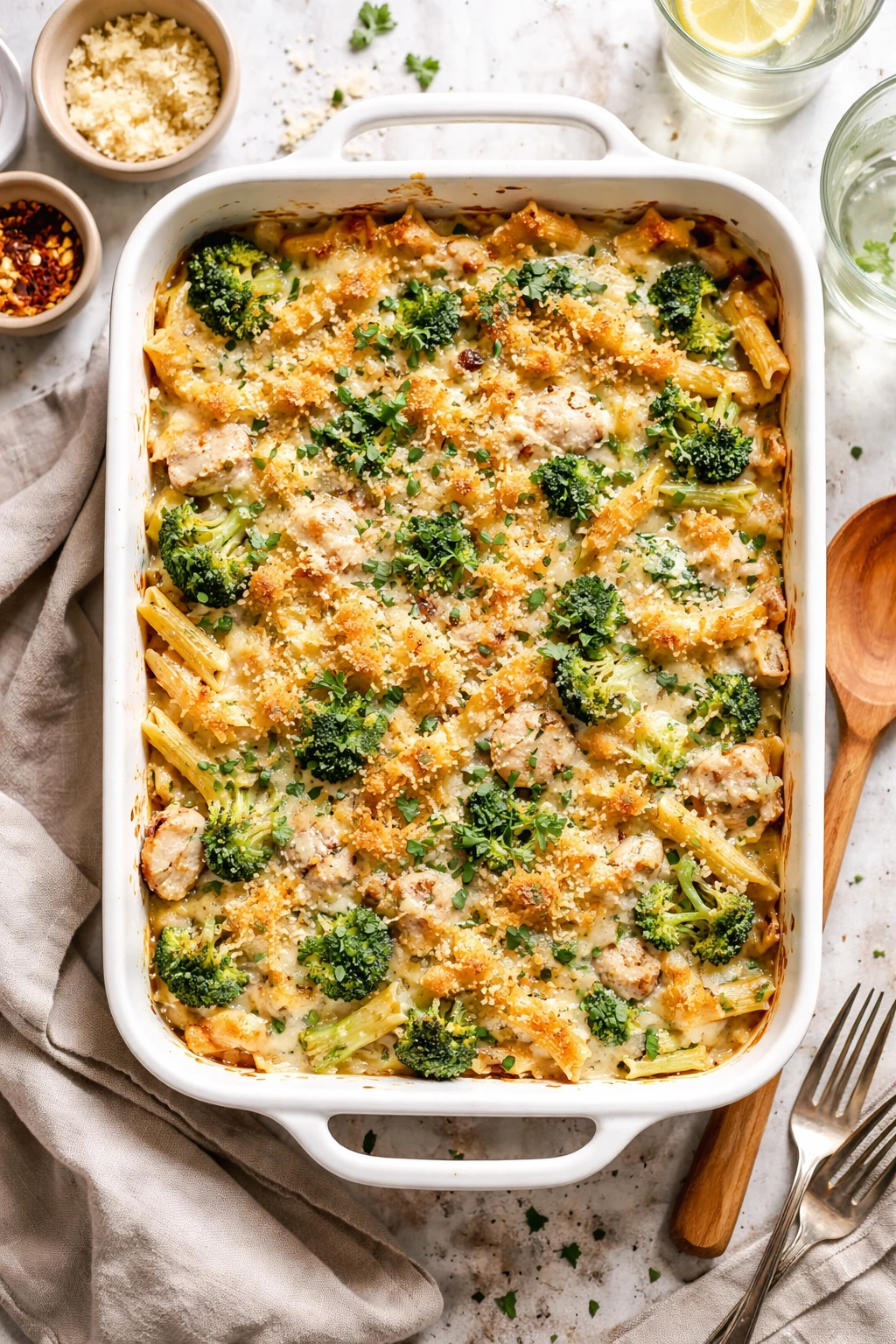
This cozy casserole layers tender vegetables with a luscious béchamel sauce and melted cheese for the ultimate comfort food. It’s creamy, satisfying, and perfect for chilly weeknights or casual family dinners.
Introduction
I first made this cheesy veggie casserole on a chilly autumn evening when I wanted something warm, cozy, and satisfying but also packed with veggies. Most casseroles I’d tried before felt either dry or heavy, but this one hit the perfect balance. What sets it apart is the creamy béchamel sauce that I learned to make from my grandmother—it's silky and rich without being overwhelming. The secret is warming the milk before slowly whisking it into the butter-flour roux; this prevents lumps and gives the sauce a smooth texture that coats every bite. Plus, I love how the mix of broccoli, carrots, and mushrooms adds both color and a nice variety of flavors and textures. When baked, the top becomes golden and crunchy from the breadcrumb and cheese topping, contrasting beautifully with the creamy layers underneath. It’s become my go-to dish for casual dinners or when I want to impress friends with something homemade but fuss-free. Expect a comforting, cheesy, and veggie-packed casserole that feels like a warm hug on a plate.
What You'll Need
Approximately 6 cups, 4 servings
- 2 cups broccoli florets, fresh
- 1 cup sliced carrots, fresh
- 1 cup sliced mushrooms, fresh
- 3 tablespoons unsalted butter
- 3 tablespoons all-purpose flour
- 2 cups whole milk, warmed
- 1/2 teaspoon salt
- 1/4 teaspoon freshly ground black pepper
- 1/4 teaspoon ground nutmeg
- 1 1/2 cups shredded sharp cheddar cheese
- 1/2 cup grated Parmesan cheese
- 1/2 cup breadcrumbs, for topping
- 2 tablespoons olive oil
How To Do It
Step 1
Start by prepping your vegetables: wash and chop the broccoli into small florets, slice the carrots thinly, and clean and slice the mushrooms. This prep is crucial because even cooking depends on uniform sizes. If the pieces are too big, some veggies might remain undercooked while others get mushy. Set them aside while you prepare the sauce and preheat your oven to 375°F (190°C).
⏱ Time: 10 minutes
✓ Doneness: Vegetables are evenly chopped and ready to cook
Step 2
In a medium saucepan, melt the butter over medium heat. Once melted, whisk in the flour to form a roux. Cook this mixture for about 2-3 minutes, whisking constantly to avoid burning. This step cooks out the raw flour taste and starts the thickening process. If you rush or skip cooking the roux, the sauce may taste floury and have a gritty texture.
⏱ Time: 3 minutes
✓ Doneness: Roux bubbles gently and smells slightly nutty without browning
Step 3
Slowly pour in the warmed milk, whisking continuously to prevent lumps. Keep whisking and cook until the sauce thickens and coats the back of a spoon, about 5-7 minutes. Patience here is key; adding milk too fast can cause clumps. The gradual incorporation and constant stirring create a smooth béchamel.
⏱ Time: 7 minutes
✓ Doneness: Sauce is thick, glossy, and smooth with no lumps
Step 4
Season the béchamel sauce with salt, pepper, and nutmeg. Nutmeg is subtle but adds warmth that complements the cheese and veggies beautifully. Stir in 1 cup of cheddar cheese until melted and fully incorporated. This creates a rich, creamy base that binds the casserole together.
⏱ Time: 3 minutes
✓ Doneness: Cheese fully melted, sauce creamy and well-seasoned
Step 5
In a large bowl, combine the chopped vegetables with the remaining 1/2 cup cheddar cheese and half of the Parmesan. Pour the béchamel sauce over the veggies and gently fold to coat everything evenly. This ensures every bite has that creamy cheesy goodness and the veggies don’t dry out during baking.
⏱ Time: 5 minutes
✓ Doneness: Veggies are thoroughly coated in cheesy sauce
Step 6
Transfer the mixture to a greased 8x8-inch baking dish, spreading it out evenly. In a small bowl, mix breadcrumbs with olive oil and the remaining Parmesan cheese. Sprinkle this topping evenly over the casserole. The olive oil helps the breadcrumbs brown and crisp up nicely in the oven.
⏱ Time: 5 minutes
✓ Doneness: Even breadcrumb topping spread over casserole
Step 7
Bake uncovered in the preheated oven for 25-30 minutes or until the topping is golden brown and crispy, and the casserole is bubbling around the edges. Avoid opening the oven door frequently as this lowers the temperature and can affect browning and cooking time.
⏱ Time: 30 minutes
✓ Doneness: Top is golden brown, bubbling edges visible
Step 8
Remove the casserole from the oven and let it rest for 5-10 minutes before serving. Resting allows the sauce to thicken slightly and the casserole to set, making it easier to serve without falling apart.
⏱ Time: 10 minutes
✓ Doneness: Casserole holds shape when scooped
Step 9
Serve warm, ideally with a simple green salad or crusty bread. This casserole pairs well with light sides because it’s rich and filling. Enjoy the creamy, cheesy layers with tender veggies in every bite!
⏱ Time: Immediate
✓ Doneness: Dish served warm with complementary sides
Variations
Add protein with cooked chicken
Mix in shredded cooked chicken for a heartier casserole. This adds protein and makes it a complete meal. Use leftover rotisserie chicken or poach chicken breasts beforehand.
Note: Ensure chicken is shredded finely and mixed well with sauce to distribute moisture evenly.
Use different vegetables
Swap broccoli and carrots with zucchini, bell peppers, or cauliflower for a different flavor profile. Adjust cooking times slightly for softer veggies.
Note: Veggies with higher water content may require reducing added milk or cooking a bit longer to avoid excess moisture.
Make it vegan
Use plant-based butter and milk alternatives, and replace cheeses with vegan versions. Nutritional yeast can add cheesy flavor to the sauce.
Note: Vegan cheeses melt differently; consider adding a thickener like cornstarch to maintain sauce creaminess.
Spicy twist
Add a pinch of cayenne pepper or chopped jalapeños to the béchamel for a subtle heat that brightens the dish without overpowering.
Note: Add spices gradually and taste the sauce before baking to balance heat.
Gluten-free version
Use gluten-free flour or cornstarch to make the roux, and gluten-free breadcrumbs for topping. This keeps the casserole safe for gluten-sensitive eaters without sacrificing texture.
Note: Cornstarch thickens faster, so add it slowly and monitor sauce thickness carefully.
Pro Tips
Warm the milk before adding to the roux.
Warming milk prevents temperature shocks that cause lumps when mixing with the roux. This results in a smooth, creamy béchamel sauce essential for coating the veggies evenly.
Chop vegetables uniformly for even cooking.
Uniform size ensures all veggies cook through at the same rate, avoiding some pieces being mushy while others remain crunchy.
Use freshly grated cheeses instead of pre-shredded.
Pre-shredded cheese contains anti-caking agents that can prevent smooth melting and affect texture, while fresh cheese melts creamily and blends better.
Don’t skip resting the casserole before serving.
Resting allows the béchamel sauce to thicken slightly, making the casserole firmer and easier to portion without it falling apart.
Brush breadcrumbs with olive oil for a perfect crust.
Olive oil helps breadcrumbs brown evenly and become crispy during baking, creating a delightful textural contrast.
Avoid opening the oven door frequently while baking.
Opening the door lowers the oven temperature and can prevent proper browning and bubbling of the casserole.
Use medium heat to cook the roux carefully.
Too high heat burns the roux, causing a bitter taste, while too low heat won’t cook out the raw flour flavor properly.
Common Mistakes to Avoid
Lumpy béchamel sauce
Why it happens Adding cold milk too quickly to the roux or not whisking continuously causes flour to clump together.
Fix Warm the milk before adding it slowly in a thin stream while whisking vigorously to keep the sauce smooth.
Undercooked or mushy vegetables
Why it happens Inconsistent chopping sizes or skipping the step to pre-cook some veggies can lead to uneven textures.
Fix Cut veggies evenly and consider lightly steaming or sautéing firmer vegetables like carrots before mixing.
Soggy breadcrumb topping
Why it happens Skipping the olive oil or using wet breadcrumbs leads to a soft, unappealing crust.
Fix Toss breadcrumbs with olive oil and Parmesan before sprinkling to ensure a crisp, golden topping.
Sauce too thin or watery
Why it happens Not cooking the roux long enough or adding too much milk can prevent proper thickening.
Fix Cook the roux until it smells nutty and thickens slightly, then add milk gradually, cooking until sauce coats the spoon.
Casserole falls apart when serving
Why it happens Serving immediately after baking while the sauce is still too loose.
Fix Let the casserole rest for at least 10 minutes to allow the sauce to set before slicing.
Nutrition
Per Serving:
Nutritional values are estimates and may vary based on specific ingredients used.
Storage & Tips
Room Temperature
You can keep leftovers at room temperature for up to 2 hours covered with foil or plastic wrap to prevent drying out. Longer than that risks bacterial growth.
Refrigerator
Store the casserole in an airtight container for up to 4 days. The flavors meld nicely but the breadcrumb topping may soften. Reheat in the oven to restore crispness.
Freezer
Freeze leftovers in a sealed container for up to 3 months. Wrap tightly to prevent freezer burn. Thaw overnight in the refrigerator before reheating.
Reheating
Reheat covered in a 350°F oven for 20-25 minutes until warmed through. For crisp topping, uncover last 5 minutes. Avoid microwave reheating if possible, as it softens the crust.
Make Ahead
You can prepare the béchamel sauce and chop veggies 1-2 days ahead. Store separately and assemble just before baking to keep veggies fresh and topping crispy.
FAQ
Can I use frozen vegetables for this casserole?
Yes, but thaw and drain them well to avoid excess water making the casserole soggy. You might also want to reduce the milk slightly to compensate for added moisture.
What can I substitute for all-purpose flour in the roux?
Gluten-free flour blends or cornstarch work well. Cornstarch thickens faster, so add it gradually. Avoid whole wheat flour as it changes texture and flavor significantly.
Can I make this casserole dairy-free?
Yes, substitute butter with vegan margarine or oil, milk with plant-based milk like almond or oat, and use dairy-free cheese alternatives. The texture and flavor will be slightly different but still tasty.
What’s the best way to get a crispy breadcrumb topping?
Toss breadcrumbs with olive oil and Parmesan before sprinkling on top. Bake uncovered and avoid opening the oven door too often to maintain heat for browning.
Can I add other cheeses to this recipe?
Definitely! Gruyère or mozzarella can add different flavors and textures. Just be mindful that some cheeses melt differently and can affect the sauce’s consistency.
Why is nutmeg added to the béchamel sauce?
Nutmeg adds a subtle warmth and depth that complements the creamy sauce and cheese. It’s a classic addition in béchamel recipes but use sparingly to avoid overpowering.
Final Thoughts
Give this cheesy veggie casserole a try for your next cozy meal—you might find it becomes a new family favorite! Don’t forget to share how yours turns out.