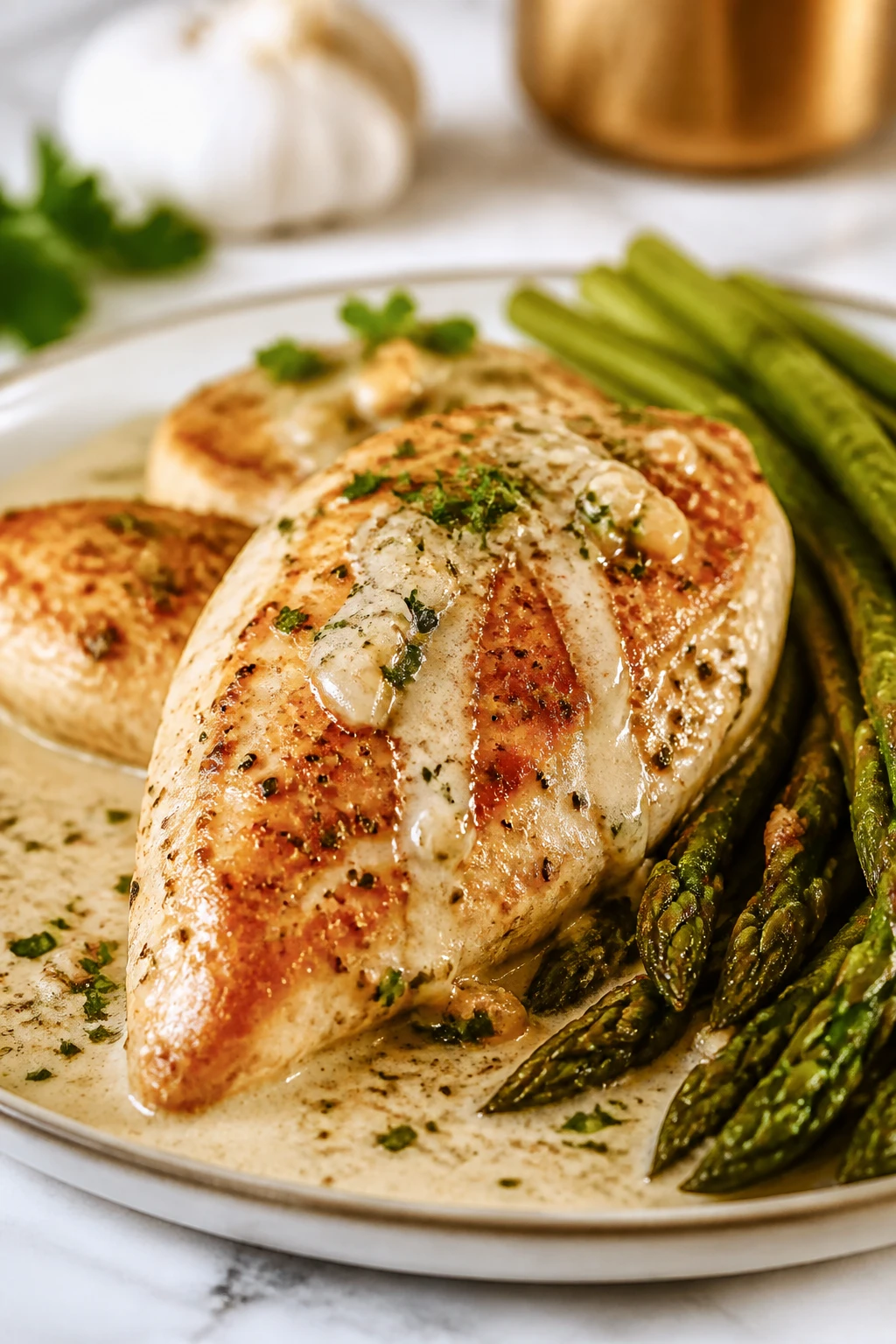
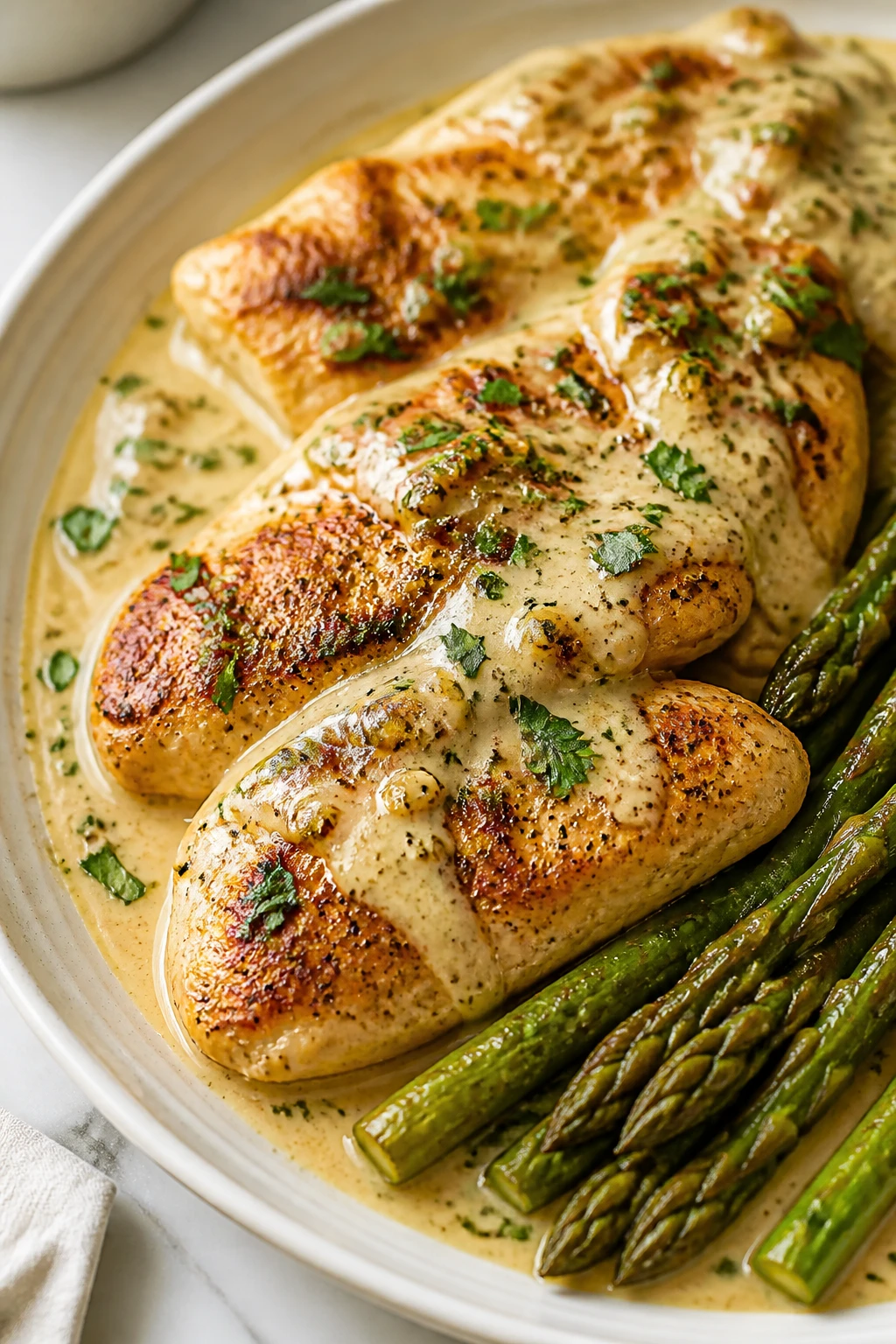
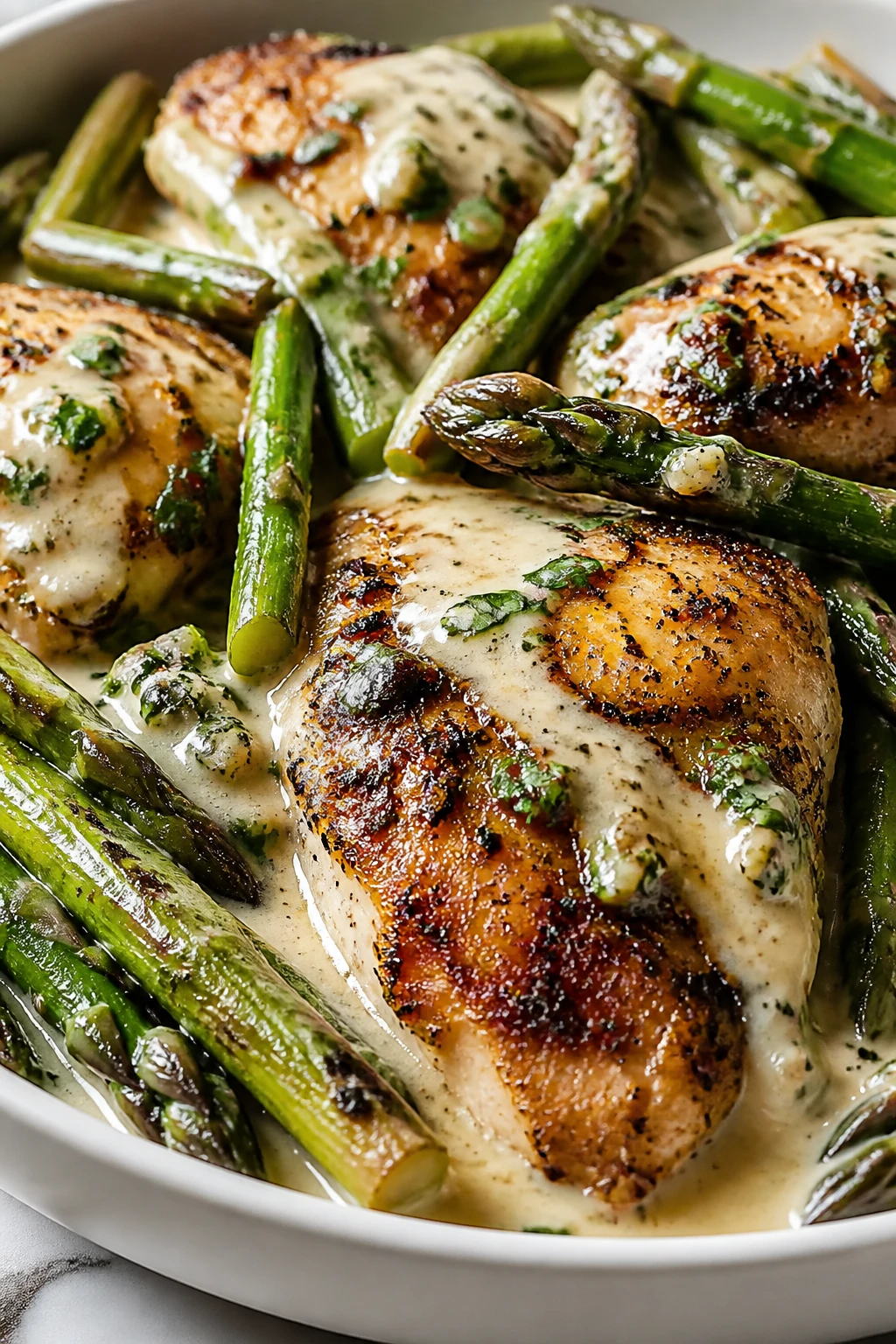
This creamy garlic chicken with fresh asparagus is a quick, flavorful dinner that feels fancy but is super simple. The garlic cream sauce makes it special, perfect for busy weeknights or relaxed weekends.
Introduction
I first made this creamy garlic chicken with fresh asparagus one busy weeknight when I wanted something quick but still felt a little special. The beauty of this recipe is that it uses just a handful of ingredients, yet the flavor is rich and comforting. I remember my first attempt was a bit bland because I didn’t properly season the chicken or let the garlic toast gently in the oil, so the sauce lacked depth. Since then, I learned to really let the garlic infuse the olive oil before adding cream, which makes the sauce irresistibly fragrant. What sets this version apart is how the cream sauce clings to the tender chicken and bright, crisp asparagus, making every bite balanced and satisfying. It’s perfect for those nights when you want dinner on the table fast but still want to impress yourself and your family. The finished dish is creamy, garlicky, and fresh with a slight snap from the asparagus. I love serving it with crusty bread or a simple side salad to soak up the sauce. Honestly, it’s become one of my go-to meals when I’m short on time but still want to enjoy something delicious and homemade.
How To Do It
Step 1
Start by seasoning the chicken breasts generously with salt and pepper on both sides. Heat the olive oil in a large skillet over medium heat until shimmering but not smoking. Add the chicken breasts and cook for about 5-7 minutes per side, depending on thickness, until golden brown and cooked through. Avoid moving the chicken too much so it develops a nice crust; this browning adds flavor through the Maillard reaction. If the chicken sticks, it likely isn’t ready to flip yet. Once cooked, transfer the chicken to a plate and tent with foil to keep warm while you make the sauce.
⏱ Time: 12-14 minutes
✓ Doneness: Chicken is golden brown on both sides and registers 165°F internal temperature
Step 2
In the same skillet, reduce heat to medium-low and add the minced garlic. Cook gently for 1-2 minutes, stirring frequently, until fragrant and lightly golden. This slow cooking releases the garlic’s flavor without burning it, which would cause bitterness. Next, pour in the heavy cream and stir to combine, scraping up any browned bits from the bottom of the pan – those bits carry tons of flavor. Let the cream simmer gently for 3-5 minutes until it thickens slightly. Season the sauce with salt and pepper to taste. This step is crucial for building the rich, velvety texture that coats the chicken beautifully.
⏱ Time: 7 minutes
✓ Doneness: Sauce is slightly thickened and coats the back of a spoon
Step 3
Add the trimmed asparagus pieces to the skillet with the cream sauce. Stir to coat and cover the pan with a lid. Let the asparagus cook gently in the sauce for 4-6 minutes until tender but still crisp. Cooking the asparagus in the sauce allows it to absorb flavor while maintaining its bright color and texture. Avoid overcooking as the asparagus will turn mushy and lose its vibrant green hue.
⏱ Time: 6 minutes
✓ Doneness: Asparagus is bright green and tender-crisp when pierced with a fork
Step 4
Return the chicken breasts to the skillet, nestling them into the creamy asparagus sauce. Spoon some sauce over the chicken and let everything warm together for 2-3 minutes. This final step melds the flavors and ensures the chicken stays juicy. Watch that the sauce doesn’t boil vigorously, as that can cause it to separate or curdle.
⏱ Time: 3 minutes
✓ Doneness: Chicken is warmed through and sauce is smooth and glossy
Step 5
Taste the sauce and adjust seasoning with additional salt and pepper if needed. If the sauce is too thick, add a splash of water or chicken broth to reach your preferred consistency. This last adjustment is key to balancing richness and ensuring the sauce isn’t overwhelming.
⏱ Time: 1 minute
✓ Doneness: Sauce has balanced flavor and desired pourable consistency
Step 6
Serve the chicken breasts topped with the creamy asparagus sauce immediately. Pair with crusty bread to soak up the sauce or a simple side like rice or mashed potatoes for a complete meal. The contrast of the rich sauce and fresh asparagus makes each bite delightful.
⏱ Time: Immediate
✓ Doneness: Dish is plated attractively with sauce coating chicken and asparagus
Step 7
For extra flavor, you can sprinkle freshly chopped parsley or grated Parmesan cheese over the top just before serving. These add freshness and a bit of salty depth that complements the creamy garlic sauce wonderfully.
⏱ Time: 1 minute
✓ Doneness: Garnish is evenly distributed and visually appealing
Step 8
If you want to prep ahead, cook the chicken breasts and make the sauce separately, then combine and warm just before serving. This helps keep the asparagus crisp and the sauce fresh without overcooking any components.
⏱ Time: Preparation varies
✓ Doneness: Components are fully cooked but combined at serving time
Step 9
Clean your skillet promptly after cooking to prevent garlic and cream residues from sticking and burning later. Use warm soapy water and a sponge to keep your pan in good shape for the next delicious meal.
⏱ Time: 5 minutes
✓ Doneness: Pan is clean and ready for next use
Variations
Add mushrooms for earthiness
Sauté sliced cremini or button mushrooms with the garlic before adding cream. Mushrooms add umami depth and pair beautifully with the creamy garlic sauce and asparagus.
Note: Cook mushrooms until browned and their moisture evaporates to avoid watery sauce.
Use half-and-half for lighter sauce
Swap heavy cream with half-and-half to reduce fat content. The sauce will be lighter but less rich, so cook gently to prevent curdling and consider adding a teaspoon of flour to thicken.
Note: Simmer sauce gently and avoid boiling to keep it smooth.
Make it spicy with red pepper flakes
Add a pinch of red pepper flakes when cooking garlic for a subtle heat that balances the creaminess. Great for those who like a little kick without overpowering the dish.
Note: Add flakes early in garlic cooking to infuse flavor.
Serve over pasta or rice
Turn this into a hearty one-pan meal by serving the creamy garlic chicken and asparagus over cooked pasta or rice. It soaks up the sauce and makes it more filling.
Note: Cook pasta or rice separately to avoid sogginess.
Swap asparagus for green beans or broccoli
Use green beans or broccoli florets instead of asparagus for a different veggie twist. Both hold up well in the cream sauce and offer a nice textural contrast.
Note: Adjust cooking time; green beans and broccoli may require slightly longer simmering.
Pro Tips
Always pat chicken dry before seasoning.
Removing excess moisture helps the chicken brown properly instead of steaming. Browning develops flavor through the Maillard reaction, which is key to a tasty crust and rich overall flavor.
Cook garlic on low heat to avoid bitterness.
Garlic burns quickly at high temperatures, turning bitter and spoiling the sauce. Gentle cooking releases its natural sweetness and aroma, enhancing the cream sauce.
Use fresh, firm asparagus for best texture.
Fresh asparagus cooks quickly and stays crisp-tender, adding a bright contrast to the creamy sauce. Older asparagus can be woody or mushy, which detracts from the dish.
Let the cream sauce simmer gently to thicken.
Slow simmering allows the cream to reduce without separating, resulting in a smooth, velvety sauce that clings perfectly to the chicken and veggies.
Don’t overcrowd the pan when searing chicken.
Crowding lowers the pan temperature, causing the chicken to steam instead of brown. Browned chicken has better flavor and texture.
Rest cooked chicken before slicing or saucing.
Resting lets juices redistribute, keeping the meat moist and tender. Cutting too soon can cause dry, tough chicken.
Add a splash of broth or water if sauce thickens too much.
Adjusting sauce consistency ensures it’s pourable and coats the food nicely without being gluey or clumpy.
Common Mistakes to Avoid
Burning the garlic
Why it happens Rushing the garlic cooking at high heat makes it burn quickly, creating a bitter flavor that ruins the sauce.
Fix Cook garlic on medium-low heat, stirring constantly and watching carefully. Remove from heat if it starts to brown too fast.
Overcooking asparagus
Why it happens Leaving asparagus in the sauce too long or cooking at too high heat causes it to become mushy and dull in color.
Fix Add asparagus last and cook just until tender-crisp, about 4-6 minutes. Cover the pan to help steam gently.
Chicken not browning properly
Why it happens If chicken is wet or pan is overcrowded, it steams instead of sears, resulting in pale, flavorless meat.
Fix Pat chicken dry and cook in batches if needed, leaving space between pieces. Use a hot pan with enough oil.
Sauce curdling
Why it happens Boiling cream or adding it to a very hot pan causes separation and grainy texture.
Fix Simmer cream gently over medium-low heat and avoid rapid boiling. Stir frequently.
Undersalting the dish
Why it happens Not seasoning chicken and sauce enough leads to bland results.
Fix Season generously at each stage—on chicken before cooking and in the sauce after adding cream.
Nutrition
Per Serving:
Nutritional values are estimates and may vary based on specific ingredients used.
Storage & Tips
Room Temperature
This dish should not be left out at room temperature for more than 2 hours. Cover it loosely with foil or a lid if you need to keep it warm for a short period before serving.
Refrigerator
Store leftovers in an airtight container in the fridge for up to 3 days. The sauce may thicken and the asparagus soften when cold. Reheat gently to avoid curdling, preferably on the stovetop with a splash of water or broth.
Freezer
Freeze cooked chicken and sauce separately in airtight containers or heavy-duty freezer bags for up to 2 months. Thaw overnight in the fridge. Reheat slowly on low heat with extra liquid to restore sauce texture.
Reheating
Warm leftovers in a skillet over low-medium heat, stirring occasionally. Add a splash of chicken broth or water to loosen the sauce and prevent it from drying out. Avoid microwaving at high heat to prevent sauce separation.
Make Ahead
You can cook the chicken and prepare the sauce up to 1 day ahead, storing them separately in the fridge. Assemble and warm everything together just before serving to keep asparagus fresh and sauce creamy.
FAQ
Can I use frozen chicken breasts for this recipe?
It's best to use fresh or fully thawed chicken breasts. Frozen chicken releases extra water when cooked, which can prevent proper browning and make the sauce watery. If using frozen, thaw completely and pat dry before cooking.
What if I don’t have heavy cream? Can I substitute?
Heavy cream is important for the rich, thick sauce. You can try half-and-half or whole milk, but the sauce will be thinner and less creamy. To help thicken, add a small amount of flour or cornstarch mixed with water before simmering.
How do I prevent the cream sauce from curdling?
Avoid boiling the sauce vigorously. Keep the heat medium-low and simmer gently. Stir frequently and add cream after reducing heat. High heat or sudden temperature changes can cause the cream to separate.
Can I use other vegetables instead of asparagus?
Yes! Green beans, broccoli, or snap peas work well. Just adjust cooking times since some vegetables may need longer to become tender but still crisp.
What’s the best way to reheat leftovers?
Reheat gently on the stovetop over low-medium heat with a splash of broth or water to loosen the sauce. Stir often to prevent sticking. Avoid microwaving at high power to keep the sauce smooth.
Is it okay to use garlic powder instead of fresh garlic?
Fresh garlic gives the best flavor and aroma. Garlic powder can work in a pinch but won’t have the same depth. If using powder, add it later in cooking to avoid burning.
How do I know when the chicken is fully cooked?
The safest method is using a meat thermometer; chicken should reach 165°F internally. Without a thermometer, make sure juices run clear and meat is no longer pink inside.
Can I make this recipe dairy-free?
You could substitute coconut cream or a non-dairy creamer, but the flavor and texture will change. Use mild-flavored non-dairy cream and add thickener if needed.
Final Thoughts
I hope you enjoy making this creamy garlic chicken with asparagus as much as I do. It’s a simple way to bring a little elegance to your weeknight dinners. Let me know how it turns out!