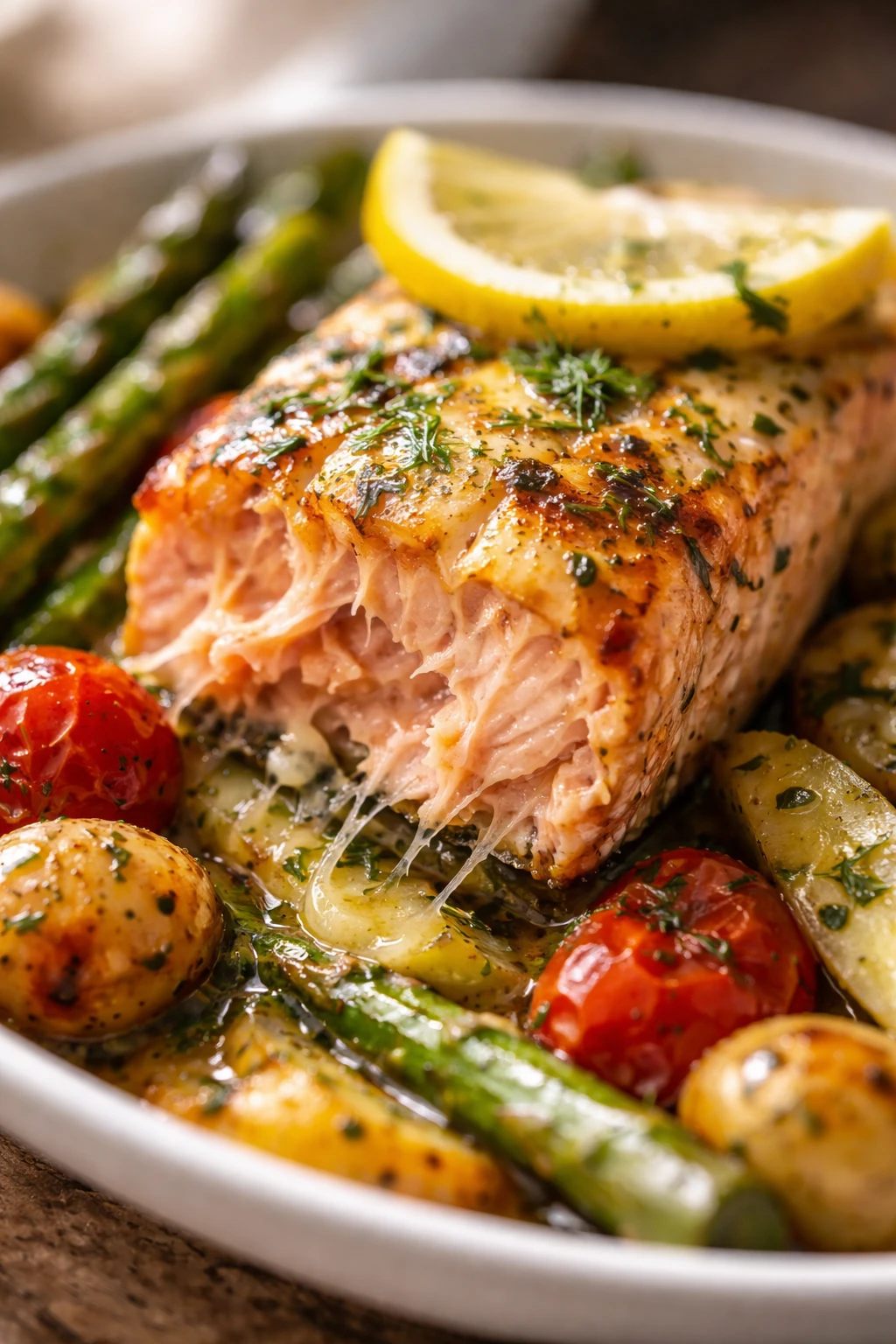
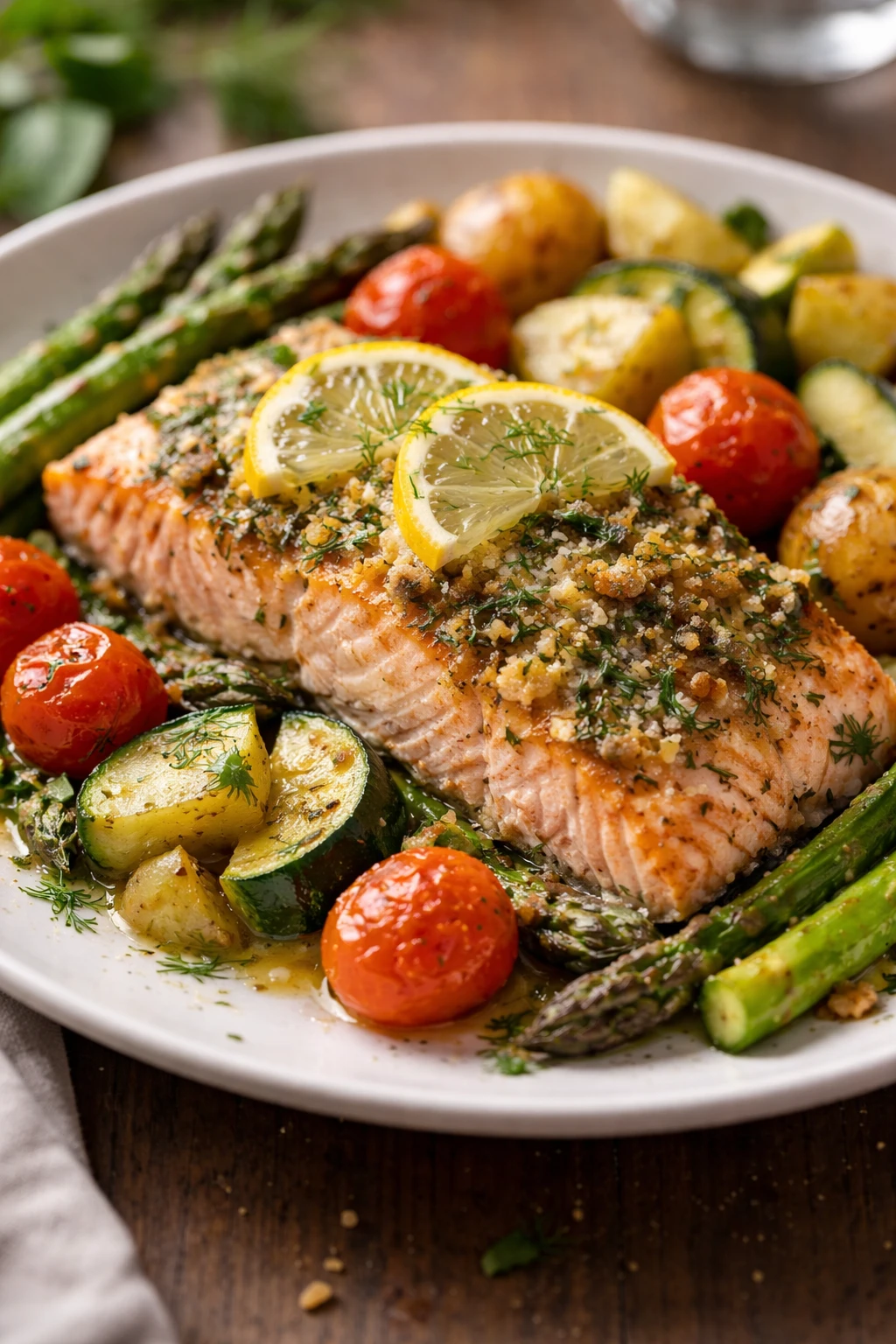
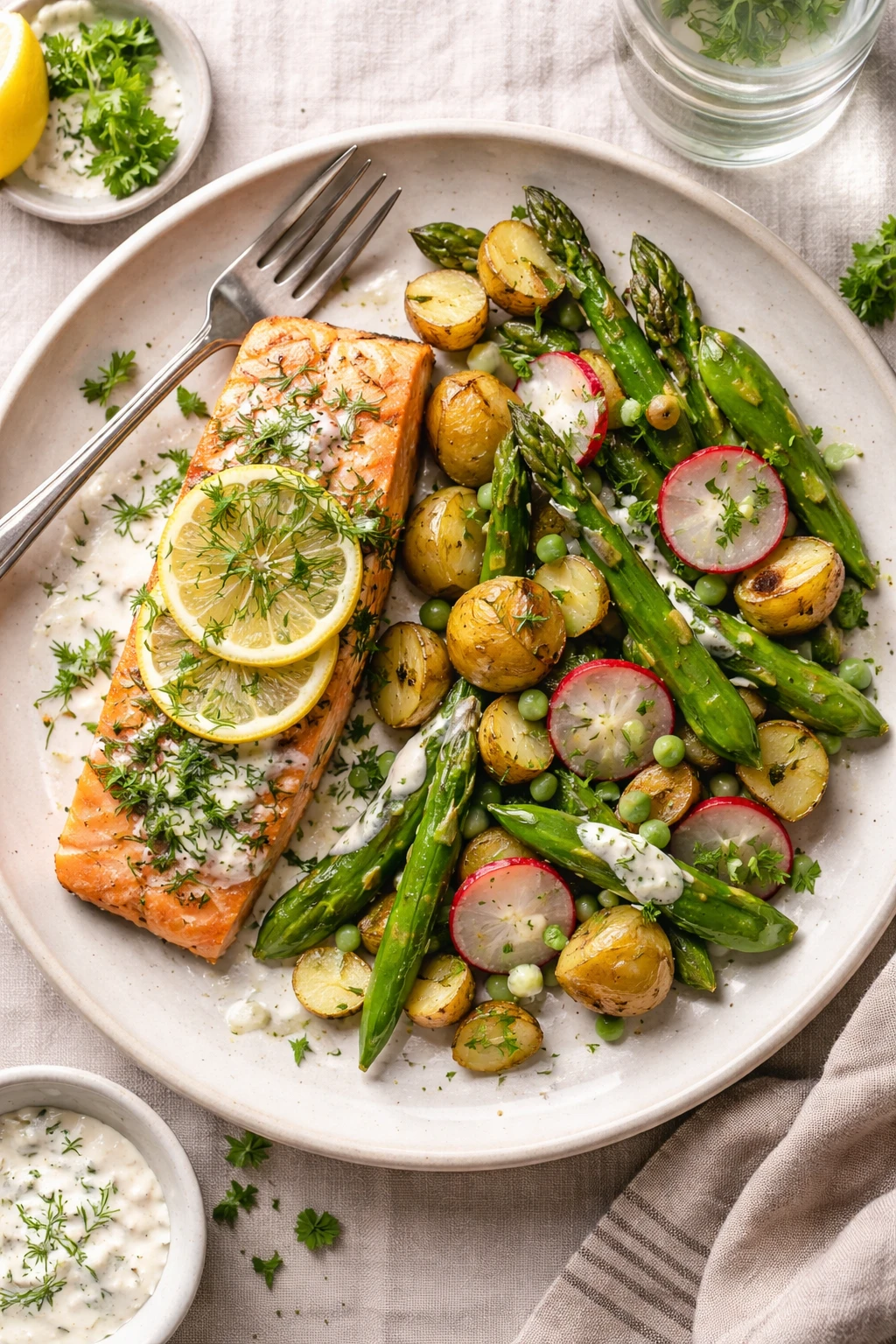
This baked salmon is bright and fresh, infused with zesty lemon and fragrant dill. Paired with crisp spring veggies, it’s a wholesome, fuss-free meal perfect for busy weeknights or a light dinner.
Introduction
I first made this baked salmon recipe on a hectic weeknight when I wanted something healthy but quick. What really sets this version apart is the bright lemon and fresh dill combo that keeps the fish light and flavorful without overpowering it. I also toss in spring veggies like asparagus and snap peas for crunch and color, which makes the meal feel complete without extra fuss. The trick I learned is to roast everything together on one sheet pan—this way, the salmon stays moist and the veggies get perfectly tender but still crisp. When it’s done, you get flaky salmon with a fresh herb aroma and veggies bursting with natural sweetness. It’s the kind of dinner that feels like you put in way more effort than you actually did, and my family always asks for seconds. Plus, cleanup is a breeze, so it’s become my go-to when I want a healthy meal fast but still impressive enough for company.
How To Do It
Step 1
Preheat your oven to 400°F (200°C). This temperature is perfect for roasting salmon and veggies evenly without drying out the fish. While the oven heats, line a large baking sheet with parchment paper or lightly grease it to prevent sticking. Getting your oven hot enough is key to achieving a nice roasted texture on the vegetables and that tender, flaky finish on the salmon. Avoid crowding the pan to allow air circulation for even cooking.
⏱ Time: 10 minutes
✓ Doneness: Oven preheated to 400°F with baking sheet ready
Step 2
Pat the salmon fillets dry with paper towels—this step is crucial for the seasoning to stick and to avoid steaming the fish. Rub each fillet with 1 tablespoon olive oil, then season generously with salt, pepper, and half the minced garlic. Drizzle the lemon juice over the fillets and sprinkle with half the chopped dill. This layering of flavors ensures every bite is bright and herbaceous, while the oil keeps the fish moist during baking.
⏱ Time: 5 minutes
✓ Doneness: Salmon fillets evenly coated with oil, seasoning, and herbs
Step 3
In a mixing bowl, toss the asparagus, sugar snap peas, and cherry tomatoes with the remaining olive oil, garlic, salt, and pepper. The olive oil helps the veggies roast evenly and develop a slight caramelization, enhancing their natural sweetness. Make sure the veggies are well coated but not drenched, or they might steam instead of roast.
⏱ Time: 5 minutes
✓ Doneness: Veggies glistening with oil and seasoning, ready to roast
Step 4
Arrange the salmon fillets skin-side down on one half of the baking sheet and spread the veggies on the other half in a single layer. Place lemon slices over the salmon for extra flavor and aroma. Keeping the fish and veggies separated ensures they cook properly without the fish juices making the veggies soggy. The lemon slices will gently infuse the salmon while it roasts.
⏱ Time: 5 minutes
✓ Doneness: Salmon and veggies neatly arranged on baking sheet with lemon slices atop fish
Step 5
Roast everything in the preheated oven for 12-15 minutes. The salmon is done when it flakes easily with a fork and is opaque throughout. The veggies should be tender but still have a slight bite. Check the fish starting at 12 minutes to avoid overcooking, which can dry it out. The roasting process caramelizes the veggies and intensifies the lemon flavor on the fish.
⏱ Time: 12-15 minutes
✓ Doneness: Salmon flakes easily; veggies are tender-crisp and lightly browned
Step 6
Remove the baking sheet from the oven and carefully transfer the salmon and veggies to plates. Sprinkle the remaining fresh dill over the top for a fresh finish. The dill adds a bright, slightly grassy note that complements the lemon and fish perfectly. Serving immediately helps retain the salmon’s moist texture and the veggies’ vibrant crunch.
⏱ Time: 5 minutes
✓ Doneness: Plated salmon garnished with fresh dill, ready to serve
Step 7
Optional: For an extra touch, drizzle a little more fresh lemon juice over the salmon just before serving. This boosts the brightness and balances the richness of the fish. If you want a little heat, a pinch of red pepper flakes works beautifully here. This last step can elevate the flavors and personalize the dish to your taste.
⏱ Time: 2 minutes
✓ Doneness: Bright, fresh aroma of lemon and herbs before serving
Step 8
Clean up your workspace while the salmon rests for a minute or two to let the juices redistribute. This resting period helps keep the fish moist and tender when you eat it. Avoid slicing immediately after baking to prevent the juices from running out, which can make the fish dry.
⏱ Time: 2 minutes
✓ Doneness: Salmon rested, juicy, and ready to enjoy
Step 9
Serve this baked salmon with your favorite grain like quinoa, rice, or crusty bread to soak up the juices. A simple side salad pairs well too. The balance of protein, fresh veggies, and citrus makes this a well-rounded, satisfying meal that’s as healthy as it is delicious.
⏱ Time: Optional serving step
✓ Doneness: Complete plate with sides, ready to enjoy
Variations
Spicy Citrus Salmon
Add a pinch of crushed red pepper flakes to the olive oil and garlic mixture for a gentle heat. Swap lemon slices for orange slices to introduce a sweeter citrus note. This version gives the salmon a warming kick and a bright, fruity twist.
Note: Watch the cooking time closely as the added sugar from orange slices can brown faster; 12 minutes is usually enough.
Herb-Crusted Salmon
Mix chopped parsley, basil, and chives with panko breadcrumbs and a little olive oil. Press this herb crust onto the salmon before baking for a crunchy, fragrant topping. The veggies stay the same but feel free to roast them a bit longer for extra caramelization.
Note: Lower oven temperature to 375°F and bake for about 18 minutes to avoid burning the herb crust.
Mediterranean Style
Add kalamata olives, sliced red onion, and feta cheese to the veggies. Drizzle with a balsamic glaze before serving to bring out a savory, tangy Mediterranean flavor profile. The lemon and dill remain for freshness.
Note: Add feta after baking to keep it from melting completely and turning mushy.
Maple Dijon Glazed Salmon
Brush the salmon with a mixture of Dijon mustard and pure maple syrup before baking. This adds a sweet and tangy glaze that caramelizes nicely. Serve with roasted sweet potatoes instead of spring veggies for a cozy twist.
Note: Bake at 400°F but keep an eye for glaze burning around 12-15 minutes.
Asian-Inspired Salmon
Swap olive oil for toasted sesame oil and add a splash of soy sauce and grated ginger to the marinade. Serve with steamed bok choy and jasmine rice for a fresh, umami-packed meal with an Asian flair.
Note: Reduce salt in seasoning due to soy sauce’s saltiness and watch for quicker browning at high heat.
Pro Tips
Pat salmon dry before seasoning.
Removing excess moisture ensures the seasonings and oil stick to the fillets, which helps create a flavorful crust and prevents steaming. If the fish is too wet, it won’t brown properly and can end up soggy.
Don’t overcrowd the baking sheet.
Giving space between salmon and veggies allows hot air to circulate, promoting even roasting and caramelization. Crowding traps steam, leading to mushy veggies and less crispy fish skin.
Use fresh herbs for garnish.
Adding dill or parsley after baking preserves their bright aroma and fresh flavor, which can be lost if cooked too long. It also adds a pop of color making the dish more inviting.
Let the salmon rest after baking.
Resting lets the juices redistribute through the fillet, making it moist and tender. Cutting immediately causes juices to run out, leaving the fish dry.
Use thin lemon slices on top of salmon.
Roasting lemon slices releases essential oils and bright citrus notes that infuse the fish subtly without overpowering. It also adds a pretty visual touch.
Trim tough ends off asparagus.
Removing woody ends ensures even cooking and prevents unpleasant texture. Tough asparagus can be fibrous and detract from the dish.
Preheat oven fully before roasting.
Starting with a hot oven ensures the salmon and veggies cook quickly and develop texture. A slow oven can lead to uneven cooking and dry fish.
Common Mistakes to Avoid
Overcooking the salmon.
Why it happens Many cooks leave the fish in the oven too long, thinking it needs to be fully opaque. This often dries it out.
Fix Check the salmon at 12 minutes and look for flakiness with a fork. The fish should still be moist and tender. Remove promptly to avoid dryness.
Skipping patting dry the fish.
Why it happens Rushing prep can lead to seasoning not sticking well and fish steaming instead of roasting.
Fix Use paper towels to dry the fillets thoroughly before adding oil and seasoning to improve texture and flavor.
Overcrowding the pan.
Why it happens Trying to cook too many veggies and fish on a small sheet traps steam.
Fix Use a large baking sheet and spread ingredients out to ensure proper roasting and crispness.
Using bottled lemon juice.
Why it happens Convenience often wins but bottled juice lacks fresh brightness and can taste flat.
Fix Always use fresh lemon juice and slices for best flavor and aroma.
Not resting salmon before serving.
Why it happens Impatience leads to slicing immediately after baking, causing juices to escape.
Fix Let the fish rest 2-3 minutes after baking to retain moisture and tenderness.
Nutrition
Per Serving:
Nutritional values are estimates and may vary based on specific ingredients used.
Storage & Tips
Room Temperature
This baked salmon and veggies can safely sit at room temperature for up to 2 hours if covered loosely with foil. Beyond that, bacteria growth increases, so refrigerate promptly to keep it safe.
Refrigerator
Store leftovers in an airtight container for up to 3 days. The salmon may firm up and the veggies soften when cold, so gently reheat before serving. Reheating helps restore texture and flavor.
Freezer
Freeze cooked salmon and veggies in a sealed container or heavy-duty freezer bag for up to 2 months. Wrap tightly to prevent freezer burn. Thaw overnight in the fridge for best results.
Reheating
Reheat gently in a 300°F oven for 10-15 minutes covered with foil to avoid drying out. Alternatively, microwave on medium power in short bursts with a splash of water or lemon juice to maintain moisture. Avoid high heat or prolonged reheating which toughens the fish.
Make Ahead
You can prep the salmon and veggies a day ahead by seasoning and chopping, then store covered in the fridge. Assemble and bake just before serving to keep flavors fresh and textures ideal.
FAQ
Can I use frozen salmon for this recipe?
Yes! Just make sure to thaw the salmon completely in the fridge overnight before cooking. Pat it dry well to remove excess moisture, which helps the seasoning stick and prevents steaming during baking.
What if I don’t have fresh dill?
Fresh dill really brightens the dish, but if you don’t have any, fresh parsley is a mild substitute. Avoid dried dill as it loses flavor when cooked. You can also omit herbs and add a squeeze of fresh lemon before serving to boost freshness.
Can I add other vegetables?
Absolutely! Vegetables like zucchini, bell peppers, or green beans work well roasted alongside the salmon. Just adjust the cooking time depending on the veggies’ density to ensure even roasting.
How do I know when the salmon is perfectly cooked?
The best way is to check if it flakes easily with a fork and is opaque throughout. It should still be moist and tender, not dry or rubbery. Using a thermometer, aim for an internal temp of 125-130°F for medium doneness.
Can I make this recipe gluten-free?
Yes, this recipe is naturally gluten-free as long as you use plain olive oil and fresh ingredients. Just double-check any packaged ingredients like garlic or seasoning blends for hidden gluten.
Is it better to cook salmon skin-side up or down?
Cooking skin-side down helps protect the fish from direct heat and keeps it moist. It also crisps up the skin nicely if you like to eat it. Avoid flipping the fillets during baking to prevent breaking the fish.
What if I don’t have a baking sheet?
You can use a shallow roasting pan or oven-safe dish as long as it allows air to circulate around the salmon and veggies. Avoid deep pans that trap steam, which will soften the veggies and reduce crispness.
Can I prepare this meal ahead and reheat?
Yes, you can prep the ingredients a day ahead and store them in the fridge. Bake just before serving. Leftovers reheat well in the oven or microwave but may lose some crispness in the veggies.
How do I prevent the veggies from getting soggy?
Make sure to toss veggies with just enough oil to coat and spread them out in a single layer on the pan. Avoid overcrowding, which traps steam and makes them soft instead of roasted.
What sides go well with this baked salmon dish?
Simple sides like quinoa, brown rice, or a fresh green salad complement the salmon and veggies well. Crusty bread is great to soak up the flavorful juices too.
Final Thoughts
Give this baked salmon with lemon dill and spring veggies a try—you’ll love how fresh, easy, and satisfying it is! Don’t forget to share how it turns out for you.