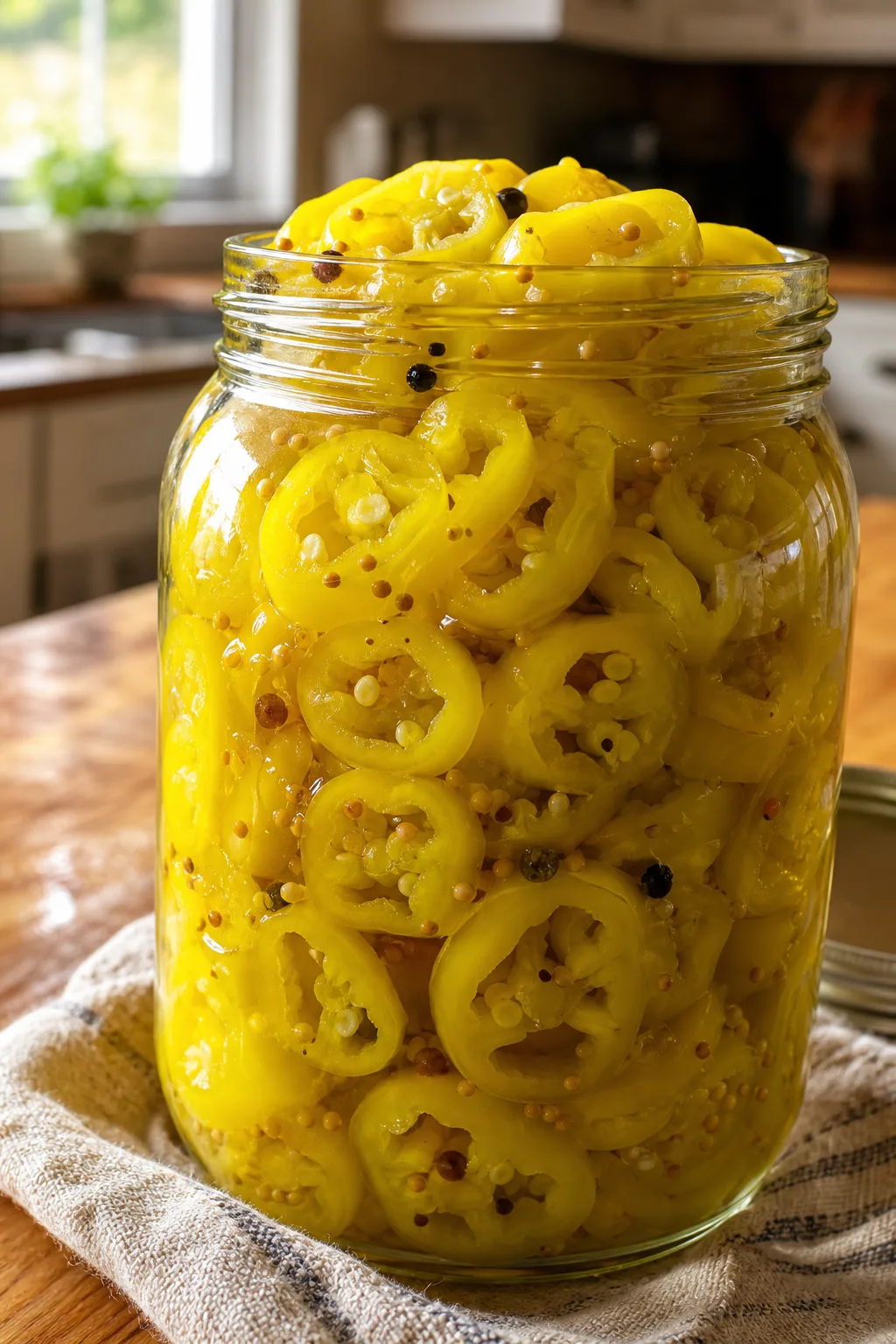
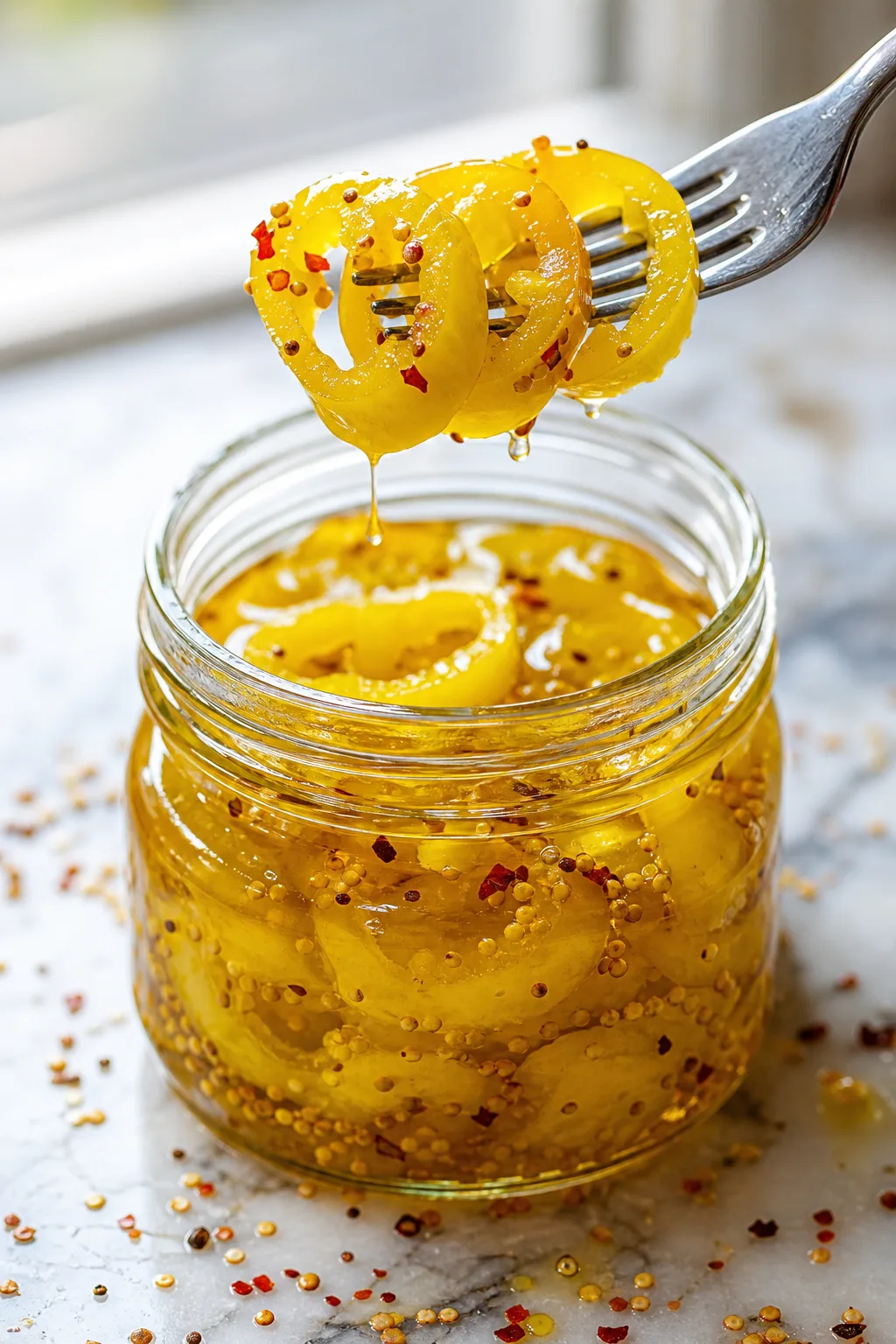
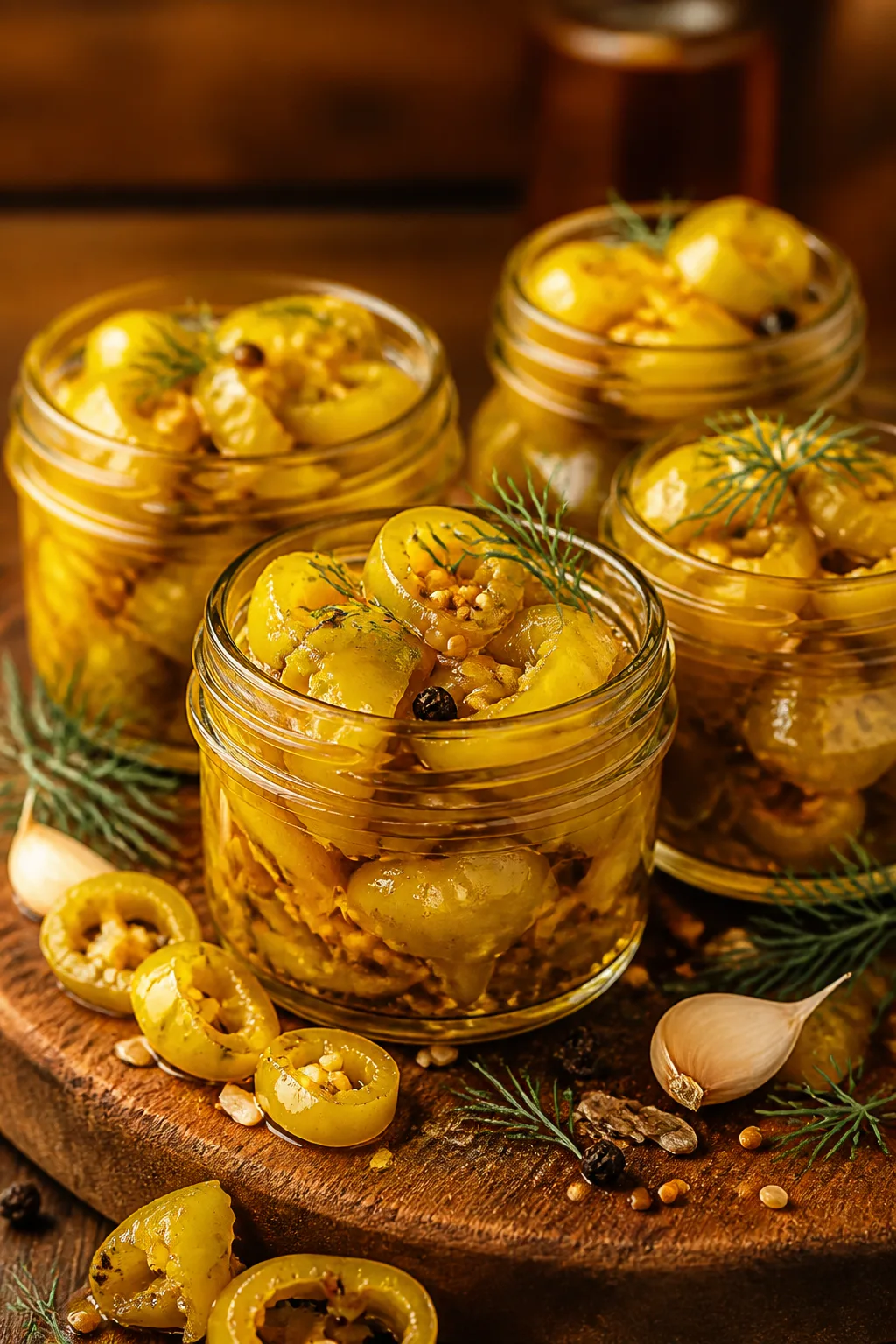
These pickled banana peppers are a quick and easy way to add a bright, tangy crunch to sandwiches and salads. The simple vinegar brine with a hint of spices makes them irresistibly fresh and perfect for anytime snacking.
Introduction
I first made these pickled banana peppers a few years ago after stumbling upon a farmer’s market overflowing with fresh peppers. I wanted a way to preserve their crispness and tang without anything too complicated or fancy. What I love about this recipe is how straightforward it is—the brine is simple but perfectly balanced, letting the natural flavor of the peppers shine through with just enough zing and spice. Over time, I tweaked the sugar and vinegar ratio a bit to get that perfect sweet-tart bite. The trick I learned early on was to slice the peppers thinly so the brine seeps in quickly, giving you crunchy, flavorful results in just a day or two. These pickled peppers have become a staple in my kitchen, great for topping sandwiches, adding to salads, or just eating straight from the jar. They’re bright, tangy, and a little addictive—I think you’ll love making them as much as I do!
What You'll Need
Approximately 4 cups pickled banana peppers, 4 servings
- 4 cups banana peppers, sliced into rings, fresh
- 2 cups white vinegar
- 1 cup water
- 2 tablespoons sugar
- 1 tablespoon kosher salt
- 2 cloves garlic, smashed
- 1 teaspoon black peppercorns
- 1 teaspoon dried oregano
- Optional: 1/2 teaspoon red pepper flakes for heat
How To Do It
Step 1
Start by washing your banana peppers thoroughly. Using a sharp knife, slice them into thin rings to ensure the brine penetrates quickly and evenly. Thin slices soak up flavor better, giving you that perfect tangy crunch. Avoid slicing too thick, which can slow down the pickling process and result in less flavorful peppers.
⏱ Time: 10 minutes
✓ Doneness: Peppers sliced uniformly thin, roughly 1/8 inch thick
Step 2
In a medium saucepan, combine the vinegar, water, sugar, kosher salt, garlic, peppercorns, oregano, and red pepper flakes if using. Bring this mixture to a gentle boil over medium heat, stirring occasionally to dissolve the sugar and salt completely. Heating the brine helps the spices release their flavors and ensures everything blends well.
⏱ Time: 7 minutes
✓ Doneness: Brine is boiling gently, sugar and salt fully dissolved
Step 3
While the brine heats, pack the sliced banana peppers tightly into a clean glass jar. Press them down gently to remove air pockets but avoid crushing them, which can affect texture. A tight pack helps the peppers stay submerged in the brine, ensuring even pickling.
⏱ Time: 5 minutes
✓ Doneness: Jar filled with peppers, no large air gaps visible
Step 4
Once the brine reaches a boil and all sugar and salt have dissolved, carefully pour it hot over the peppers in the jar. Make sure the peppers are fully submerged to prevent spoilage. The hot brine also helps soften the peppers slightly and jumpstarts the pickling process.
⏱ Time: 5 minutes
✓ Doneness: Peppers completely covered by brine, jar nearly full
Step 5
Seal the jar tightly with a lid and let it cool to room temperature on the counter. Cooling before refrigeration prevents condensation inside the jar, which could dilute the brine and affect shelf life. This step also helps flavors meld as the jar cools slowly.
⏱ Time: 15-20 minutes
✓ Doneness: Jar cooled to room temperature, no steam inside
Step 6
Once cooled, place the jar in the refrigerator. For best flavor, let the peppers pickle for at least 24 hours before eating. The longer they sit, the more intense the tang and spice become. You’ll notice the peppers soften slightly but retain a satisfying crunch.
⏱ Time: 24 hours minimum
✓ Doneness: Flavors melded, peppers slightly softened but still crunchy
Step 7
Before serving, taste a few peppers to check the seasoning. If they’re too tangy, a quick rinse can mellow them out. If you want more heat, add a pinch of red pepper flakes directly to your serving. These quick adjustments let you customize to your taste.
⏱ Time: 5 minutes
✓ Doneness: Flavor balanced to your liking after tasting
Step 8
Use these pickled banana peppers as a topping for sandwiches, burgers, or salads. They also make a great side for grilled meats or a tangy snack straight from the jar. Their bright acidity lifts heavier dishes and adds a fresh, crunchy bite.
⏱ Time: As needed
✓ Doneness: Peppers incorporated into dishes, adding vibrant color and tang
Step 9
After enjoying, keep the jar refrigerated and consume within 2-3 weeks for best quality. Always use a clean utensil to avoid contamination, which can shorten shelf life. Proper storage keeps your peppers fresh and flavorful longer.
⏱ Time: Ongoing
✓ Doneness: Peppers remain bright and crisp, no off smells or mold
Variations
Spicy Pickled Banana Peppers
Add more red pepper flakes or a sliced jalapeño to the brine for an extra kick. This variation gives your pickles a fiery edge that's perfect for spice lovers and adds a nice contrast to creamy sandwiches.
Note: Increase the red pepper flakes to 1 teaspoon and add jalapeño slices. Watch for slightly softer texture due to extra heat.
Sweet and Mild Pickled Banana Peppers
Double the sugar and omit the red pepper flakes for a sweeter, milder pickle that's great for kids or those avoiding heat. The extra sweetness balances the vinegar for a gentle tang.
Note: Use 4 tablespoons sugar and no red pepper flakes. Expect a sweeter, less tangy flavor with softer texture over time.
Herb-Infused Pickled Banana Peppers
Add fresh herbs like thyme or rosemary to the jar before pouring the brine. This gives the peppers a fragrant, earthy aroma that elevates their flavor and pairs well with grilled dishes.
Note: Use 1-2 sprigs fresh herbs. Infuse brine longer for maximum flavor absorption.
Garlic Lover’s Pickled Banana Peppers
Double the garlic cloves for a pungent, savory pickle. This version is perfect for garlic fans and adds a bold punch to any meal or snack.
Note: Use 4 smashed garlic cloves. The garlic flavor intensifies with longer pickling times.
Quick Refrigerator Pickled Banana Peppers
Skip heating the brine and simply mix vinegar, water, sugar, and salt cold, then pour over peppers. This speeds up prep but requires a longer resting time for flavor development.
Note: No heating step; allow 3-5 days in fridge for full flavor. Texture may be slightly crisper.
Pro Tips
Slice the peppers thinly for faster, more even pickling.
Thin slices increase the surface area exposed to the brine, allowing the flavors to penetrate quickly and thoroughly. Thick slices take longer to pickle and can result in uneven flavor and texture.
Use a clean, sterilized jar to store your pickles.
Sterilizing the jar reduces the risk of contamination by unwanted bacteria or mold. This helps extend shelf life and ensures your pickles stay fresh and safe to eat.
Let the brine cool slightly before sealing the jar.
Pouring hot brine over the peppers softens them just enough, but sealing the jar while too hot can cause condensation, diluting the brine and potentially affecting preservation.
Adjust sugar and vinegar ratios to suit your taste.
Everyone’s palate is different. More sugar will mellow the acidity and add sweetness, while more vinegar increases tang. Experimenting helps you find your perfect balance.
Add garlic and herbs for extra flavor complexity.
Simple vinegar and peppers can be tasty, but spices like garlic and oregano add layers of flavor that make your pickles more interesting and aromatic.
Store pickles in the fridge for best texture and flavor.
Refrigeration slows down fermentation and spoilage, preserving the crispness of the peppers and the bright flavor of the brine.
Use a non-reactive pot for heating the brine.
Stainless steel or enameled pots prevent metallic flavors that can occur with aluminum or cast iron, ensuring a clean-tasting pickle brine.
Common Mistakes to Avoid
Using old or soft peppers
Why it happens Sometimes cooks use peppers that have lost firmness, thinking pickling will fix texture issues.
Fix Always select firm, fresh peppers. Soft or bruised peppers will pickle into mushy textures, so discard any with spots or limpness before slicing.
Not dissolving sugar and salt fully
Why it happens Rushing the brine heating step or not stirring enough leaves undissolved grains.
Fix Heat the brine gently until sugar and salt dissolve completely. Undissolved crystals can cause uneven flavor and texture.
Skipping sterilization of jars
Why it happens Some assume refrigeration alone is enough for safety.
Fix Always sterilize jars by boiling or oven-heating to prevent contamination and prolong shelf life.
Not submerging peppers fully in brine
Why it happens Packing peppers loosely or pouring insufficient brine.
Fix Press peppers gently into the jar and pour enough brine to cover completely to avoid spoilage and ensure even pickling.
Sealing jar while brine is too hot
Why it happens Eager to finish, cooks sometimes seal immediately after pouring hot brine.
Fix Let jar cool to room temperature before sealing to avoid condensation that dilutes brine and affects preservation.
Nutrition
Per Serving:
Nutritional values are estimates and may vary based on specific ingredients used.
Storage & Tips
Room Temperature
Pickled banana peppers can be kept at room temperature only briefly while cooling (up to 2 hours). After that, they should be refrigerated to prevent spoilage. Always cover the jar tightly to avoid contamination.
Refrigerator
Store pickled banana peppers in an airtight jar in the fridge for up to 3 weeks. Flavor intensifies over time, but they remain crunchy and delicious. Serve cold or at room temperature, no reheating needed.
Freezer
Freezing pickled banana peppers is not recommended as it affects their texture, making them mushy upon thawing. For best quality, consume refrigerated pickles within 3 weeks.
Reheating
Pickled banana peppers are typically eaten cold or at room temperature and do not require reheating. If desired, add directly to hot dishes at the end of cooking for flavor without cooking the peppers themselves.
Make Ahead
You can slice the peppers and prepare the brine 1-2 days ahead, storing peppers separately in the fridge. Assemble and pour hot brine over peppers on the day you plan to serve, then refrigerate for at least 24 hours before eating.
FAQ
Can I use a different type of vinegar for pickling?
You can substitute white vinegar with apple cider vinegar or rice vinegar, but keep the acidity at 5% to ensure safety. Different vinegars will change the flavor profile—apple cider adds fruitiness, rice vinegar is milder. Avoid using balsamic or flavored vinegars as they can darken the peppers and alter taste.
How long do homemade pickled banana peppers last?
When stored properly in the refrigerator in an airtight jar, pickled banana peppers last about 3 weeks. Always use a clean utensil to prevent contamination. If you notice any mold, off smells, or sliminess, discard immediately.
Why are my pickled peppers soft and mushy?
Soft peppers often result from using overripe or bruised peppers, or from overcooking the brine or peppers. To keep them crisp, use fresh, firm peppers and pour hot (not boiling) brine over thinly sliced peppers. Refrigerate promptly after cooling.
Can I omit sugar from the recipe?
You can omit sugar, but it will make the pickles more sour and less balanced. Sugar mellows the acidity and enhances flavor complexity. If avoiding sugar, consider adding a small amount of honey or a sugar substitute, but results may vary.
Do I need to sterilize jars for refrigerator pickles?
While refrigeration slows bacterial growth, sterilizing jars is still recommended to reduce contamination risk and extend shelf life. You can boil jars and lids or run them through a hot dishwasher cycle before use.
Can I add other vegetables to this pickling brine?
Yes, you can pickle other vegetables like carrots, cucumbers, or onions using the same brine. Adjust slicing thickness and pickling time accordingly, as some vegetables may require longer to develop flavor.
How soon can I eat the pickled peppers after making them?
You can eat them after 24 hours in the fridge, but the flavor improves significantly after 2-3 days. The peppers soften slightly and the tang deepens, making them more enjoyable.
Can I make these pickled banana peppers shelf-stable?
To make shelf-stable pickles, you need to process jars in a hot water bath canner following safe canning guidelines. This recipe is designed for refrigerator pickling only and isn’t tested for shelf stability.
Final Thoughts
I hope you enjoy making and eating these tangy pickled banana peppers as much as I do! Don’t forget to share your pics and tweaks—I’d love to hear how they turn out.