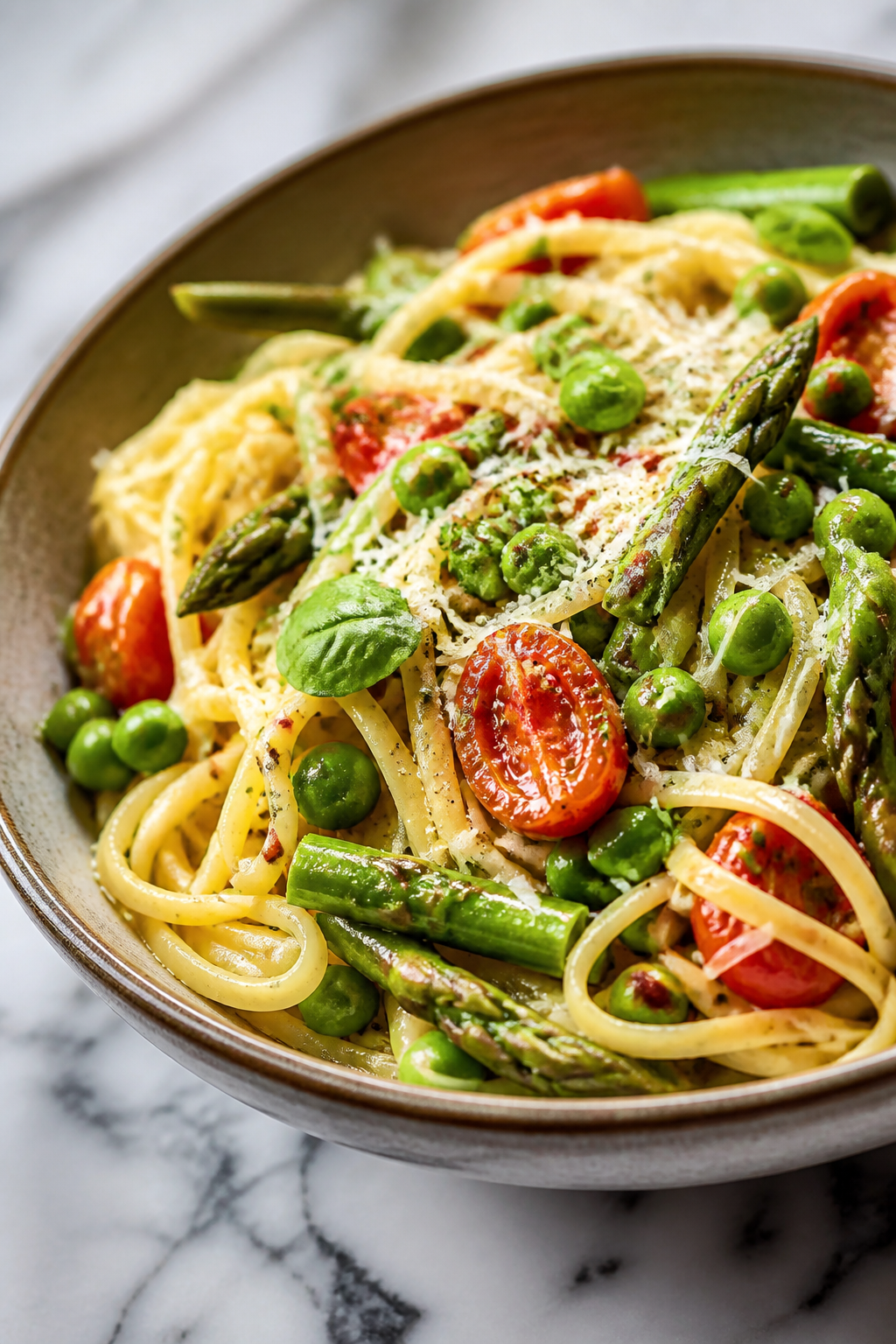
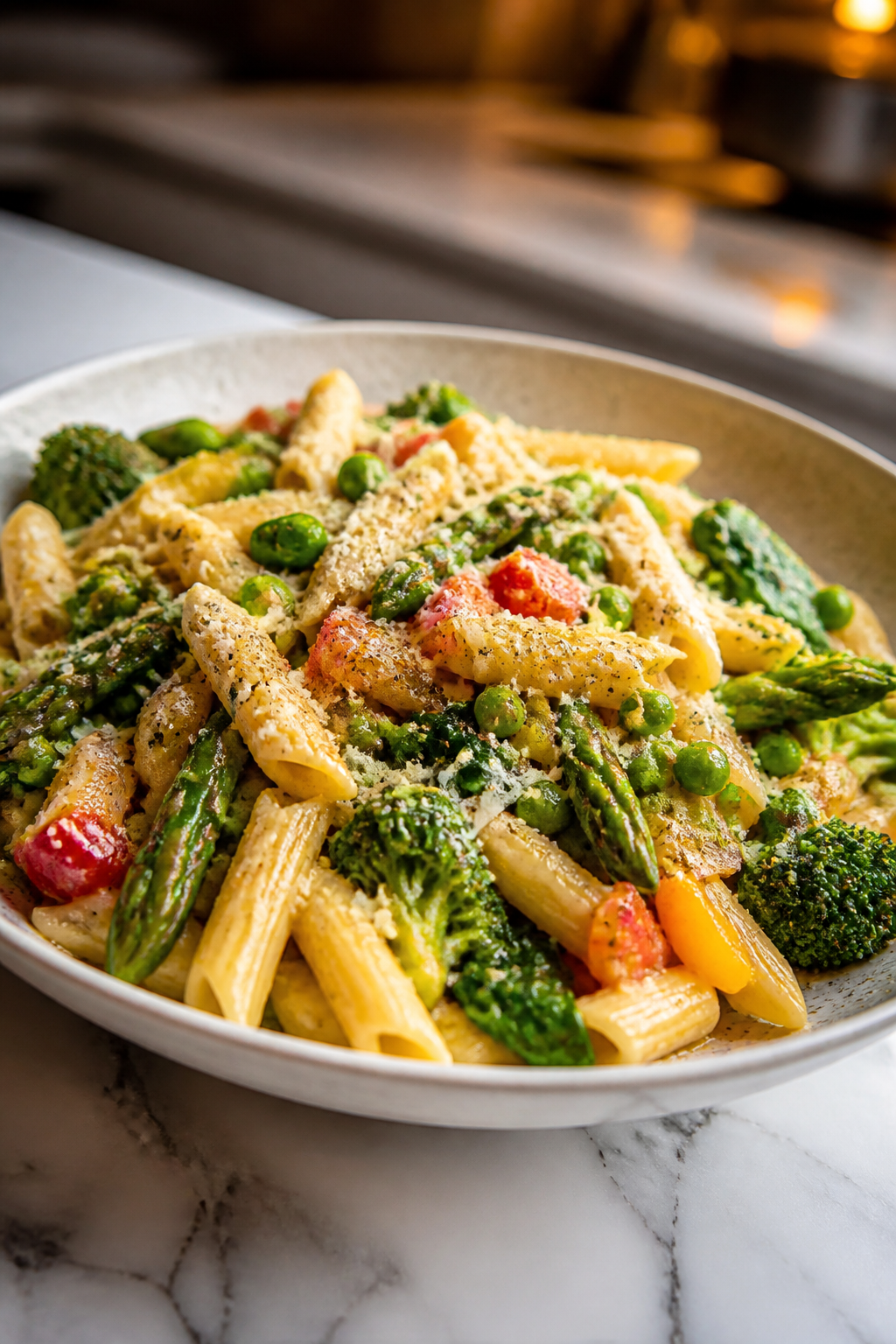
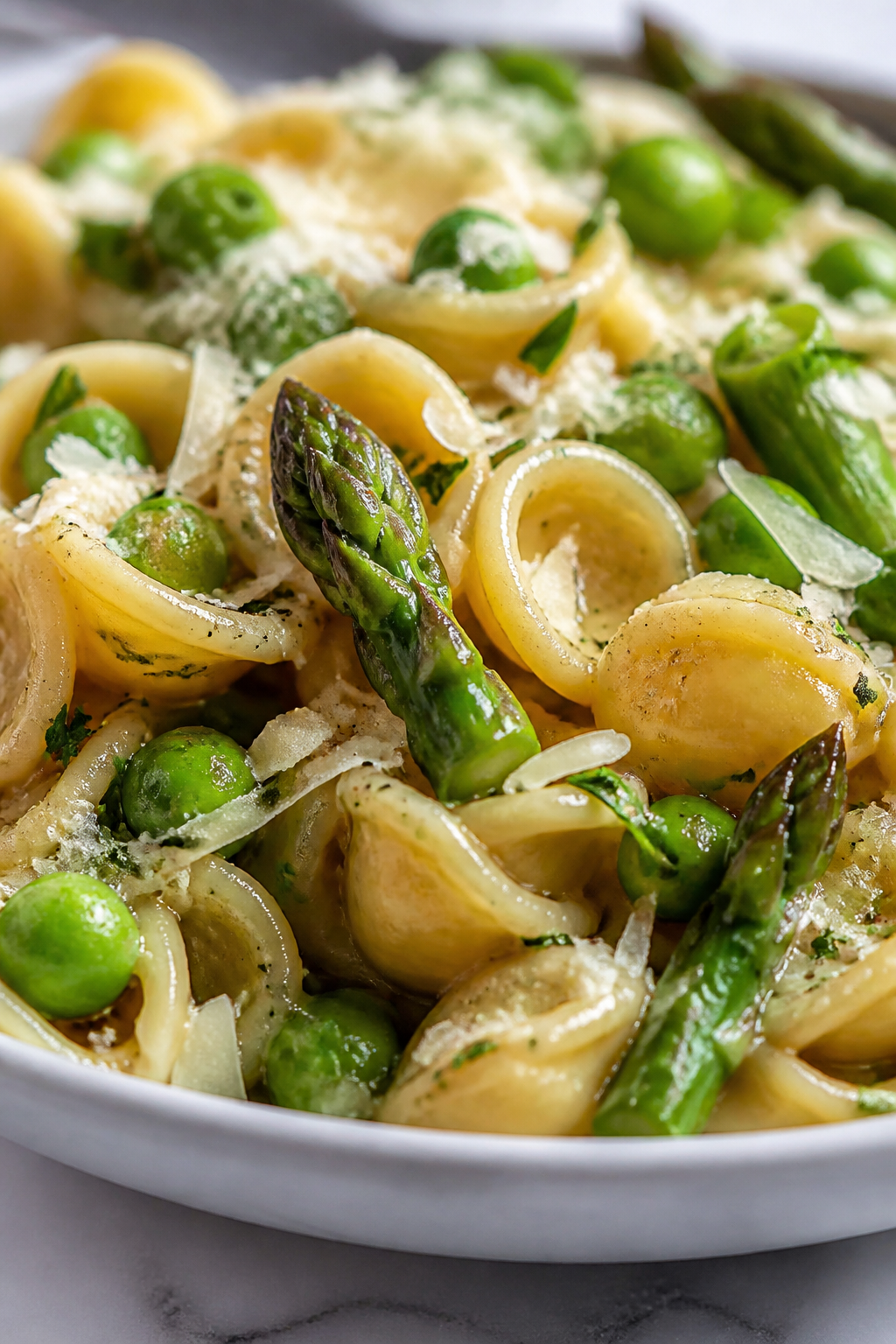
This fresh, colorful pasta is packed with spring veggies and topped with Parmesan. It’s a one-pot wonder that saves time and cleanup—ideal for busy weeknights when you want something tasty but simple.
Introduction
I first stumbled upon this one-pot spring veggie pasta on a hectic weeknight when I was craving something fresh but didn’t want to spend ages cooking or washing up. The idea of cooking pasta and veggies all together in one pot sounded almost too good to be true, but I gave it a shot—and it quickly became a family favorite. What makes this version stand out is how the pasta soaks up the vegetable broth and the subtle sweetness of fresh spring veggies like asparagus and peas, all finished with a generous sprinkle of Parmesan for that creamy, savory touch. I also love that you can toss everything into a single pot and have dinner ready in about 30 minutes, which is a lifesaver on busy nights. The trick I learned is to add the veggies at just the right time so they stay tender and vibrant, not mushy. When it’s done, you get a colorful, flavorful dish that feels light yet satisfying, perfect for spring or anytime you want a quick, wholesome meal. Honestly, I’ve tried similar recipes before, but this one nails the balance of freshness, texture, and ease every time.
How To Do It
Step 1
Start by heating the olive oil in a large, deep skillet or pot over medium heat. Add the diced onion and sauté for about 3-4 minutes until it becomes translucent and fragrant. This step is important because gently cooking the onions releases their natural sweetness, which forms a flavorful base for the pasta. Avoid browning them too much as this can add a bitter note. Stir occasionally so they cook evenly and don't stick or burn at the bottom.
⏱ Time: 4 minutes
✓ Doneness: Onions are soft, translucent, and smell sweet but not browned
Step 2
Add the minced garlic to the pot and cook for another 30 seconds until fragrant. Garlic cooks quickly and can burn easily, so keep it moving in the pan and watch closely. This step adds a lovely aromatic layer to the dish that will infuse the broth and pasta with flavor.
⏱ Time: 30 seconds
✓ Doneness: Garlic is fragrant but not browned or bitter
Step 3
Pour in the vegetable broth and water, then add the uncooked penne pasta. Stir well to make sure the pasta is mostly submerged. This liquid will cook the pasta and veggies simultaneously, so it’s important to have enough broth to hydrate everything properly. Using broth instead of just water adds depth of flavor to the dish.
⏱ Time: 2 minutes
✓ Doneness: Pasta is evenly distributed and mostly covered by liquid
Step 4
Bring the mixture to a boil over medium-high heat. Once boiling, reduce the heat to a simmer and let it cook uncovered. Stir every few minutes to prevent the pasta from sticking to the bottom. This gentle simmer allows the pasta to absorb the broth gradually, resulting in perfectly cooked noodles with great flavor. Rushing this step or covering the pot can cause uneven cooking or mushy pasta.
⏱ Time: 10 minutes
✓ Doneness: Pasta is tender but still has a slight bite (al dente)
Step 5
After 10 minutes, add the asparagus pieces, peas, and cherry tomatoes to the pot. These veggies cook quickly and adding them later prevents overcooking, preserving their bright color and fresh taste. Stir them in gently so they’re evenly distributed but not crushed.
⏱ Time: 1 minute
✓ Doneness: Veggies are mixed in and still vibrant in color
Step 6
Continue simmering the pasta and veggies for another 5-7 minutes, stirring occasionally. This allows the vegetables to cook through but remain tender-crisp, adding a lovely texture contrast to the soft pasta. Keep an eye on the liquid level and add a splash more broth or water if it looks too dry before the pasta is done.
⏱ Time: 7 minutes
✓ Doneness: Asparagus and peas are tender but not mushy; tomatoes softened
Step 7
Once the pasta and veggies are cooked to your liking, remove the pot from heat. Stir in the freshly grated Parmesan cheese and chopped basil. The cheese will melt into the warm pasta, creating a silky, savory coating, while the basil adds a fresh, herbaceous note. Stirring off the heat prevents the cheese from clumping or becoming grainy.
⏱ Time: 2 minutes
✓ Doneness: Cheese is melted and coats the pasta evenly; basil is vibrant
Step 8
Taste and season with salt and freshly ground black pepper to your preference. Since the broth and cheese add saltiness, taste first before adding more. Proper seasoning brings out all the flavors and balances the dish perfectly.
⏱ Time: 1 minute
✓ Doneness: Balanced flavor with no overpowering saltiness or blandness
Step 9
Serve the pasta hot, garnished with extra Parmesan or basil if you like. This dish is best enjoyed fresh for the vibrant flavors and perfect pasta texture. Leftovers can be reheated gently but may lose some of that fresh veggie snap.
⏱ Time: Immediate
✓ Doneness: Pasta looks glossy and veggies maintain their color and shape
Variations
Add Grilled Chicken for Extra Protein
Toss in some grilled chicken strips or cubes to make this pasta a heartier meal. The smoky char from the chicken pairs wonderfully with the fresh veggies and Parmesan, making it a balanced dinner option for meat-lovers.
Note: Grill chicken separately and add just before serving to keep textures distinct and prevent overcooking.
Make It Vegan with Nutritional Yeast
Skip the Parmesan and sprinkle nutritional yeast for a cheesy flavor without dairy. Use vegan broth and olive oil to keep the dish plant-based and still packed with flavor and creaminess.
Note: Add nutritional yeast after removing from heat to preserve its flavor and avoid bitterness.
Swap Penne for Whole Wheat or Gluten-Free Pasta
Use whole wheat pasta for extra fiber or gluten-free pasta if needed. Cooking times may vary, so adjust simmering accordingly and watch the texture closely to avoid mushiness.
Note: Gluten-free pasta can be more delicate; stir gently and test for doneness frequently.
Add a Spicy Kick with Red Pepper Flakes
Sprinkle in some red pepper flakes when sautéing onions for a subtle heat that contrasts nicely with the creamy Parmesan. Perfect if you like a little spice without overpowering the fresh veggie flavors.
Note: Add chili flakes early in the cooking process to infuse the oil with spice flavor.
Use Seasonal Veggies Like Zucchini or Peppers
Swap or add in zucchini, bell peppers, or baby spinach depending on what’s fresh. This keeps the recipe flexible and lets you enjoy different flavors and textures throughout the year.
Note: Adjust cooking times for added veggies to maintain their texture and prevent overcooking.
Pro Tips
Don’t overfill your pot with liquid; just enough broth to cover the pasta ensures it cooks evenly without being soupy.
Too much liquid dilutes flavor and prevents the pasta from absorbing the broth properly, resulting in bland noodles. The right amount allows starches to thicken the sauce naturally.
Add delicate vegetables like peas and tomatoes in the last few minutes to keep them bright and tender.
Overcooking these veggies makes them mushy and dulls their vibrant colors. Adding them late preserves texture and freshness, enhancing the overall dish.
Use a wide, shallow pot for better evaporation and even cooking when simmering pasta and broth.
A shallow pot allows excess liquid to evaporate gradually, concentrating flavors and preventing the pasta from boiling in too much water.
Stir frequently but gently during cooking to prevent pasta from sticking and veggies from breaking apart.
Regular stirring ensures even cooking and prevents clumps or burnt bits at the bottom. Gentle stirring preserves vegetable shape and integrity.
Reserve a little pasta water before adding veggies to adjust consistency if the sauce gets too thick.
Pasta water contains starch that can loosen the sauce while maintaining creaminess, perfect for adjusting texture without watering down flavor.
Grate Parmesan fresh using a fine microplane for better melting and flavor distribution.
Freshly grated cheese melts more smoothly and evenly than pre-grated varieties, resulting in a creamier finish without clumps.
Serve immediately for best texture; leftovers can lose the crispness of fresh vegetables.
Pasta absorbs sauce over time and vegetables soften further when refrigerated, so serving fresh preserves the ideal balance of textures.
Common Mistakes to Avoid
Adding all vegetables at once at the beginning
Why it happens Many assume all ingredients should cook together to save time, but this overlooks varying cooking times for different veggies.
Fix Add sturdier vegetables like asparagus later in cooking and delicate ones like tomatoes last to keep them from overcooking and becoming mushy.
Skipping stirring during simmering
Why it happens People often underestimate how much pasta can stick when cooking in minimal liquid.
Fix Stir every few minutes gently to prevent sticking and to distribute heat and veggies evenly for consistent cooking.
Using water instead of broth
Why it happens Water is convenient but doesn’t add flavor.
Fix Always use vegetable broth for a richer, more savory pasta base that eliminates the need for heavy sauces.
Adding Parmesan cheese while the pot is still on heat
Why it happens Some think melting cheese over heat is faster without realizing it can cause clumping.
Fix Remove the pot from heat before stirring in cheese to ensure a smooth, creamy texture.
Overcooking pasta resulting in mushy noodles
Why it happens Not monitoring cooking time or temperature closely enough.
Fix Check pasta a minute or two before package instructions and remove from heat when al dente, as it will continue cooking slightly off heat.
Nutrition
Per Serving:
Nutritional values are estimates and may vary based on specific ingredients used.
Storage & Tips
Room Temperature
This pasta can be safely kept at room temperature for up to 2 hours if covered loosely. Beyond that, bacteria growth increases, so refrigerate promptly to keep it safe and fresh.
Refrigerator
Store leftovers in an airtight container for up to 3 days. The pasta will absorb more sauce and the veggies soften over time, so reheat gently and consider adding a splash of broth or water to refresh the texture.
Freezer
Freeze the pasta in a freezer-safe container or bag for up to 2 months. Wrap tightly to prevent freezer burn. Thaw overnight in the fridge before reheating to preserve texture as much as possible.
Reheating
Reheat gently on the stovetop over low heat with a splash of broth or water to loosen the sauce. Alternatively, microwave covered in short intervals, stirring between. Avoid high heat which can dry out the pasta and make veggies mushy.
Make Ahead
You can prep the broth, chop veggies, and measure ingredients a day ahead, storing them separately. Assemble and cook the pasta just before serving for the freshest results.
FAQ
Can I use other types of pasta for this recipe?
Yes, you can substitute penne with other short pasta shapes like rigatoni or fusilli. Just keep in mind that cooking times may vary slightly. Avoid very thin pastas like angel hair, which can overcook quickly in this method.
What if I don’t have vegetable broth on hand?
You can use water, but the dish won’t be as flavorful. To compensate, add extra seasoning like garlic, herbs, or a splash of soy sauce. Homemade or store-bought broth is best for richer taste.
How do I keep the vegetables from getting mushy?
Add vegetables that cook quickly, like peas and tomatoes, towards the end of the pasta cooking time. Staggering cooking times for different veggies ensures they stay tender-crisp and vibrant.
Can I make this recipe vegan?
Absolutely! Replace Parmesan with nutritional yeast or a vegan cheese alternative. Just check that your vegetable broth is vegan-friendly to keep it fully plant-based.
Is it okay to prepare this dish in advance?
You can prep ingredients ahead, but it’s best to cook the pasta fresh to avoid mushiness. If you must store leftovers, keep them refrigerated and reheat gently to maintain texture.
Why does the pasta sometimes stick to the pot?
Cooking pasta in minimal liquid can cause sticking if not stirred frequently. Stirring every few minutes prevents clumping and ensures even cooking.
Can I add protein to this meal?
Yes! Grilled chicken, shrimp, or tofu are great additions. Cook them separately and stir in at the end to keep their texture intact.
What’s the best way to reheat leftovers?
Reheat on the stovetop over low heat with a splash of broth or water to loosen the sauce, stirring gently. Microwaving works too but do it in short bursts to avoid drying out the pasta.
Final Thoughts
Give this one-pot spring veggie pasta a try—you’ll love how fresh, easy, and flavorful it is. Don’t forget to share how it turns out!