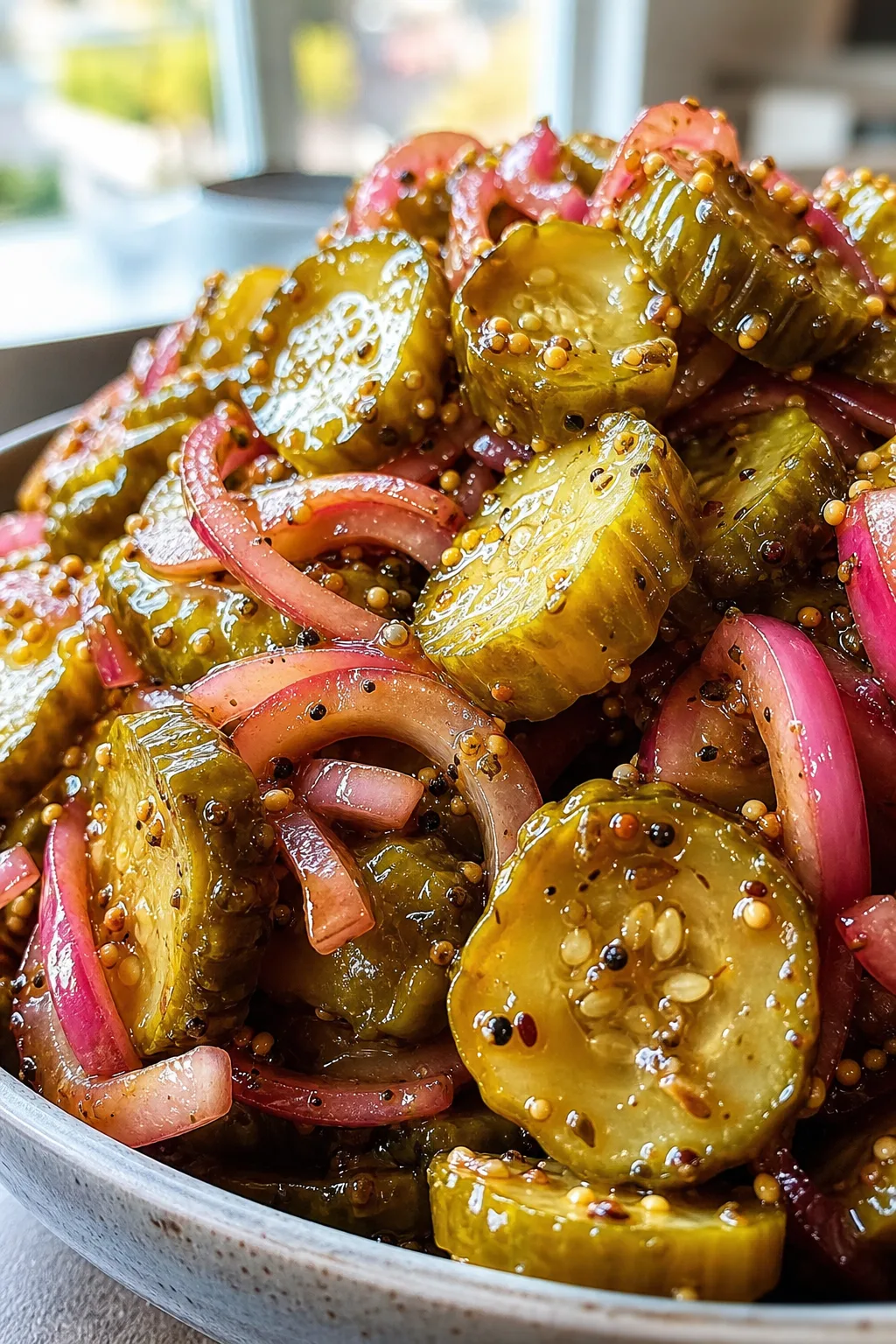
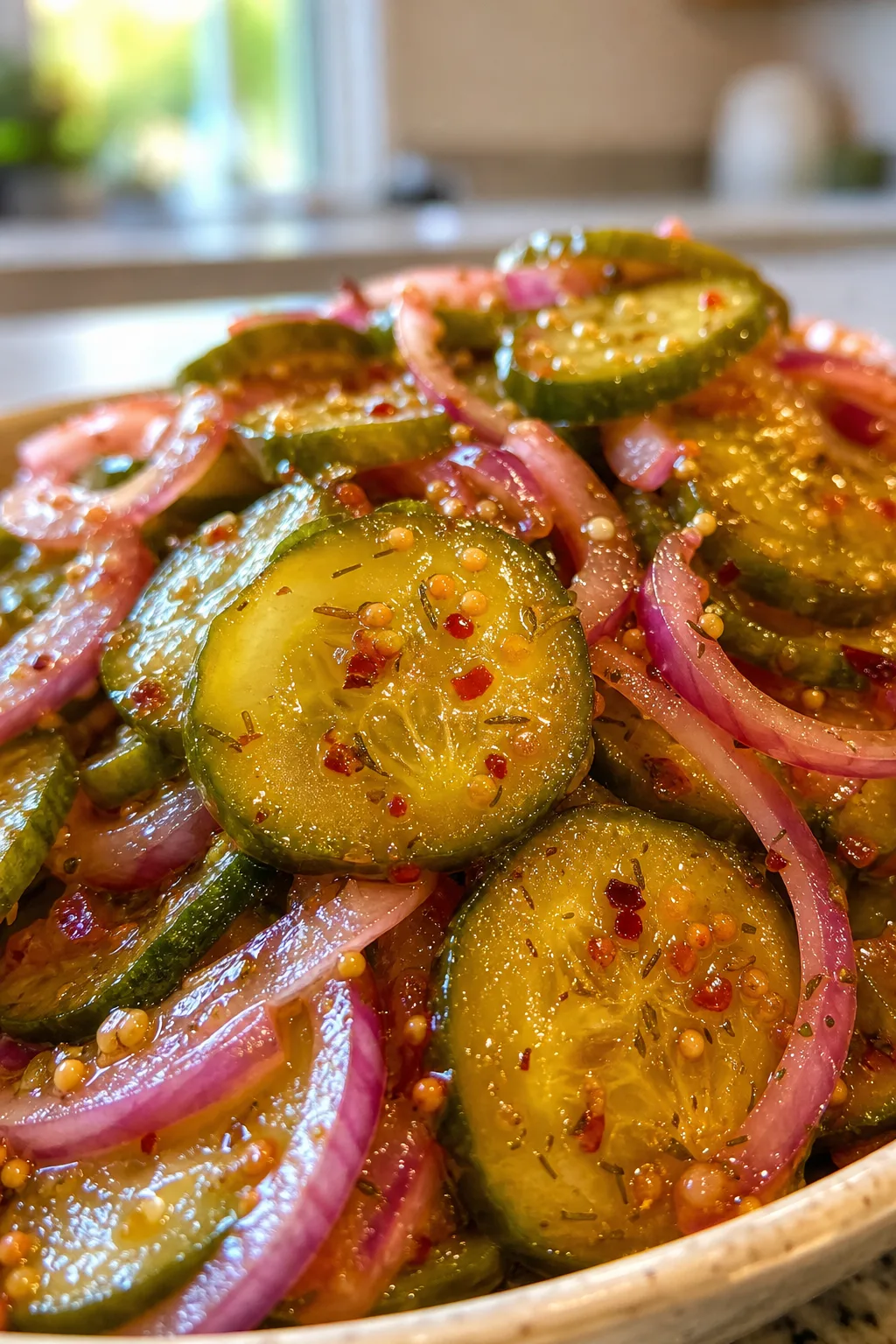
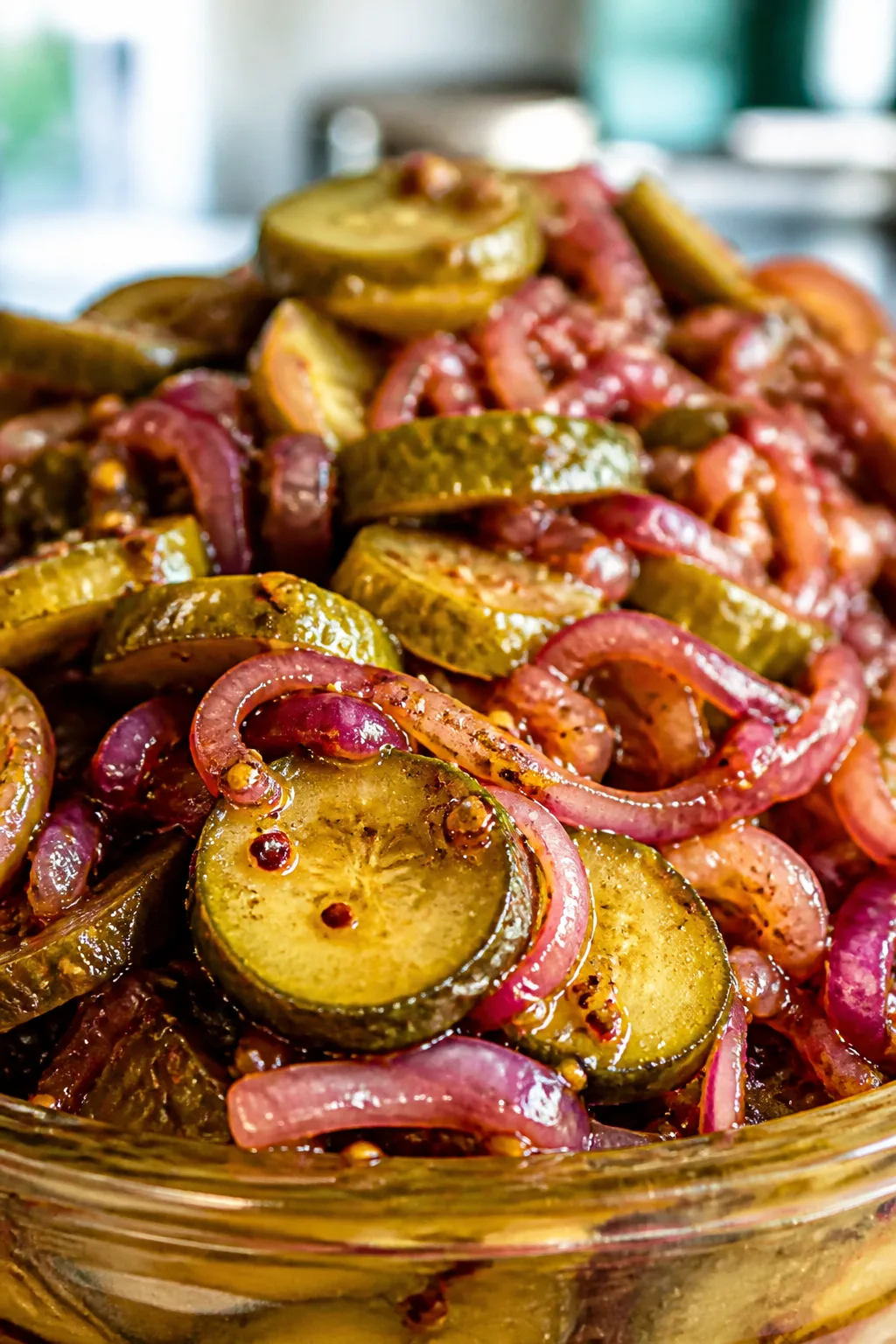
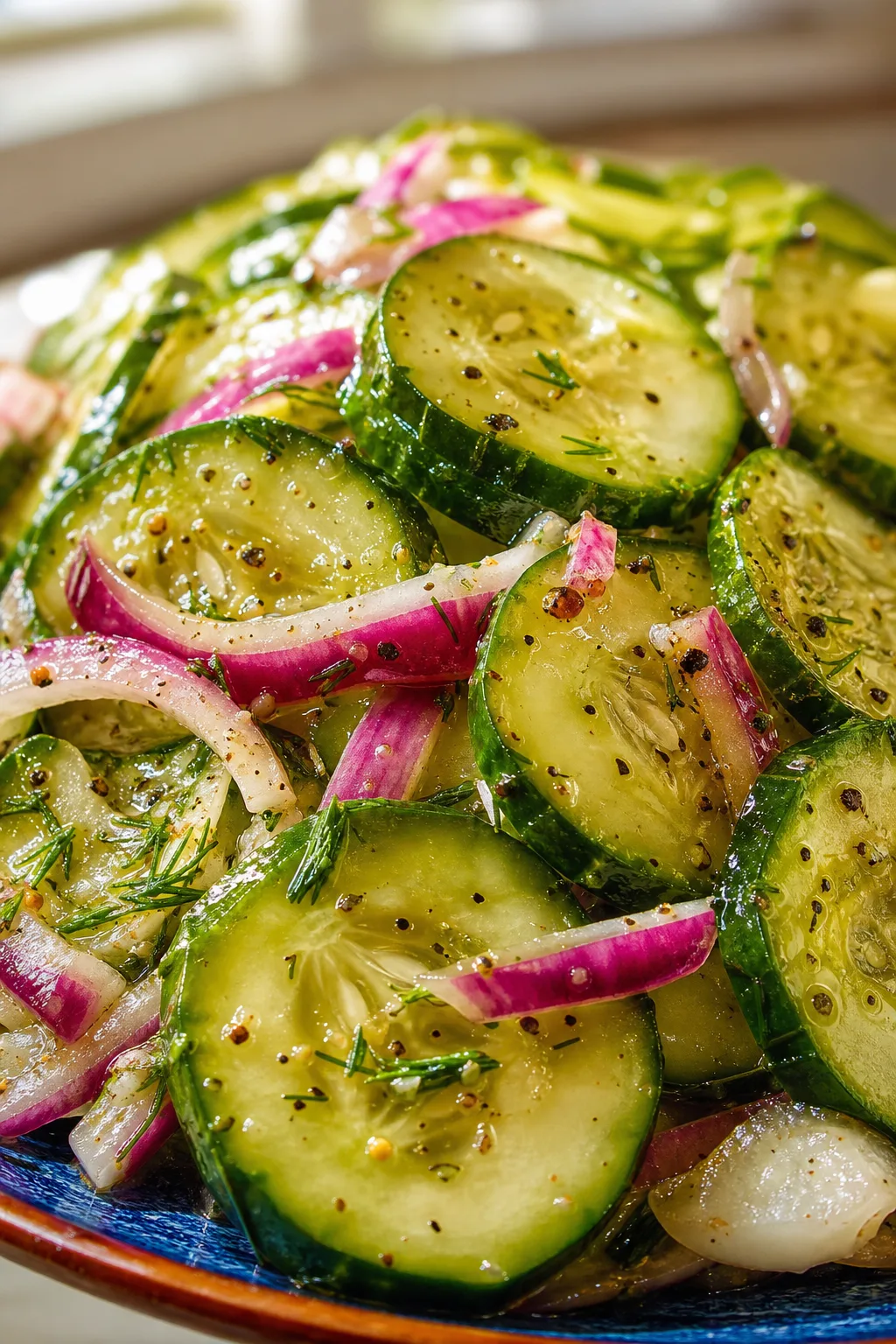
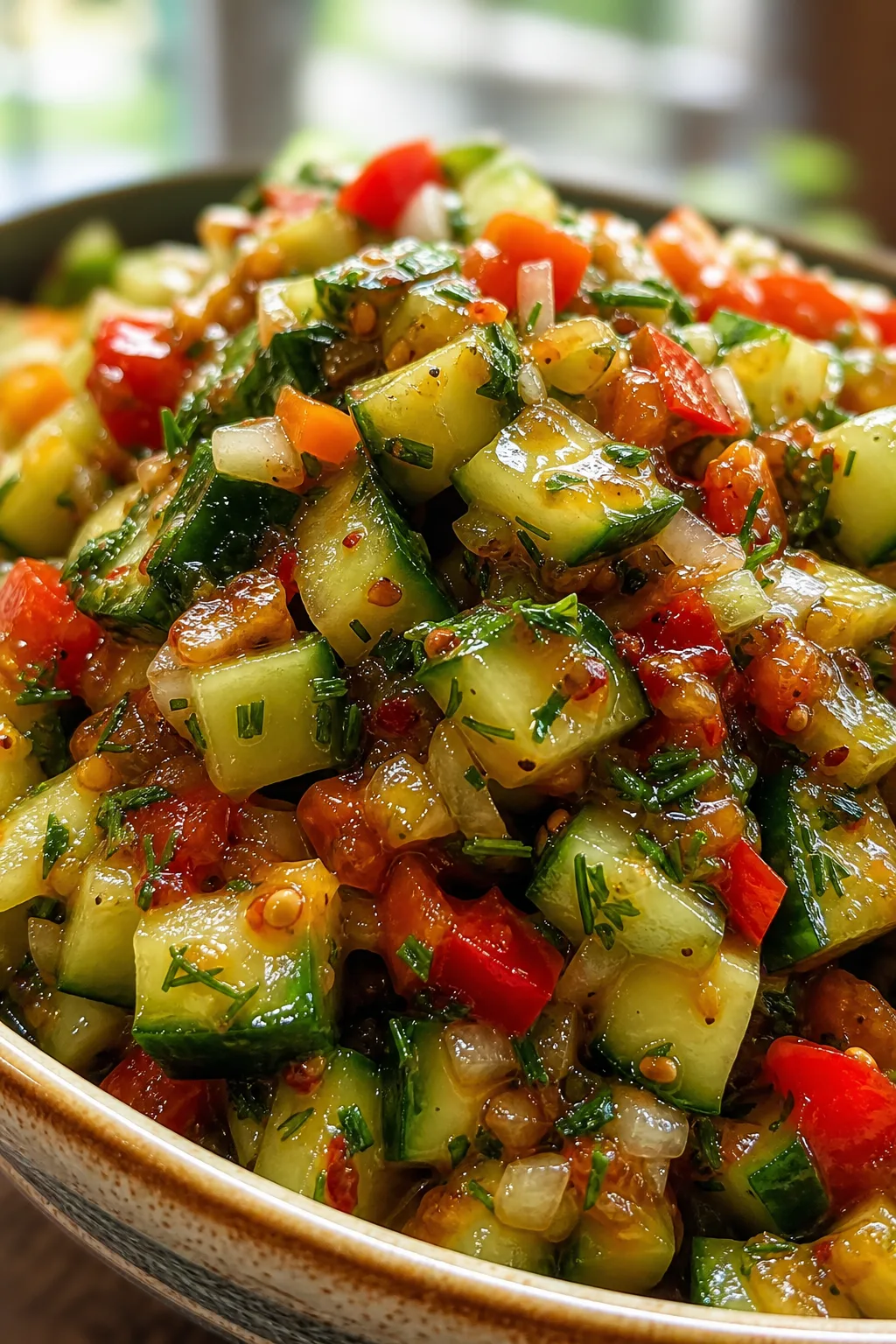
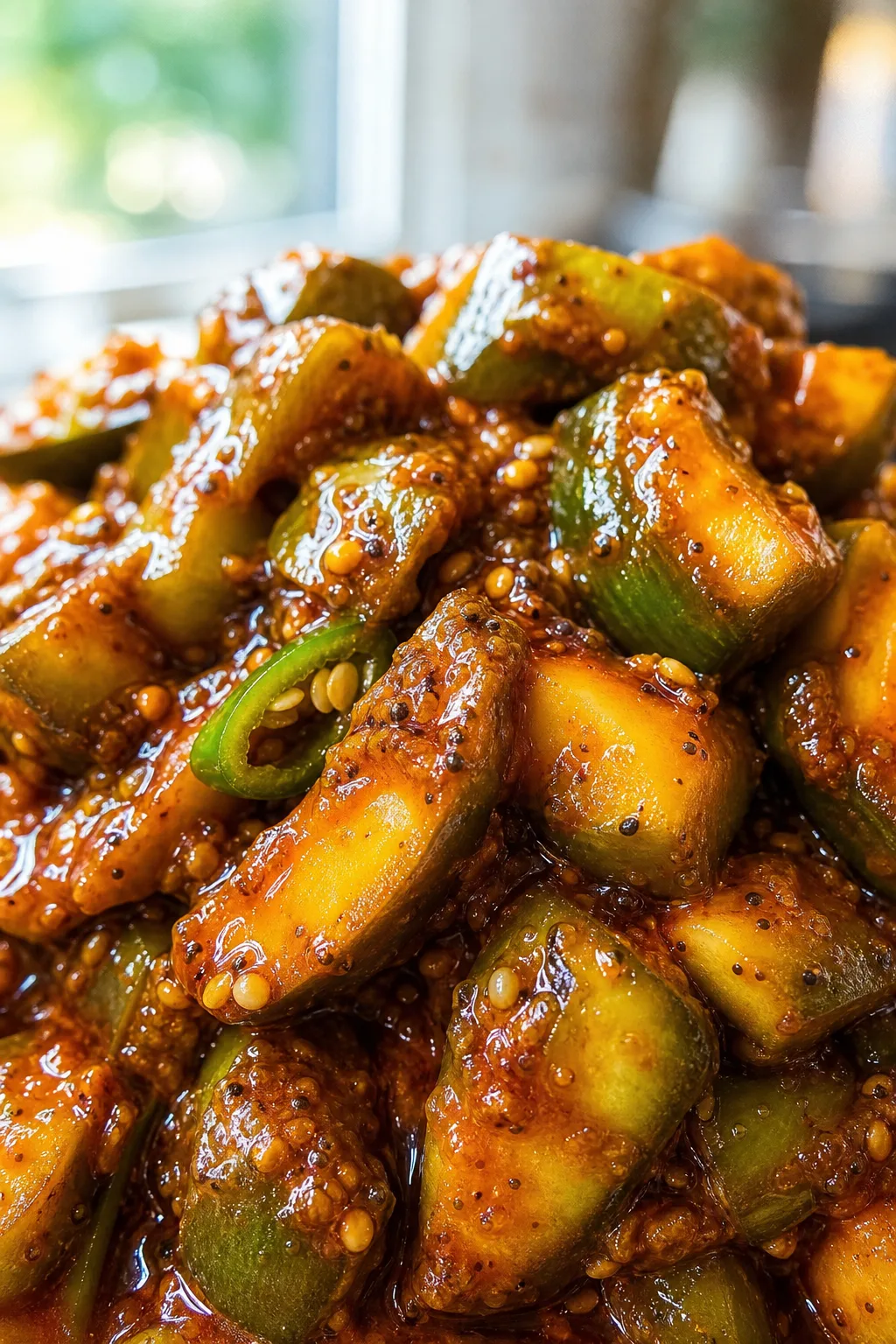
These refrigerator pickles with onions are a fresh, crunchy treat packed with tangy sweetness. The simple brine is the magic here, balancing flavors perfectly. Great for snacking or jazzing up sandwiches anytime!
Introduction
I stumbled upon this refrigerator pickle recipe a few summers ago when I wanted a quick way to preserve cucumbers without the fuss of traditional canning. What I love most about these pickles is how fast they come together and how perfectly balanced the brine tastes—sweet, sour, and just the right amount of tang. Adding thinly sliced onions not only gives a lovely bite but also a subtle sweetness that complements the cucumbers beautifully. I remember the first batch I made was a bit too salty because I rushed the salt measurement, but after a few tweaks, I nailed the perfect brine ratio. The trick I learned is to slice the cucumbers and onions thinly and evenly so they soak up the flavors quickly. These pickles are crisp, refreshing, and ideal for topping sandwiches, serving alongside grilled meats, or just munching on as a snack. Plus, they stay fresh in the fridge for weeks, making them a staple in my kitchen all summer long.
What You'll Need
Approximately 6 cups, 6 servings
- 3 cups thinly sliced cucumbers (about 2 medium cucumbers)
- 1 medium red onion, thinly sliced
- 1 cup white vinegar
- 1 cup water
- 3 tablespoons granulated sugar
- 1 tablespoon kosher salt
- 1 teaspoon mustard seeds
- 1/2 teaspoon black peppercorns
- 1/2 teaspoon crushed red pepper flakes (optional)
How To Do It
Step 1
Start by washing and thinly slicing the cucumbers and red onion. The key here is to slice them evenly so they pickle uniformly. Using a sharp knife or mandoline works great. Thin slices absorb the brine faster, giving you that crisp tang in less time. Avoid thick chunks because they won’t pickle as well and might stay a bit raw. Once sliced, place them in a large bowl or directly into a clean quart-sized jar if you prefer. This step sets the stage for quick, tasty pickles.
⏱ Time: 10 minutes
✓ Doneness: Evenly thin, crisp slices with no bruising or crushing
Step 2
In a small saucepan, combine the vinegar, water, sugar, kosher salt, mustard seeds, black peppercorns, and crushed red pepper flakes if using. Heat over medium heat, stirring occasionally until the sugar and salt fully dissolve. This creates your brine, which balances the sweet and sour flavors. Heating helps the spices release their aromas, enhancing the pickle’s depth. Don’t let it boil vigorously – just a gentle simmer is perfect. Once dissolved, remove from heat and let it cool slightly before pouring over the vegetables to avoid wilting them.
⏱ Time: 5 minutes
✓ Doneness: Clear brine with no grainy sugar or salt, aromatic spice scent
Step 3
Pour the warm brine over the sliced cucumbers and onions, making sure they’re fully submerged. If using a jar, press down gently with a spoon to pack everything in. This ensures all slices soak evenly. Leaving some space at the top is important for expansion. Cover tightly with a lid or plastic wrap. This step is crucial because full submersion prevents spoilage and promotes even pickling. If some slices float, use a clean small plate or weight to keep them under the brine.
⏱ Time: 5 minutes
✓ Doneness: All slices fully covered in brine, no air pockets visible
Step 4
Place the jar or bowl in the refrigerator and let it chill for at least 24 hours before tasting. The longer it sits, the more the flavors develop and the crunch intensifies. I usually wait 2-3 days for the best balance of tangy and sweet. Avoid rushing this step because the cucumbers need time to absorb the brine and soften slightly while staying crisp. This resting period transforms the vegetables into flavorful pickles that brighten any dish.
⏱ Time: 24-72 hours
✓ Doneness: Pickles taste tangy, slightly sweet, and are crisp to bite
Step 5
Before serving, give the pickles a quick stir or shake if in a jar to redistribute the spices and brine. This wakes up the flavors and ensures each bite is deliciously seasoned. Use a fork or tongs to remove pickles to avoid bruising. These pickles are fantastic on sandwiches, burgers, salads, or just as a crunchy snack. Keep them refrigerated and enjoy within 3 weeks for optimal freshness and texture.
⏱ Time: 2 minutes
✓ Doneness: Evenly coated pickles with visible spices and bright colors
Step 6
If you want to amp up the flavor, try adding fresh dill or garlic cloves to the jar before pouring the brine. Dill adds a lovely herbaceous note, while garlic gives a punchy depth. Just crush a couple of garlic cloves lightly to release their aroma. These additions elevate the pickles to a more complex flavor profile and make them feel homemade and special.
⏱ Time: 2 minutes
✓ Doneness: Aromatic hints of dill and garlic blend with the pickles
Step 7
For a spicy kick, increase the crushed red pepper flakes or add a few thin slices of fresh jalapeño to the jar. The spice level builds over time, so start with less if you’re unsure. This variation works great if you like your pickles with a little heat to balance the sweetness. Just remember, spicy pickles pair wonderfully with rich, creamy dishes or grilled meats.
⏱ Time: 2 minutes
✓ Doneness: Subtle red pepper flecks visible, mild heat on tasting
Step 8
If you prefer your pickles sweeter, increase the sugar in the brine by a tablespoon or two. Adjust slowly and taste your brine before pouring it over the veggies. Too much sugar can mask the tang, so balance is key here. Sweet pickles are a classic favorite and great for those who want a milder, dessert-like bite.
⏱ Time: 2 minutes
✓ Doneness: Brine tastes pleasantly sweet but still tangy
Step 9
When ready to serve, drain the pickles from the brine if you want a less salty bite or serve them straight with some brine for extra zing. These pickles also make a great gift when jarred nicely. Just be sure to refrigerate immediately and label with the date. Sharing homemade pickles always brings smiles!
⏱ Time: 2 minutes
✓ Doneness: Pickles retain crunch and have balanced flavor when drained
Variations
Dill and Garlic Refrigerator Pickles
Add fresh dill sprigs and a few crushed garlic cloves to the brine before refrigerating. This gives the pickles a classic herbaceous kick and savory depth that pairs wonderfully with sandwiches and charcuterie boards.
Note: Garlic can intensify over time, so start with small amounts and adjust in future batches.
Spicy Jalapeño Refrigerator Pickles
Include thin slices of fresh jalapeño or increase crushed red pepper flakes for a spicy twist. These pickles bring a lively heat that complements rich dishes and adds excitement to any meal.
Note: Heat builds with time; check pickles after 24 hours to gauge spiciness.
Sweet Honey Refrigerator Pickles
Swap granulated sugar for honey to create a richer, floral sweetness in your pickles. Honey adds a subtle complexity and is great for those who prefer a more natural sweetener.
Note: Honey may cloud the brine and change color slightly but won’t affect preservation.
Bread and Butter Style Refrigerator Pickles
Add sliced bell peppers and a pinch of turmeric to the brine for a colorful, mildly sweet pickle reminiscent of the classic bread and butter style. These are perfect for burgers and deli sandwiches.
Note: Turmeric can stain surfaces; handle with care.
Herbed Cucumber and Onion Pickles
Mix in fresh herbs like thyme, rosemary, or tarragon to the brine for an aromatic flavor boost. These herbs infuse the pickles with subtle earthiness and make them unique for gourmet snacking.
Note: Use fresh herbs sparingly to avoid overpowering the brine’s balance.
Pro Tips
Slice cucumbers and onions as thin as possible for quicker pickling.
Thin slices increase surface area exposed to the brine, allowing flavors to penetrate faster and more evenly. Thick slices take longer to pickle and may remain bland inside. Plus, thin slices stay crisp rather than becoming soggy.
Use a non-reactive container like glass or food-safe plastic for pickling.
Vinegar is acidic and can react with metal containers, imparting off-flavors and discoloring the pickles. Glass jars or BPA-free plastic keep the flavor pure and prevent chemical reactions, ensuring safe storage.
Don’t skip heating the brine to dissolve sugar and salt fully.
Heating ensures sugar and salt dissolve completely, creating a uniform brine. It also helps release flavors from spices like mustard seeds and peppercorns. Skipping this step can lead to grainy brine and uneven flavor distribution.
Press down the vegetables to keep them submerged under the brine.
Exposure to air causes spoilage and softening. Keeping veggies submerged prevents mold and promotes even pickling. Using a weight or small plate inside the jar helps maintain full submersion.
Adjust sugar and salt quantities to suit your taste gradually.
Everyone’s palate is different, so start with the recipe amounts and tweak as you gain confidence. Too much sugar masks the tang; too little makes it overly sour. Salt controls texture and flavor, so balance is key.
Store pickles in the fridge and consume within 3 weeks for best quality.
While refrigeration slows spoilage, pickles lose their crunch and flavor over time. Consuming within a few weeks ensures crisp texture and vibrant taste before natural enzymatic breakdown softens them.
Experiment with add-ins like dill, garlic, or chili for variety.
Adding herbs and spices customizes pickles to your preference and keeps the recipe exciting. Fresh dill adds brightness, garlic brings depth, and chili flakes add heat, making your pickles unique every time.
Common Mistakes to Avoid
Using thick cucumber slices that pickle unevenly
Why it happens People often slice cucumbers unevenly or too thick out of convenience or lack of sharp tools, not realizing it slows down pickling and results in bland bites.
Fix Use a sharp knife or mandoline to slice cucumbers thinly and evenly. This improves brine absorption and keeps the texture crisp and consistent throughout.
Not dissolving sugar and salt fully in the brine
Why it happens Skipping heating or stirring thoroughly leaves grainy brine and uneven seasoning, causing parts of the pickle to taste too salty or bland.
Fix Always warm the vinegar mixture and stir until sugar and salt dissolve completely before pouring over vegetables.
Failing to keep vegetables fully submerged in brine
Why it happens Without a weight or tight packing, veggies float, exposing them to air which leads to spoilage and softening.
Fix Press down with a clean weight or plate inside the jar to keep all slices submerged and ensure even pickling.
Using the wrong type of salt
Why it happens Table salt with additives can cloud the brine and impart off-flavors, ruining the pickle’s clarity and taste.
Fix Use pure kosher salt or pickling salt without additives to maintain clear brine and clean flavor.
Rushing to eat pickles before they’ve had time to develop flavor
Why it happens Impatience leads to tasting pickles too soon, when they’re still bland and not fully pickled.
Fix Allow pickles to rest in the fridge for at least 24 hours, preferably 2-3 days, for full flavor and crispness.
Nutrition
Per Serving:
Nutritional values are estimates and may vary based on specific ingredients used.
Storage & Tips
Room Temperature
These pickles should not be kept at room temperature for more than 2 hours as the brine is not heat-processed. Always refrigerate promptly to prevent spoilage and maintain crispness.
Refrigerator
Store pickles in an airtight glass jar for up to 3 weeks. They stay crunchy and flavorful but may soften slightly over time. Serve cold or at room temperature depending on preference.
Freezer
Freezing is not recommended because cucumbers become mushy when thawed. Best to enjoy fresh or refrigerated within the storage period.
Reheating
No reheating needed. Serve chilled or let sit at room temperature for 10 minutes to soften slightly if preferred. Avoid heating as it breaks down texture.
Make Ahead
You can slice cucumbers and onions up to 1 day ahead and store them in the fridge. Prepare the brine freshly and combine just before refrigerating for pickling to maintain maximum freshness.
FAQ
Can I use regular white vinegar instead of distilled?
It's best to use distilled white vinegar with 5% acidity for consistent flavor and safety. Other vinegars like apple cider or malt can work but will change the taste and color of your pickles.
How long do these refrigerator pickles last?
Stored properly in the fridge, they last about 3 weeks. After that, they may start to lose crunch and develop off flavors, so try to consume within this window for best taste.
Can I use different types of cucumbers?
Kirby cucumbers are ideal for pickling due to their firmness. Slicing regular slicing cucumbers works too but may result in softer pickles. Avoid overly ripe or large cucumbers as they become mushy.
Why are my pickles soft and mushy?
Soft pickles usually result from thick slicing, overripe cucumbers, or insufficient salt in the brine. Thin slices and proper salt concentration help keep them crisp.
Do I have to heat the brine?
Yes, warming the brine helps dissolve sugar and salt completely and releases flavors from spices. Pouring cold brine can cause uneven seasoning and dull taste.
Can I add herbs or garlic for more flavor?
Absolutely! Fresh dill, garlic cloves, or chili flakes add wonderful depth. Just be cautious with quantities to avoid overpowering the pickles.
How soon can I eat these pickles?
For best flavor, wait at least 24 hours in the fridge. They get tangier and more flavorful the longer they sit, up to about 3 days.
Can I store pickles in plastic containers?
Use food-safe, non-reactive containers if glass jars aren’t available. Avoid metal containers as vinegar can react and change the flavor.
Final Thoughts
I hope you give these tangy refrigerator pickles a try — they’re such an easy way to add crunch and flavor to your meals. Don’t forget to share how yours turn out!