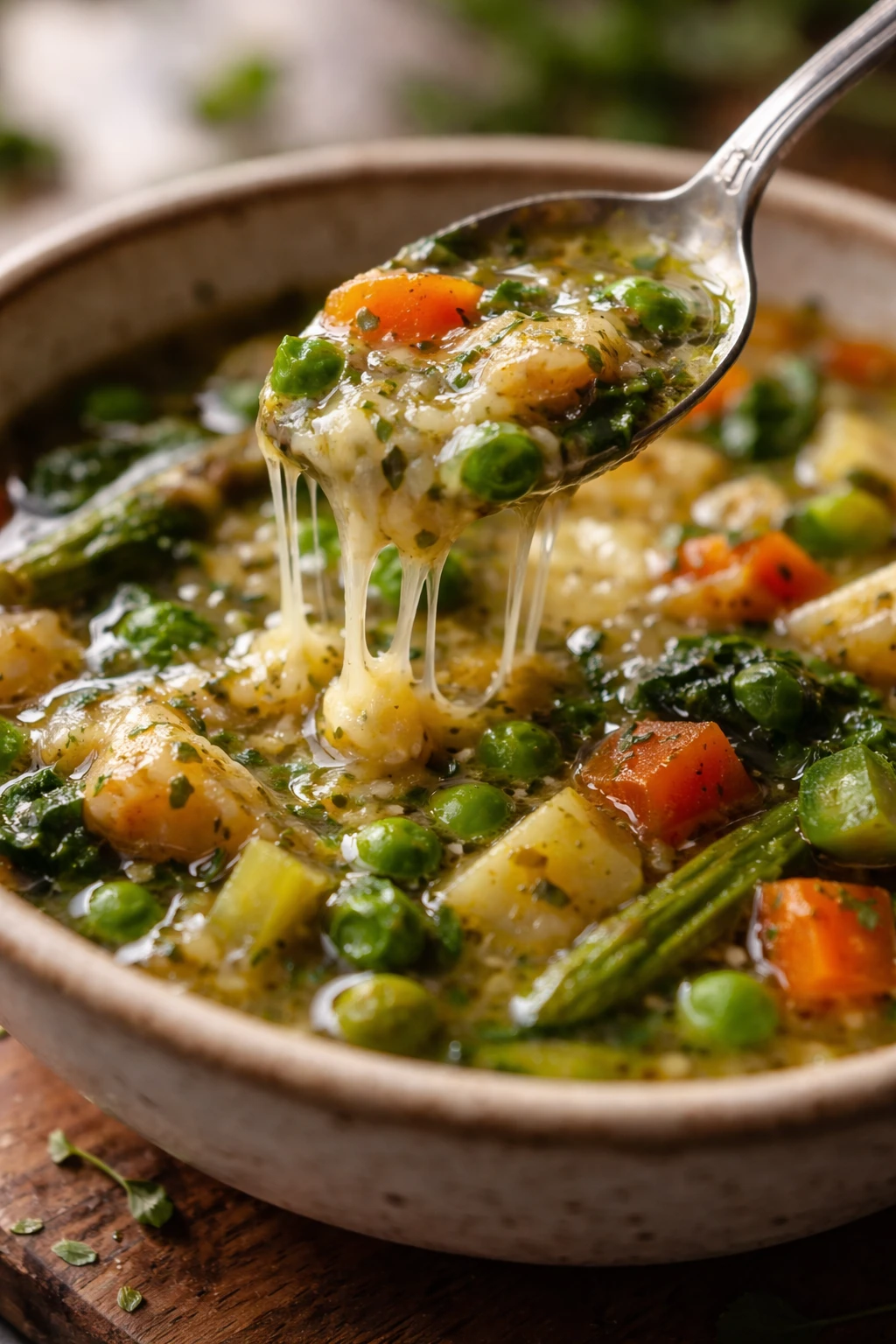
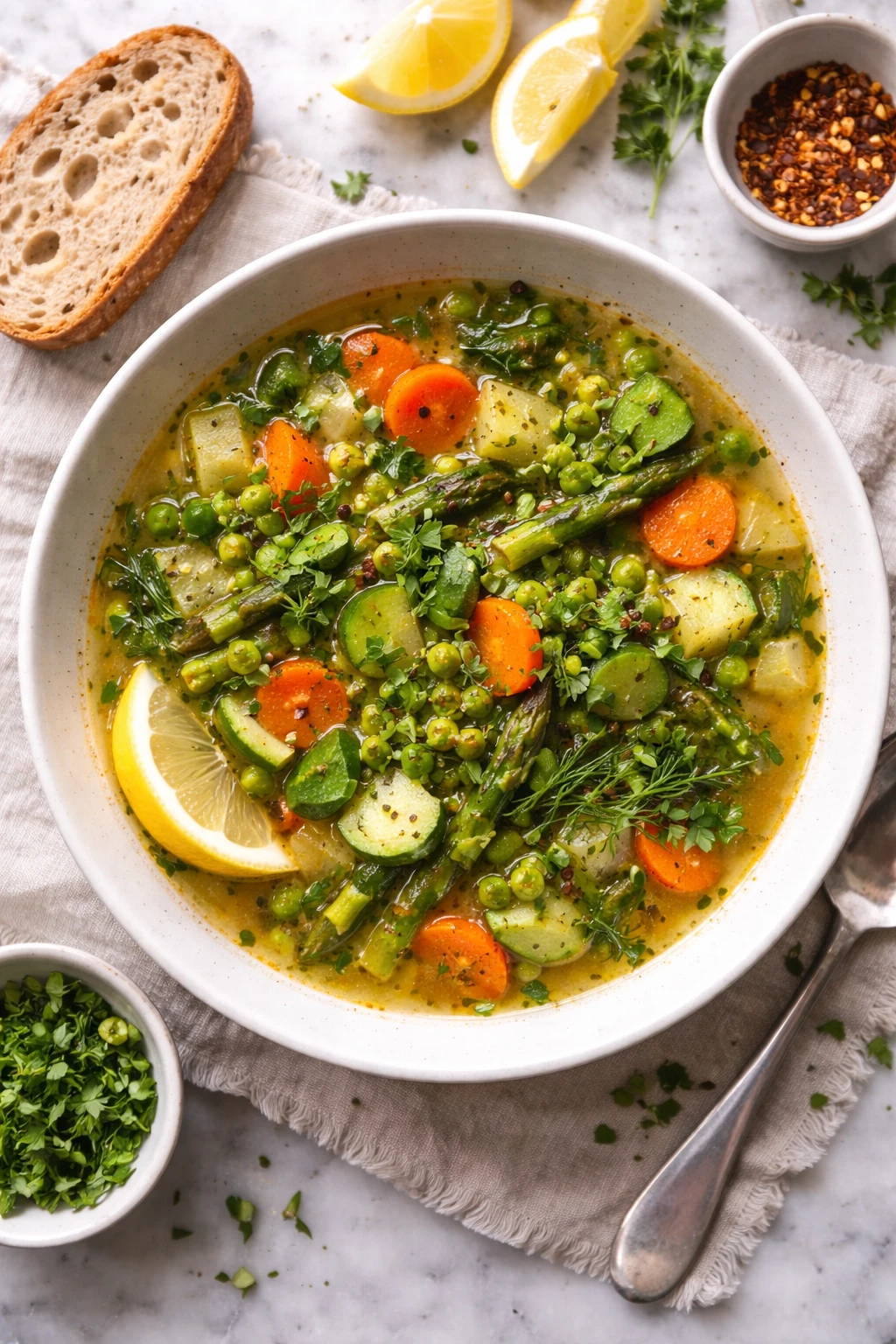
This vibrant vegan spring soup is packed with tender vegetables and fresh herbs. A splash of lemon juice lifts all the flavors, making it perfect for a light lunch or a cozy dinner when you want something fresh yet comforting.
Introduction
I first stumbled upon this vegan spring soup a few years ago when I was craving something light but still satisfying after a long winter. It was one of those recipes that surprised me with how fresh and bright it tasted despite being so simple. What I love most about this version is how the lemon juice added at the end really wakes up all the flavors—it’s like a little burst of sunshine in every spoonful. Unlike many heavier soups, this one lets the natural sweetness of the spring veggies shine through without being masked by too many spices or cream. I also like to use fresh herbs like parsley and dill to give it that fragrant, garden-fresh note that makes it feel so seasonal. One trick I learned that really helps is sautéing the garlic and onions slowly until they're soft and fragrant before adding the broth. This step builds a subtle depth of flavor that makes the soup taste much more complex than you'd expect from such basic ingredients. When it’s done, the soup is light, comforting, and perfect for either a quick lunch or a cozy dinner on a chilly spring evening. Honestly, it’s become one of my go-to recipes whenever I want something fresh but not fussy. Give it a try—I think you’ll love just how easy and nourishing it is!
What You'll Need
Approximately 6 cups, 4 servings
- 2 tablespoons olive oil, extra virgin
- 1 medium onion, finely chopped
- 3 cloves garlic, minced
- 2 medium carrots, diced
- 2 celery stalks, diced
- 1 medium zucchini, diced
- 4 cups vegetable broth, low sodium
- 1 cup green beans, trimmed and cut
- 1 cup fresh peas, shelled
- 1/4 cup fresh parsley, chopped
- 1/4 cup fresh dill, chopped
- Juice of 1 lemon
- Salt and freshly ground black pepper, to taste
How To Do It
Step 1
Heat the olive oil in a large pot over medium heat. Add the chopped onion and cook slowly, stirring occasionally, until it becomes soft and translucent, about 7-8 minutes. This gentle cooking releases the onion's natural sweetness and forms a flavorful base. Avoid turning the heat too high to prevent browning, which can make the soup bitter instead of mellow.
⏱ Time: 8
✓ Doneness: Onions are soft, translucent, and fragrant without any browning.
Step 2
Add the minced garlic to the pot and sauté for about 1 minute, stirring constantly. Garlic cooks quickly and can burn easily, so keep the heat moderate and watch closely. This step infuses the oil with garlic aroma, which will carry through the whole soup.
⏱ Time: 1
✓ Doneness: Garlic is fragrant and slightly golden but not browned.
Step 3
Add the diced carrots and celery to the pot and stir to combine. Cook for about 5 minutes, allowing the vegetables to soften slightly. This helps build more depth in flavor and ensures even cooking later. Stir occasionally to prevent sticking, and don’t rush this step as it enhances the soup’s overall texture.
⏱ Time: 5
✓ Doneness: Carrots and celery start to soften but still have some firmness.
Step 4
Pour in the vegetable broth and bring the mixture to a gentle boil. Once boiling, reduce the heat to a simmer and cook for 10 minutes. This simmering melds the flavors and softens the vegetables further. Avoid a rolling boil which can break down the veggies too much and muddy the soup’s clarity.
⏱ Time: 10
✓ Doneness: Vegetables are tender and broth is clear but flavorful.
Step 5
Add the diced zucchini, green beans, and peas to the pot. Continue to simmer for another 8-10 minutes until all the vegetables are tender but still vibrant and not mushy. This timing ensures a nice contrast in textures and preserves the fresh spring vibe of the soup.
⏱ Time: 10
✓ Doneness: Vegetables are tender but retain bright color and slight firmness.
Step 6
Stir in the chopped parsley and dill, cooking for an additional 2 minutes. Fresh herbs added at the end keep their bright flavor and aroma. Overcooking herbs can make them lose their vibrancy, so add them last to get that fresh, garden-like note.
⏱ Time: 2
✓ Doneness: Herbs look bright and fresh, and soup smells fragrant.
Step 7
Remove the pot from heat and stir in the lemon juice. The acidity brightens the entire soup and balances the sweetness of the vegetables. Add the lemon juice off the heat to preserve its fresh, zesty flavor instead of cooking it out.
⏱ Time: 1
✓ Doneness: Soup has a lively, fresh aroma and slightly tangy taste.
Step 8
Season the soup with salt and freshly ground black pepper to taste. Seasoning at the end lets you adjust the flavors perfectly after all ingredients have melded. Taste carefully and add more lemon juice or herbs if desired for extra brightness.
⏱ Time: 2
✓ Doneness: Balanced flavor with no blandness or overpowering saltiness.
Step 9
Serve the soup hot, ideally with a slice of crusty bread or a light salad. This soup is best enjoyed fresh but can be stored and reheated gently to keep its vibrant flavors intact.
⏱ Time: 0
✓ Doneness: Soup is steaming hot and aromatic, ready to enjoy.
Variations
Spicy Vegan Spring Soup
Add a pinch of red pepper flakes or a diced jalapeño when sautéing the onions for a gentle heat that complements the fresh veggies. This variation adds warmth without overpowering the soup’s brightness.
Note: Adjust cooking time slightly to mellow the heat if desired, and add spicy ingredients early for flavor infusion.
Creamy Coconut Spring Soup
Stir in 1/2 cup coconut milk at the end for a creamy texture and subtle tropical flavor. It adds richness while keeping the soup vegan and light.
Note: Add coconut milk off the heat and gently warm through to avoid curdling.
Spring Soup with Quinoa
Cook 1/2 cup quinoa separately and stir it into the soup just before serving for extra protein and a hearty texture. This makes it more filling without changing the fresh flavor profile.
Note: Ensure quinoa is rinsed well to remove bitterness and fully cooked before adding.
Herb Swap: Basil and Mint
Replace parsley and dill with fresh basil and mint for a sweeter, more aromatic twist. This variation is especially refreshing served chilled on hot days.
Note: Add herbs off the heat to preserve delicate flavors.
Roasted Vegetable Spring Soup
Roast the carrots, zucchini, and green beans before adding them to the broth to deepen their flavor with caramelized notes while keeping the soup fresh and vibrant.
Note: Roast veggies at 400°F until golden, then add to simmering broth for a layered flavor.
Pro Tips
Sauté onions and garlic slowly over medium heat.
Slow cooking these aromatics releases their natural sweetness and builds a flavorful base without bitterness. Rushing this step or using high heat can burn the garlic, creating a harsh flavor that ruins the soup’s delicate balance.
Add delicate vegetables later in cooking.
Zucchini, peas, and green beans cook quickly and can become mushy if added too early. Adding them near the end preserves their color, texture, and fresh flavor, contributing to the soup’s bright and lively character.
Use fresh herbs and add them off the heat.
Fresh parsley and dill contain essential oils that provide vibrant aroma and flavor. Heating herbs too long causes loss of these oils and can make the herbs bitter, so stir them in at the end to keep the soup fresh-tasting.
Don’t skip the lemon juice at the end.
The acidity from lemon juice brightens all the flavors and balances the natural sweetness of the vegetables. Adding it off the heat preserves its fresh, zesty notes, which are essential for that springtime lift.
Use low-sodium broth to control saltiness.
Starting with a low-salt broth lets you season the soup precisely at the end. Pre-salted broths can make the soup too salty or mask the delicate vegetable flavors, so adjust salt carefully after all ingredients are combined.
Chop vegetables uniformly for even cooking.
Cutting veggies into similar sizes ensures they cook evenly, preventing some pieces from being mushy while others remain undercooked. This consistency enhances texture and presentation.
Simmer gently instead of boiling hard.
A gentle simmer melds flavors without breaking down vegetables too much or clouding the broth. High boiling can make the soup cloudy and cause veggies to disintegrate, losing that fresh spring feel.
Common Mistakes to Avoid
Burning the garlic during sautéing
Why it happens Many cooks add garlic to hot oil and leave it unattended, causing it to burn quickly because garlic cooks faster than onions.
Fix Add garlic after onions have softened on medium heat and stir constantly while cooking garlic for just about a minute. If you smell a bitter or acrid aroma, reduce heat immediately or start over to avoid bitterness.
Adding all vegetables at once
Why it happens It’s tempting to throw everything in together to save time, but different vegetables have varied cooking times.
Fix Add root vegetables like carrots and celery first and simmer until partly tender. Then add quicker-cooking veggies like zucchini and peas near the end to keep their texture and color vibrant.
Skipping fresh herbs or adding them too early
Why it happens Some think dried herbs or early addition of fresh herbs is fine, but this dulls their flavor.
Fix Always add fresh herbs at the very end of cooking or off the heat to preserve their bright, fresh aroma and avoid bitterness.
Not seasoning at the end
Why it happens Seasoning too early can lead to over or under-salted soup after vegetables release water.
Fix Wait until all ingredients are cooked and the soup is cooled slightly before adjusting salt and pepper for perfect flavor balance.
Using bottled lemon juice
Why it happens Bottled lemon juice lacks the fresh brightness and aroma of freshly squeezed juice.
Fix Always use fresh lemon juice added off the heat for optimal freshness and flavor lift.
Nutrition
Per Serving:
Nutritional values are estimates and may vary based on specific ingredients used.
Storage & Tips
Room Temperature
This soup can safely sit at room temperature for up to 2 hours if covered to prevent contamination. Beyond that, it’s best refrigerated to maintain freshness and safety.
Refrigerator
Store in an airtight container for up to 3 days. The flavors may deepen overnight but the fresh herbs might lose some brightness. Reheat gently on the stove to avoid overcooking the vegetables.
Freezer
Freeze the soup in a freezer-safe container for up to 2 months. Leave some headspace as liquids expand. Thaw in the refrigerator overnight and reheat gently to preserve texture and flavor.
Reheating
Warm the soup over low heat on the stovetop, stirring occasionally. Add a splash of vegetable broth or water if it seems too thick. Avoid boiling to keep vegetables tender and prevent loss of fresh flavors.
Make Ahead
You can prepare the soup base (sautéed aromatics and broth with root vegetables) 1-2 days ahead and refrigerate. Add the delicate vegetables, herbs, and lemon juice just before serving for best texture and flavor.
FAQ
Can I use frozen vegetables instead of fresh for this soup?
Yes, frozen vegetables can be used in a pinch, but fresh vegetables provide the best texture and flavor, especially for this light spring soup. Frozen veggies tend to be softer and may make the soup less vibrant. Add frozen veggies later in cooking to avoid overcooking.
What can I substitute for lemon juice if I don’t have any?
You can use a splash of white wine vinegar or apple cider vinegar to add acidity, but lemon juice offers the brightest, freshest flavor. Use about half the amount of vinegar and add gradually to avoid overpowering the soup.
Is this soup suitable for meal prep?
Yes, it’s perfect for meal prep. Store in airtight containers and add fresh herbs and lemon juice when reheating to keep flavors vibrant.
Can I add protein to make this soup more filling?
Adding cooked beans or quinoa is a great way to boost protein. Stir them in at the end so they don’t overcook and remain tender.
Why do I add lemon juice off the heat?
Lemon juice loses its fresh aroma and can turn bitter if boiled. Stir it in after removing the pot from the heat for the best flavor.
Can I make this soup spicy?
A little chili or cayenne pepper added early in cooking gives a gentle heat that complements the fresh veggies nicely.
How can I make this soup creamier without dairy?
Coconut milk or blended soaked cashews are great dairy-free options to add creaminess while keeping the soup light.
What’s the best way to store leftovers?
Store leftovers in sealed containers in the fridge or freezer. Add fresh lemon and herbs when reheating to refresh the flavors.
Final Thoughts
I hope you enjoy this fresh vegan spring soup as much as I do! It’s simple, nourishing, and perfect for any day you want a light, bright meal. Don’t forget to share how it turns out!