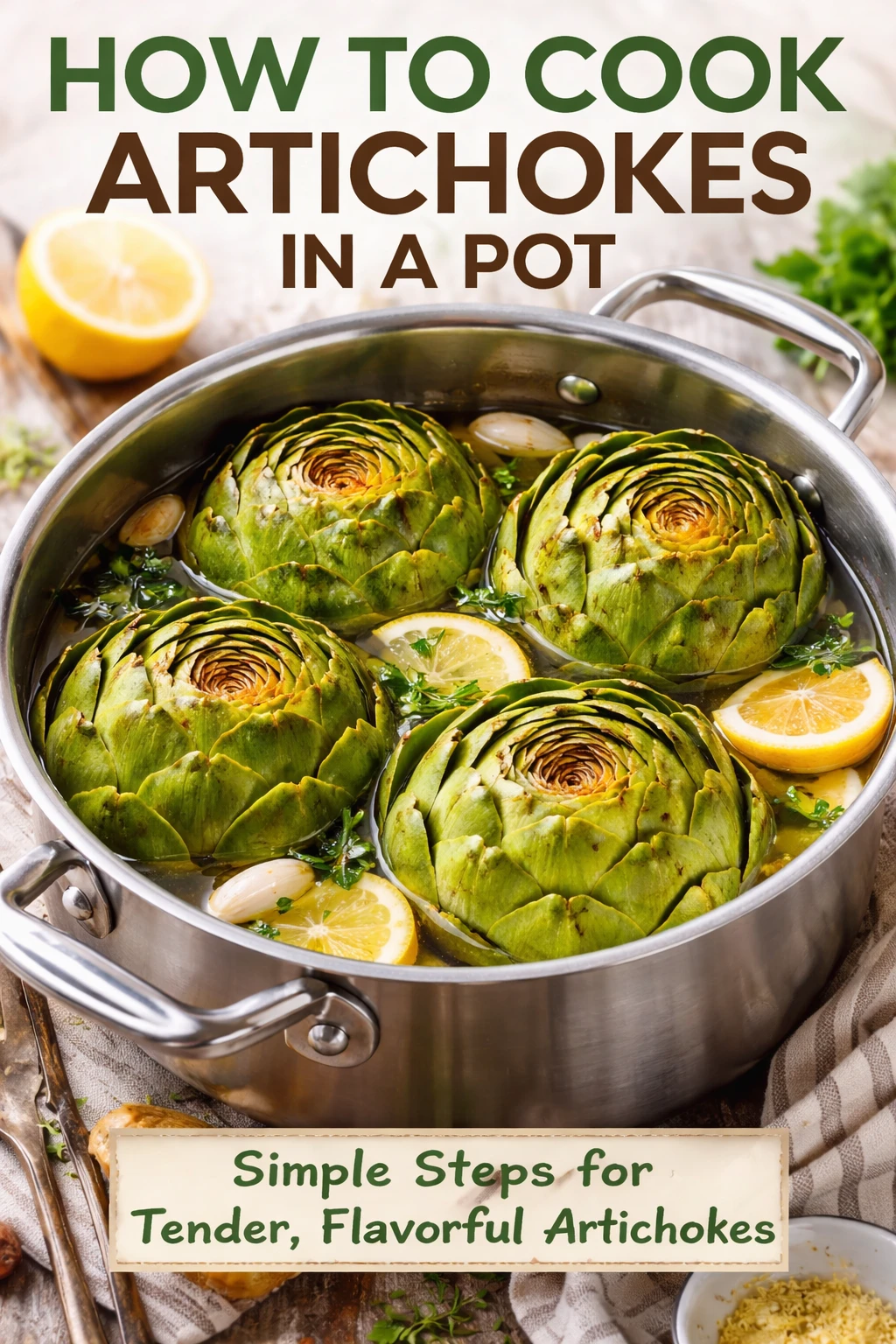
Steaming artichokes in a pot is surprisingly simple and yields tender, flavorful results every time. The trick is locking in moisture while gently cooking. Perfect for a healthy snack or alongside your favorite main dish.
Introduction
I still remember the first time I tried cooking artichokes at home—it was intimidating! Those spiky leaves and that fuzzy choke always made me hesitate. But once I learned the simple pot-steaming method, it quickly became one of my favorite easy veggie sides. What I love about this recipe is how it gently steams the artichokes until tender without losing their delicate flavor. I usually add a splash of lemon to the water for a fresh zing and a few garlic cloves for subtle aroma. The trick I discovered is to trim the leaves just right and steam long enough so the heart is soft but not mushy. When done, the artichokes have a slightly nutty, buttery texture that’s perfect for dipping in olive oil or aioli. It’s a healthy snack that feels fancy but is really fuss-free. Plus, it’s a great way to impress guests without hours in the kitchen. If you’ve been wary of cooking artichokes before, this method will change your mind—I promise it’s way easier than it looks!
How To Do It
Step 1
Start by prepping your artichokes: rinse them under cold water and trim the stems so they can sit flat. Snip off the sharp tips of the outer leaves with kitchen scissors to make them easier to handle and more pleasant to eat. This step is crucial because it removes the tough, prickly parts while preserving the tender heart inside. Also, rub the cut parts with lemon to prevent browning. Taking a few extra minutes here sets you up for a better eating experience and helps the artichokes steam evenly.
⏱ Time: 10
✓ Doneness: Artichokes feel firm but not hard; cut edges look fresh and slightly moist.
Step 2
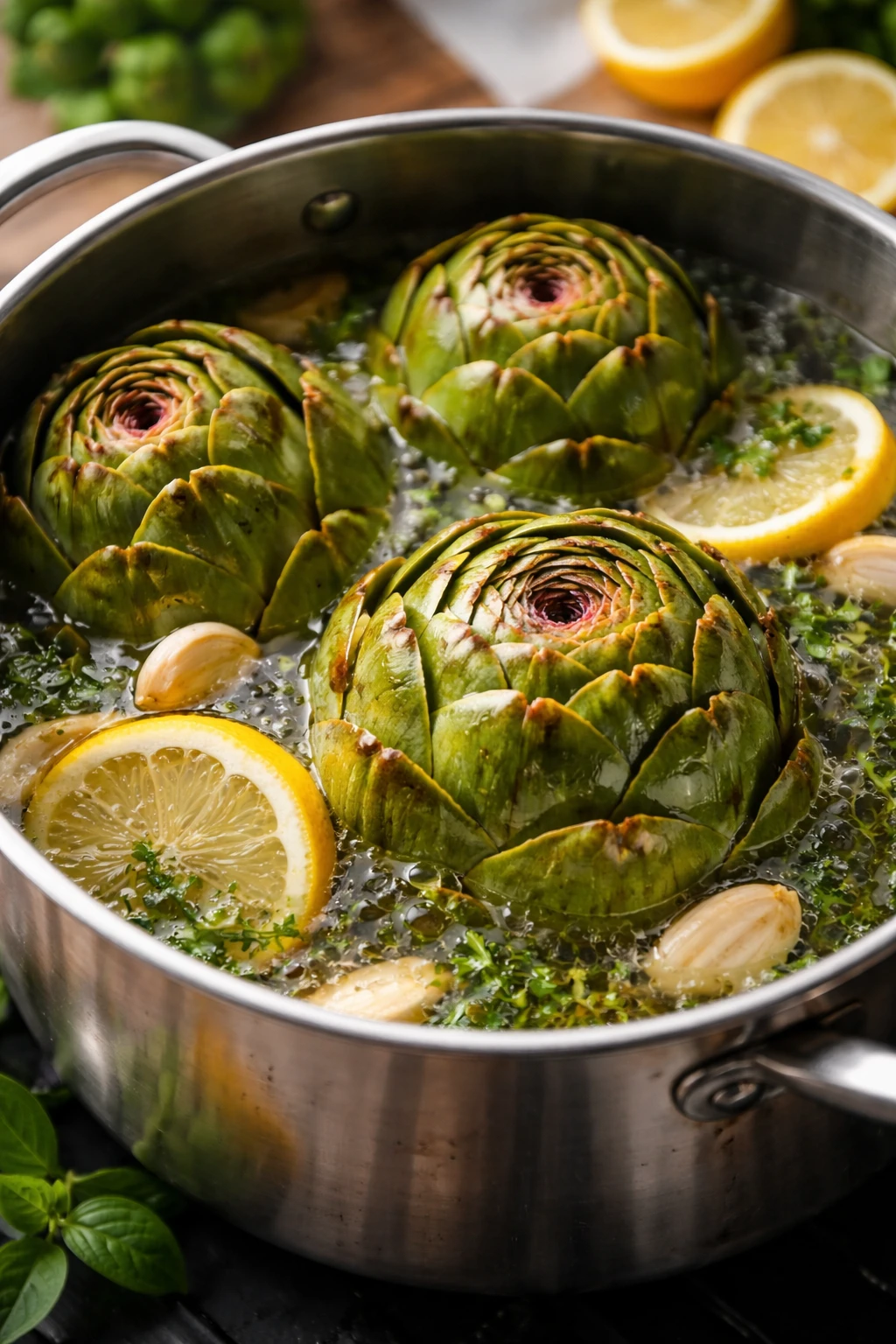
Pour 4 cups of water into a large pot and add the halved lemon and smashed garlic cloves. Bring the water to a gentle boil, then reduce to a simmer. Place a steaming basket or a heatproof colander inside the pot above the water level. This ensures the artichokes cook via steam, not boiling water, which keeps them tender and prevents sogginess. If you skip this, the artichokes can become waterlogged and lose flavor. The lemon and garlic infuse subtle notes during steaming, enhancing the natural taste.
⏱ Time: 5
✓ Doneness: Water simmers gently with aromatic lemon and garlic scents.
Step 3
Arrange the prepared artichokes stem-side up in the steaming basket. Cover the pot tightly with a lid to trap the steam inside. The sealed environment cooks the artichokes evenly and locks in moisture. If the lid isn’t tight, steam escapes and cooking times increase, risking dry or unevenly cooked leaves. This step is key to getting that tender, pull-apart texture you want.
⏱ Time: 2
✓ Doneness: Lid fits snugly, steam visible inside the pot.
Step 4
Steam the artichokes for about 30 minutes, checking occasionally to ensure there’s enough water in the pot but without lifting the lid too often. Lifting the lid releases steam and drops the temperature, which can extend cooking time and dry out the artichokes. Use tongs to lift one leaf after 25 minutes; it should pull away easily and feel soft at the base. This is your signal that they’re done.
⏱ Time: 30
✓ Doneness: Leaves pull away easily and the heart is tender when pierced with a knife.
Step 5
Once cooked, carefully remove the artichokes from the pot with tongs and let them cool for a few minutes. This resting step allows steam inside the leaves to settle and makes handling easier. If served too hot, the leaves can burn your fingers and the flavors won't have fully developed. Cooling slightly also firms up the texture just enough for dipping.
⏱ Time: 5
✓ Doneness: Artichokes are warm but comfortable to touch.
Step 6
Drizzle the artichokes with good-quality olive oil and sprinkle with a pinch of salt. This simple finish enhances the natural nutty flavor and adds richness without overpowering the delicate taste. I like using a fruity extra virgin olive oil here because it complements without masking. Skip heavy sauces to let the artichoke shine on its own.
⏱ Time: 2
✓ Doneness: Leaves glisten lightly with oil and seasoning.
Step 7
Serve the artichokes whole or pull off leaves one by one to dip in your favorite sauce like garlic aioli, vinaigrette, or melted butter. The leaves have tender bases with a subtle bite, and the heart at the center is creamy and delicious. Eating the leaves is a fun, interactive experience that’s perfect for casual meals or entertaining.
⏱ Time: 0
✓ Doneness: Leaves easily pull off and reveal the soft heart.
Step 8
If you want to store leftovers, wrap the artichokes tightly in plastic wrap or place in an airtight container. Refrigerate within two hours to keep them fresh. When reheating, steam gently or microwave briefly with a splash of water to restore moisture. Avoid overcooking during reheating as it can make them mushy.
⏱ Time: 0
✓ Doneness: Artichokes remain moist and tender after reheating.
Step 9
For an extra flavor boost, try adding herbs like thyme or bay leaves to the steaming water. This subtle addition infuses an aromatic layer without overpowering the artichokes. Just toss the herbs in with the lemon and garlic before steaming. It’s a small touch that makes a big difference!
⏱ Time: 0
✓ Doneness: Steam carries a fresh herb aroma.
Variations
Garlic Herb Steamed Artichokes
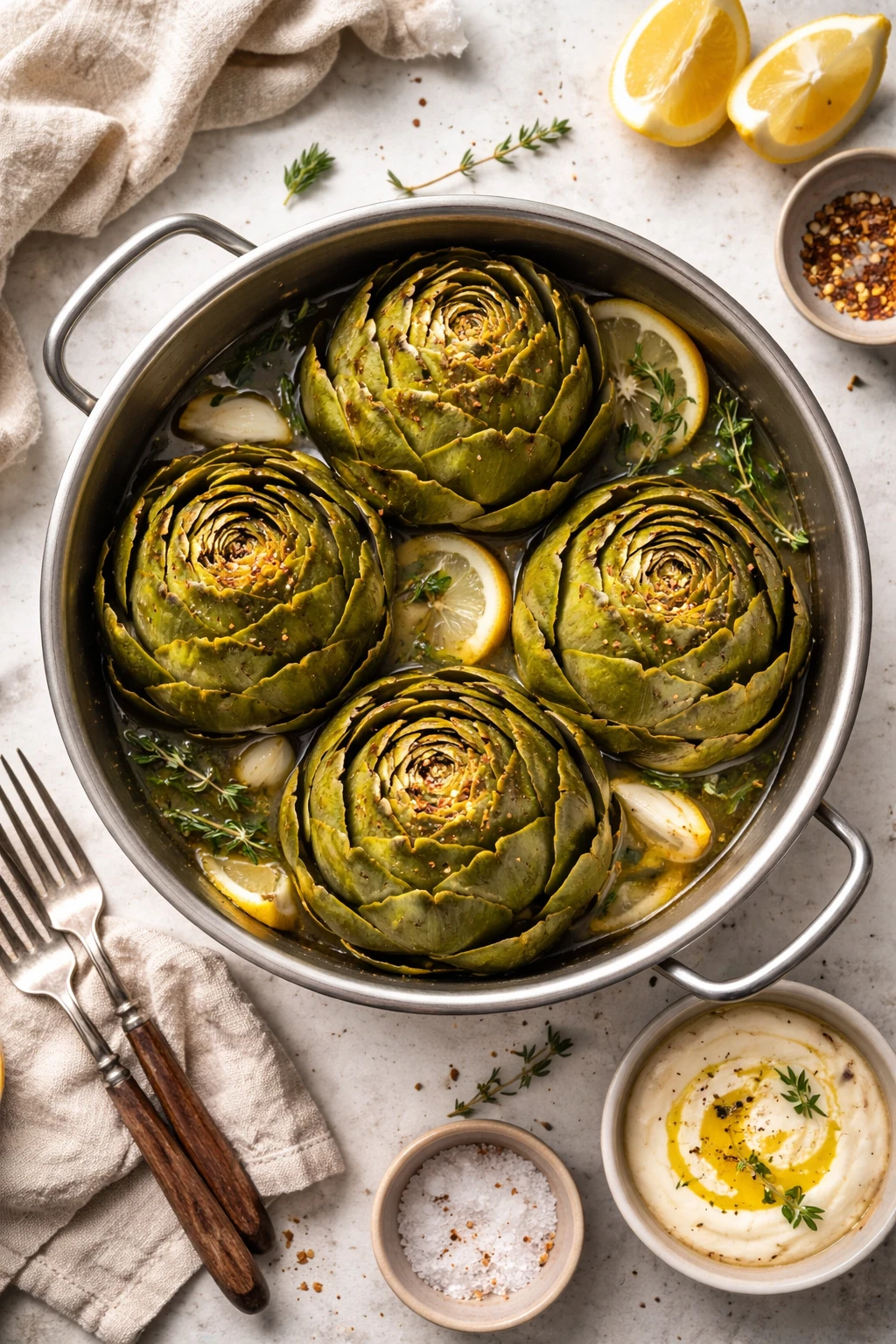
Add fresh thyme, rosemary, or bay leaves to the steaming water along with garlic for an aromatic twist. This variation deepens the flavor profile and pairs well with a lemony dipping sauce. Expect a slightly more fragrant and herbaceous artichoke with the same tender texture.
Note: Herbs should be fresh and added at the start of steaming to allow full infusion without overpowering.
Spicy Steamed Artichokes
For a kick, sprinkle red chili flakes on the artichokes after steaming or add a pinch to the steaming water. Serve with a spicy aioli or hot sauce dip. The heat contrasts nicely with the mild vegetable flavor and adds excitement to the classic dish.
Note: Use chili flakes sparingly to avoid overwhelming the artichokes’ subtle taste.
Stuffed Steamed Artichokes
Before steaming, stuff the artichoke centers with a mixture of breadcrumbs, Parmesan, garlic, and herbs. This creates a rich, savory filling that bakes inside during steaming. The texture is heartier, and the flavor more complex and cheesy.
Note: Ensure the stuffing is tightly packed but not blocking steam penetration for even cooking.
Lemon Butter Steamed Artichokes
Serve steamed artichokes with a warm lemon butter sauce instead of olive oil for a richer finish. The butter adds creaminess while lemon keeps it bright. This variation feels indulgent but still highlights the artichoke’s natural flavor.
Note: Melt butter gently and add fresh lemon juice just before serving to preserve freshness.
Grilled Steamed Artichokes
After steaming, slice artichokes in half and grill them briefly to add smoky char marks and deepen flavor. This adds a pleasant texture contrast and a slightly smoky note that elevates the simple steamed vegetable.
Note: Grill over medium-high heat for 2-3 minutes per side to avoid drying out.
Pro Tips
Trim the artichoke leaves with kitchen scissors before steaming.
Removing the sharp tips makes the artichokes easier and safer to handle and eat. It also helps steam penetrate more evenly, speeding up cooking and improving texture. Skipping this can result in prickly leaves that are hard to eat and unevenly cooked artichokes.
Don’t lift the lid while steaming too often.
Each time you open the lid, steam escapes and temperature drops, which interrupts the cooking process. This leads to longer cooking times and can dry out the artichokes. Keeping the lid closed traps heat and moisture for consistent, tender results.
Rub cut surfaces with lemon immediately after trimming.
Exposing fresh artichoke flesh to air causes enzymatic browning, turning it an unappetizing brown. Lemon juice’s acidity slows this reaction and keeps the artichokes looking fresh and bright. This also slightly enhances flavor with a fresh citrus note.
Use a steaming basket or colander above water level.
Steaming rather than boiling prevents the artichokes from becoming waterlogged and mushy. The basket holds the artichokes above the water so they cook with steam only, preserving texture and flavor. Direct boiling can dilute taste and ruin the ideal tender-crisp consistency.
Add aromatic ingredients like garlic or herbs to the steaming water.
These infuse subtle flavors into the artichokes as they cook, elevating the dish without overpowering the vegetable’s natural taste. Aromatics also make the kitchen smell amazing and add complexity to what might otherwise be a simple steamed vegetable.
Let artichokes rest briefly after steaming before serving.
Resting allows steam inside the leaves to redistribute and the artichokes to cool to a comfortable temperature. This step enhances flavor and texture, making the leaves easier to handle and the heart creamier. Serving immediately can risk burns and underdeveloped flavors.
Use high-quality extra virgin olive oil for finishing.
A good olive oil adds fruity, peppery notes and a silky texture that complements the artichokes beautifully. Low-quality oils can taste greasy or bland and mask the delicate vegetable flavors. Drizzling just before serving preserves the oil’s fresh taste and nutritional benefits.
Common Mistakes to Avoid
Overcooking the artichokes until mushy.
Why it happens Many cooks steam artichokes too long thinking it will make them more tender, but this actually breaks down the texture and makes them unpleasantly soft.
Fix Use a fork or knife to test the heart after about 25 minutes. It should be tender but still hold shape. Remove immediately once done to avoid mushiness and maintain a pleasant bite.
Not trimming the leaf tips before cooking.
Why it happens People often overlook this step because it seems tedious or unnecessary, but sharp tips can make eating difficult and increase risk of injury.
Fix Use kitchen scissors to snip off the sharp points before steaming. This makes handling safer and more enjoyable without affecting flavor.
Steaming with the lid off or loose.
Why it happens Beginners might forget the importance of trapping steam, leading to evaporative loss and uneven cooking.
Fix Always use a tight-fitting lid to keep steam trapped inside. This ensures consistent temperature and moisture, which is critical for tender artichokes.
Using old or dry artichokes.
Why it happens Sometimes people buy artichokes without checking freshness, resulting in tough, bitter vegetables that don’t cook well.
Fix Pick fresh, heavy artichokes with closed leaves and avoid any with brown spots. Freshness dramatically improves texture and flavor.
Skipping the lemon to prevent browning.
Why it happens Some cooks don’t realize how quickly artichokes oxidize once cut, leading to an unappealing brown color.
Fix Rub all cut surfaces with lemon juice immediately and add lemon to the steaming water. This keeps artichokes bright and fresh-looking.
Nutrition
Per Serving:
Nutritional values are estimates and may vary based on specific ingredients used.
Storage & Tips
Room Temperature
Steamed artichokes can be kept at room temperature for up to 2 hours if covered loosely to prevent dust. Beyond that, bacteria growth increases and they should be refrigerated.
Refrigerator
Store cooled artichokes in an airtight container in the fridge for up to 3 days. They can be eaten cold or reheated gently. Note that refrigeration may slightly toughen the leaves but the heart stays tender.
Freezer
Artichokes can be frozen for up to 2 months. Wrap tightly in plastic wrap and place in a freezer bag to prevent freezer burn. Thaw overnight in the fridge and reheat by steaming or microwaving with a splash of water.
Reheating
Reheat by steaming over simmering water for 5–7 minutes or microwaving covered with a damp paper towel for 1–2 minutes. Adding a splash of water helps restore moisture. Avoid overheating to prevent mushiness.
Make Ahead
You can prep and trim artichokes 1 day ahead, storing them in lemon water to prevent browning. Steam artichokes up to 1 day before serving and reheat gently. Add finishing oil or seasoning just before serving for best flavor.
FAQ
Can I use frozen artichokes for this recipe?
Frozen artichokes are usually pre-cooked and may have a different texture than fresh ones. While you can steam them, expect a softer, sometimes mushier result. Fresh artichokes are best for this recipe because they hold their shape and flavor better during steaming.
How do I know when the artichokes are fully cooked?
You’ll know they’re done when a leaf near the center pulls away easily and the base feels tender when pierced with a knife or fork. The cooking time can vary slightly depending on size but usually takes around 30 minutes. Overcooking leads to mushiness, so test early if your artichokes are small.
Is it necessary to add lemon to the steaming water?
Yes, lemon juice prevents the artichokes from turning brown due to oxidation after cutting. It also adds a fresh citrus aroma that complements the vegetable’s flavor. Skipping lemon can result in unappetizing discoloration and a less vibrant dish.
Can I cook artichokes in a microwave instead of steaming in a pot?
Microwaving is a quicker option but can lead to uneven cooking and sometimes rubbery leaves. Steaming in a pot provides gentler, more even heat, resulting in better texture and flavor. If using a microwave, cover the artichokes and add water, but check frequently to avoid overcooking.
What dipping sauces go well with steamed artichokes?
Classic options include garlic aioli, melted butter with lemon, vinaigrettes, or even a simple olive oil and balsamic mix. These sauces enhance the artichoke’s flavor without overpowering it. Try experimenting with spicy mayo or herb dips for variety.
How do I store leftover steamed artichokes?
Cool leftovers completely, then store in an airtight container in the refrigerator for up to 3 days. To keep the texture, reheat gently by steaming or microwaving with a little water. Avoid reheating multiple times to preserve quality.
Can I add herbs to the steaming water?
Absolutely! Adding herbs like thyme, rosemary, or bay leaves infuses subtle aromas into the artichokes. Add them at the start of steaming for best flavor. Just be sure not to add too many strong herbs that might overpower the delicate vegetable.
What do I do if the artichokes taste bitter?
Bitterness can come from overcooking or using older artichokes. To reduce bitterness, pick fresh artichokes and steam just until tender. Serving with a bit of acid like lemon juice or a flavorful dip can also balance any bitter notes.
Final Thoughts
I hope you give this simple steamed artichoke recipe a try — it’s one of those easy dishes that feels special and tastes amazing. Let me know how yours turns out!