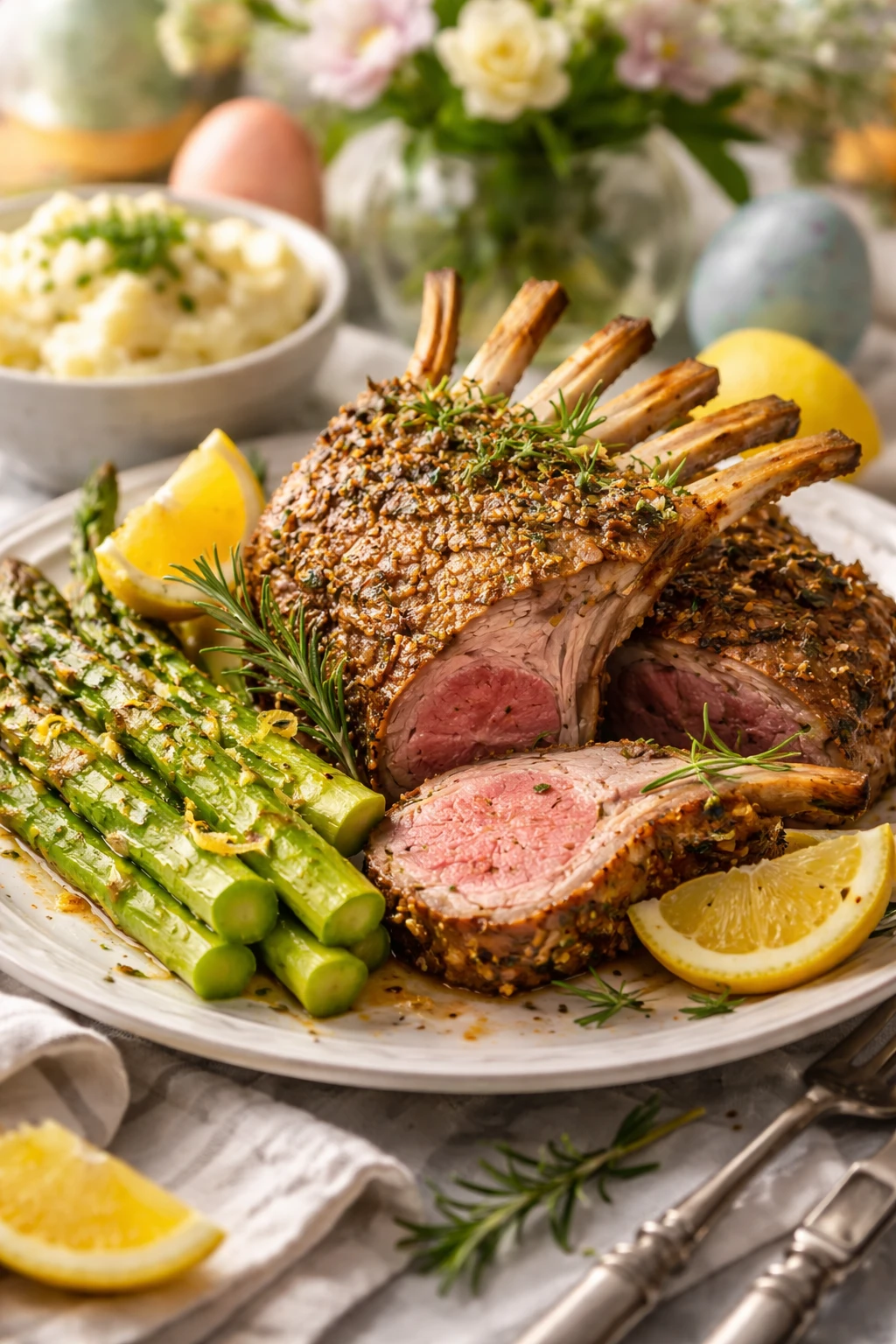
This Easter dinner features juicy herb-roasted chicken paired with colorful spring vegetables. The fresh herbs add a bright flavor that feels festive but is quick to prepare. Perfect for impressing guests without the stress!
Introduction
I remember the first time I made this herb-roasted chicken for Easter—it was supposed to be a quick fix, but it ended up stealing the show! What I love about this recipe is how the fresh rosemary and thyme really brighten the chicken’s flavor without any complicated steps. It’s one of those dishes that feels special but doesn’t demand hours in the kitchen. Over the years, I tweaked it by adding garlic under the skin and stuffing the cavity with lemon halves, which keeps the meat juicy and adds a subtle zing. The sides are just as important—tender baby carrots, crisp asparagus, and sweet pearl onions tossed with butter make the meal vibrant and colorful. This combo is perfect for springtime celebrations or any night when you want a comforting yet fresh meal. The chicken turns out golden brown with crispy skin and juicy meat, while the veggies complement it with natural sweetness and texture. Honestly, it’s become my go-to for when I want to impress without stress. If you’ve ever burned a roast or ended up with dry chicken, this method will be a game changer. I’m excited to share it with you!
How To Do It
Step 1
Preheat your oven to 425°F (220°C). While it heats, pat the chicken dry with paper towels; this step is crucial because dry skin crisps up better. Mix the olive oil with minced garlic, chopped rosemary, and thyme in a small bowl. Rub this herb mixture all over the chicken, including under the skin where possible. Season generously with salt and pepper. Stuff the lemon halves inside the cavity to infuse moisture and brightness during roasting. This aromatics infusion is what makes the chicken juicy and flavorful.
⏱ Time: 15
✓ Doneness: Chicken skin looks evenly coated with herbs and slightly glossy from the oil
Step 2
Place the chicken breast-side up on a roasting rack inside a baking pan. This elevates the bird allowing hot air to circulate evenly, which promotes crispy skin all around. Roast for 20 minutes at 425°F to develop the golden crust. Avoid opening the oven door during this time to maintain consistent heat. This initial high-heat blast is what triggers the Maillard reaction, giving the skin its beautiful brown color and rich flavor.
⏱ Time: 20
✓ Doneness: Skin is golden brown and crispy to the touch
Step 3
While the chicken roasts, prepare your vegetables. Toss baby carrots, asparagus, and pearl onions with a bit of olive oil, salt, and pepper. These veggies roast quickly and bring vibrant color and natural sweetness to the plate. The pearl onions add a mild onion flavor without overpowering the dish. Set aside until the chicken reaches the 20-minute mark.
⏱ Time: 10
✓ Doneness: Vegetables are evenly coated and ready to roast
Step 4
After the first 20 minutes, reduce the oven temperature to 375°F (190°C). Arrange the prepared vegetables around the chicken in the roasting pan. The chicken will continue cooking gently while the veggies roast alongside, absorbing some of the savory chicken juices. This layering of flavors is why the sides taste so harmonious with the meat.
⏱ Time: 25
✓ Doneness: Vegetables start to soften and chicken juices collect in pan
Step 5
Continue roasting for another 25 minutes, or until a meat thermometer inserted into the thickest part of the thigh reads 165°F (74°C). If you don’t have a thermometer, pierce the thigh and ensure the juices run clear, not pink. This ensures the chicken is fully cooked but still juicy. Overcooking will dry out the meat, so keep a close eye near the end.
⏱ Time: 25
✓ Doneness: Internal temperature hits 165°F and juices run clear
Step 6
Once done, remove the chicken and veggies from the oven. Tent the chicken loosely with foil and let it rest for 10-15 minutes. Resting allows the juices to redistribute through the meat, making every bite tender and juicy rather than dry. Use this time to melt butter over the hot vegetables for a glossy finish.
⏱ Time: 15
✓ Doneness: Chicken skin stays crispy but meat feels juicy and tender when sliced
Step 7
Carve the chicken by first removing the legs and thighs, then slicing the breast meat against the grain for tenderness. Arrange slices alongside the roasted vegetables on a serving platter. Sprinkle fresh chopped parsley over everything for a pop of color and hint of freshness that balances the rich flavors.
⏱ Time: 10
✓ Doneness: Slices are moist and vegetables have a light caramelized look
Step 8
Serve immediately while warm. This dish pairs beautifully with a simple green salad or crusty bread to soak up the juices. The lemon and herbs keep it feeling light and spring-appropriate, even though it’s rich and comforting.
⏱ Time: 5
✓ Doneness: Meal plated attractively and steaming slightly
Step 9
If you have leftovers, cool the chicken and veggies completely before storing them in airtight containers in the fridge. Reheat gently to preserve moisture—avoid microwaving on high heat to prevent drying out. Adding a splash of broth or water when reheating helps keep the meat tender.
⏱ Time: 5
✓ Doneness: Leftovers stay moist and flavorful after reheating
Variations
Lemon-Herb Butter Roast Chicken
Mix softened butter with lemon zest, garlic, and herbs, then spread it under the skin before roasting. This adds richness and extra citrus brightness, making the chicken even juicier and more flavorful.
Note: Butter under the skin melts during roasting, basting the meat continuously. Adjust roasting time slightly if using a larger bird.
Garlic and Paprika Roasted Chicken
Add smoked paprika and extra garlic to the herb rub for a smoky, savory twist. This variation pairs beautifully with roasted potatoes instead of spring vegetables for a heartier meal.
Note: Paprika can burn easily; make sure to mix with oil and apply evenly to avoid bitter spots.
Mediterranean Style with Olives and Feta
Add pitted olives and crumbled feta to the vegetable mix for a salty, tangy flavor profile. Use oregano instead of thyme for a Mediterranean vibe. Expect a more robust, savory finish.
Note: Add feta after roasting to prevent melting too much and losing texture.
Spicy Herb-Roasted Chicken
Incorporate chili flakes and cayenne into the herb rub for a gentle heat. This version is great if you want a kick but still want to keep the fresh herb flavors prominent.
Note: Balance spice carefully to not overpower the herbs and lemon.
Slow-Roasted Low and Slow Chicken
Roast the chicken at 300°F for 2-2.5 hours for ultra-tender meat with less crispy skin. This technique is great for hands-off cooking but expect a different texture and less browning.
Note: Use a thermometer to avoid overcooking and consider broiling briefly at the end for skin crispness.
Pro Tips
Always pat your chicken dry before seasoning.
Dry skin crisps up much better in the oven because moisture inhibits browning. Patting the chicken thoroughly removes excess water, which helps trigger the Maillard reaction for that golden, crispy skin everyone loves.
Use a meat thermometer to check doneness.
Checking the internal temperature ensures the chicken is safely cooked without overcooking. Overcooked chicken dries out quickly, while undercooked is unsafe. A thermometer takes the guesswork out and guarantees juicy results every time.
Let the chicken rest after roasting.
Resting allows juices to redistribute throughout the meat, making it tender and moist instead of dry. Cutting immediately causes the juices to run out, leaving the meat less flavorful and chewy.
Toss vegetables in oil and season well before roasting.
The oil helps vegetables roast evenly and develop a caramelized surface. Proper seasoning enhances their natural sweetness and complements the chicken’s savory flavors.
Place the chicken on a rack to roast.
Elevating the chicken lets hot air circulate underneath, promoting even cooking and crisping the skin all around instead of steaming the bottom.
Use fresh herbs rather than dried for best flavor.
Fresh herbs contain essential oils that release flavor during cooking. Dried herbs are less potent and can sometimes taste bitter or dusty, so fresh is worth the extra effort.
Add lemon halves inside the cavity.
The lemon releases moisture and citrus oils during roasting, which keeps the meat juicy and adds a subtle zing that brightens the dish.
Common Mistakes to Avoid
Skipping the drying step before roasting.
Why it happens Many cooks overlook drying the chicken skin because it seems like an extra step or they’re in a rush.
Fix Take the time to pat the chicken completely dry with paper towels. This simple step is crucial for crispy skin and better browning. Even a little surface moisture can prevent that golden crust.
Cooking at too low a temperature initially.
Why it happens Some assume lower heat means juicier meat, but it actually prevents proper browning.
Fix Start roasting at a high temperature (425°F) to trigger the Maillard reaction and develop crisp skin and deep flavor, then lower the heat to finish cooking gently.
Not letting the chicken rest before carving.
Why it happens Impatience or not knowing about resting leads to juices escaping when sliced.
Fix Allow the chicken to rest tented loosely with foil for 10-15 minutes after roasting. This keeps the meat juicy and tender.
Overcrowding the pan with vegetables.
Why it happens Trying to save time by roasting everything together without space.
Fix Arrange vegetables evenly around the chicken with enough room to roast, ensuring they caramelize instead of steam.
Using dried herbs instead of fresh.
Why it happens Convenience or forgetting to buy fresh herbs.
Fix Fresh rosemary and thyme provide essential oils and flavor depth. If using dried, reduce quantity and add earlier in cooking to allow flavor release.
Nutrition
Per Serving:
Nutritional values are estimates and may vary based on specific ingredients used.
Storage & Tips
Room Temperature
This dish should not be left out at room temperature for more than two hours. Cover loosely with foil if serving buffet-style to keep warm but avoid drying out.
Refrigerator
Store leftover chicken and vegetables in airtight containers for up to 3 days. The chicken may firm up and the skin lose crispness. Reheat gently to maintain moisture.
Freezer
Freeze cooked chicken and vegetables in freezer-safe bags or containers for up to 3 months. Wrap tightly to prevent freezer burn. Thaw overnight in the fridge before reheating.
Reheating
Reheat leftovers in a low oven (around 300°F) covered with foil to keep moisture, or gently in the microwave with a splash of broth. Avoid high heat to prevent drying out.
Make Ahead
You can prepare the herb rub and clean the vegetables 1-2 days ahead, storing separately. Stuff the chicken with lemon and season it the morning of roasting for freshest flavor.
FAQ
Can I use dried herbs instead of fresh in this recipe?
Yes, but fresh herbs provide a brighter, more aromatic flavor. If using dried, reduce the quantity by about half and mix them into the olive oil before rubbing on the chicken. Dried herbs also benefit from being added earlier in cooking to release flavor.
How do I know when the chicken is fully cooked without a thermometer?
Pierce the thickest part of the thigh with a knife or skewer—if the juices run clear with no pink, the chicken is done. The meat should also be firm but not hard. However, a meat thermometer is the most reliable method to avoid under or overcooking.
Can I prepare this recipe ahead of time?
Absolutely! You can season the chicken and prepare the vegetables a day ahead. Keep them covered separately in the fridge. Roast everything fresh on the day you plan to serve for the best texture and flavor.
What if I don’t have pearl onions?
You can substitute small shallots or sliced yellow onions. Pearl onions add a mild sweetness and tender texture, but regular onions work well if cooked gently to avoid overpowering the dish.
Is it okay to roast the vegetables separately?
Yes, roasting vegetables separately allows you to control their cooking time more precisely, especially if they have different cooking rates. Just toss them in oil and roast at 375°F until tender and caramelized.
How can I make the chicken skin extra crispy?
Make sure the chicken skin is very dry before seasoning, and start roasting at a high temperature. Avoid covering the chicken while roasting, and don’t baste with liquid. Resting uncovered after cooking helps keep skin crisp.
Can I use chicken pieces instead of a whole chicken?
Yes, but cooking times will vary. Bone-in, skin-on thighs and breasts work best for moisture and flavor. Roast at 400°F for about 30-40 minutes until juices run clear and internal temp reaches 165°F.
What sides go well with this herb-roasted chicken?
Besides the roasted vegetables included, light green salads, crusty bread, or simple rice pilaf complement this dish beautifully. The fresh herbs and lemon keep it feeling light enough for spring.
Final Thoughts
I hope you enjoy making this herb-roasted chicken as much as I do! It’s a simple way to bring fresh, festive flavors to your table. Let me know how it turns out!