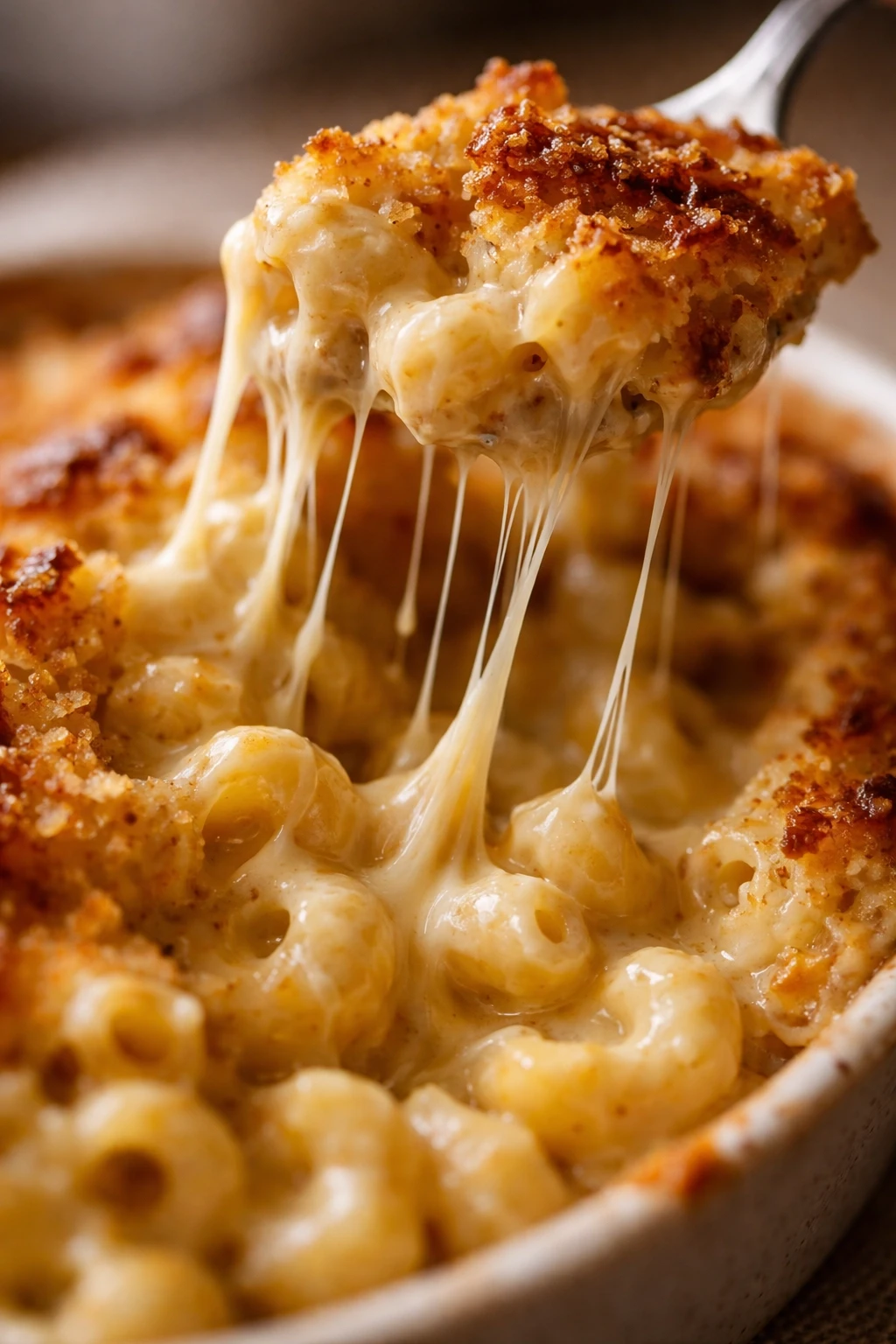
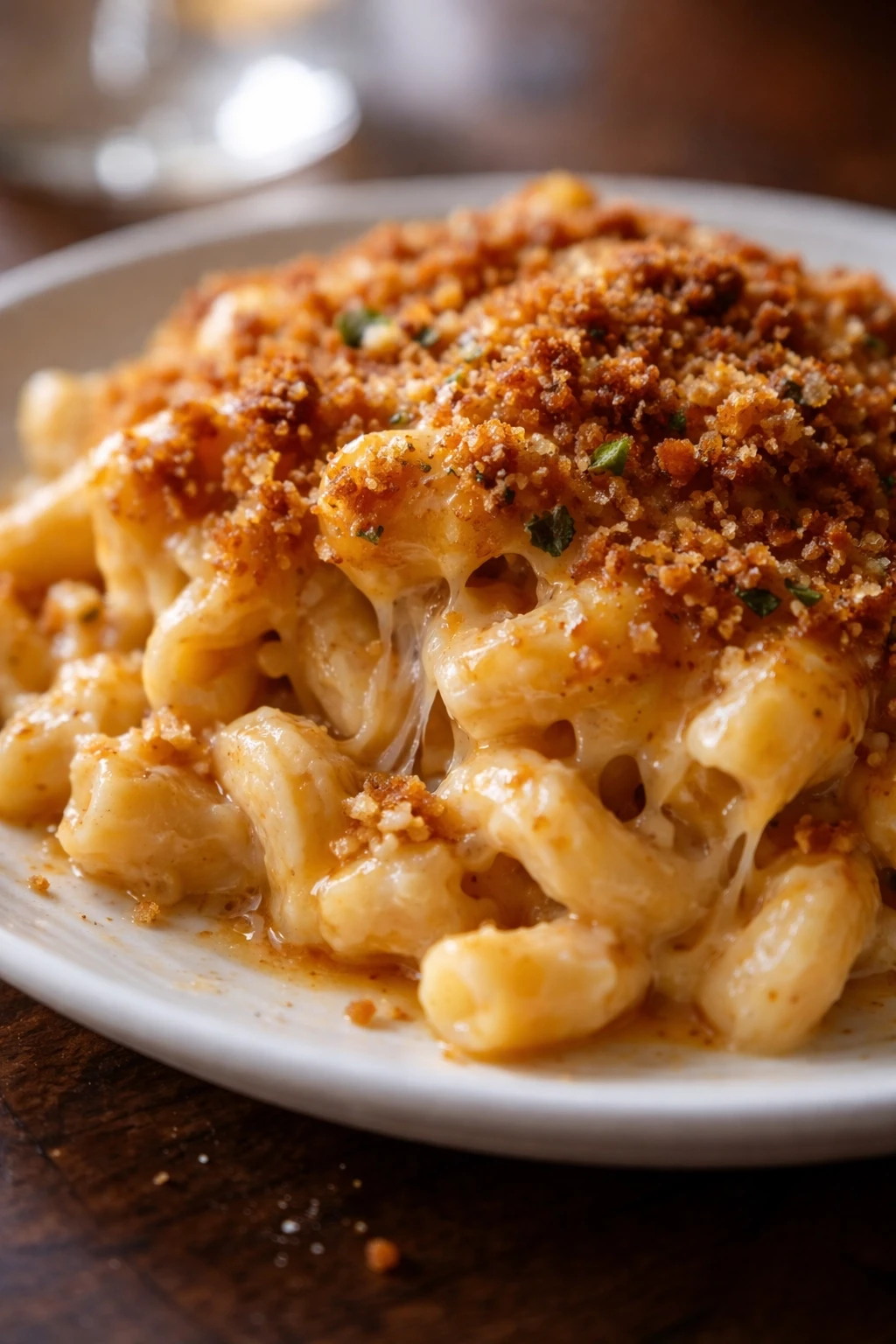
This mac and cheese is pure comfort — ultra creamy with a crispy, golden crust that makes every bite heavenly. The secret’s in the cheese blend and quick stovetop method. Perfect for cozy dinners or anytime you need a cheesy hug.
Introduction
I first made this mac and cheese after seeing it all over TikTok, and honestly, it lived up to the hype! What sets this recipe apart is the blend of sharp cheddar and Gruyère — it’s creamy but with a depth of flavor that feels fancy yet homey. The quick stovetop roux combined with warm milk creates the perfect silky cheese sauce without any lumps. Plus, topping it with toasted panko breadcrumbs mixed with olive oil gives it that irresistible crunch you want on top. I’ve tried classic baked versions before, but this method saves time and keeps the cheese sauce perfectly smooth. Every time I make it, my family asks for seconds, and I love how it’s ready in about 45 minutes total. It’s the kind of comfort food that warms you up and feels like a hug on a plate. The golden topping adds texture that contrasts beautifully with the creamy noodles, making it a total crowd-pleaser. If you’re craving something cheesy and cozy but don’t want to fuss for hours, this recipe is a winner.
How To Do It
Step 1
Start by cooking the elbow macaroni in a large pot of salted boiling water. Cook it just until al dente, usually about 7-8 minutes, so it still has a slight bite. Avoid overcooking here because the pasta will continue to cook a bit when combined with the cheese sauce later. Once done, drain and set aside. This step is crucial because perfectly cooked pasta ensures a nice texture in the final dish, preventing mushiness.
⏱ Time: 8
✓ Doneness: Pasta should be tender but firm to the bite, not mushy or overly soft.
Step 2
In the same pot, melt the butter over medium heat. Once melted, whisk in the flour to create a roux. Stir constantly for about 2 minutes until the mixture is bubbling but not browned. This cooks out the raw flour taste and helps thicken the sauce later. Be patient and don’t rush this step, as undercooked roux can make your sauce grainy or floury-tasting.
⏱ Time: 3
✓ Doneness: Roux should be smooth and slightly bubbly with no lumps or raw flour smell.
Step 3
Slowly pour in the warmed milk while whisking continuously to prevent lumps. Keep stirring until the mixture thickens and coats the back of a spoon, about 5-7 minutes. The warmth of the milk helps the roux absorb it smoothly, creating a creamy base. If you pour cold milk or add it too fast, you risk lumps forming which can ruin the sauce texture.
⏱ Time: 7
✓ Doneness: Sauce should be thickened, creamy, and smooth without lumps.
Step 4
Lower the heat to medium-low and gradually add the shredded cheddar and Gruyère cheeses, stirring until fully melted and incorporated. Adding cheese slowly prevents it from clumping or separating. Use a mix of cheeses for flavor complexity and meltability — cheddar gives sharpness, Gruyère adds nuttiness and creaminess.
⏱ Time: 5
✓ Doneness: Cheese sauce should be smooth, glossy, and thick enough to coat pasta.
Step 5
Season the cheese sauce with salt, black pepper, and smoked paprika for a subtle smoky depth. Taste and adjust seasoning as needed. This layering of flavors ensures the mac and cheese isn’t bland but pleasantly savory with a hint of warmth from the paprika.
⏱ Time: 2
✓ Doneness: Sauce should taste balanced — cheesy, salty, with a gentle smoky note.
Step 6
Add the cooked pasta back into the cheese sauce and stir gently to coat every piece evenly. Make sure the heat is low to prevent scorching the sauce. The pasta should be fully enveloped in creamy cheese, creating a luscious texture that’s neither dry nor overly saucy.
⏱ Time: 2
✓ Doneness: Pasta should be evenly coated, creamy, and hot throughout.
Step 7
In a small bowl, toss the panko breadcrumbs with olive oil until lightly coated. This step is key for achieving a golden, crunchy topping instead of dry, bland crumbs. The oil helps the breadcrumbs crisp up nicely when baked or broiled.
⏱ Time: 3
✓ Doneness: Breadcrumbs should be evenly coated and shiny with oil.
Step 8
Transfer the mac and cheese to a buttered baking dish and evenly sprinkle the oiled breadcrumbs on top. Spread them to cover the surface for a consistent crispy crust. This contrast between creamy pasta and crunchy topping makes the dish a textural delight.
⏱ Time: 3
✓ Doneness: Breadcrumbs should form an even layer across the mac and cheese.
Step 9
Place the dish under a broiler on high for 3-5 minutes, watching carefully to avoid burning. The breadcrumbs will turn golden brown and crisp up beautifully. Remove as soon as the top is toasted and bubbly. This finishing step adds that irresistible crunch and visual appeal that makes this mac and cheese stand out.
⏱ Time: 5
✓ Doneness: Topping should be golden brown, crisp, and slightly toasted but not burnt.
Variations
Spicy Jalapeño Mac and Cheese
Add diced jalapeños to the cheese sauce for a spicy kick. You can also sprinkle some crushed red pepper flakes in the breadcrumb topping. This variation adds heat and a fresh pepper flavor that pairs well with creamy cheese.
Note: Add jalapeños after melting the cheese to keep their texture. Broil breadcrumbs as usual, watching closely due to added moisture.
Bacon and Chive Mac and Cheese
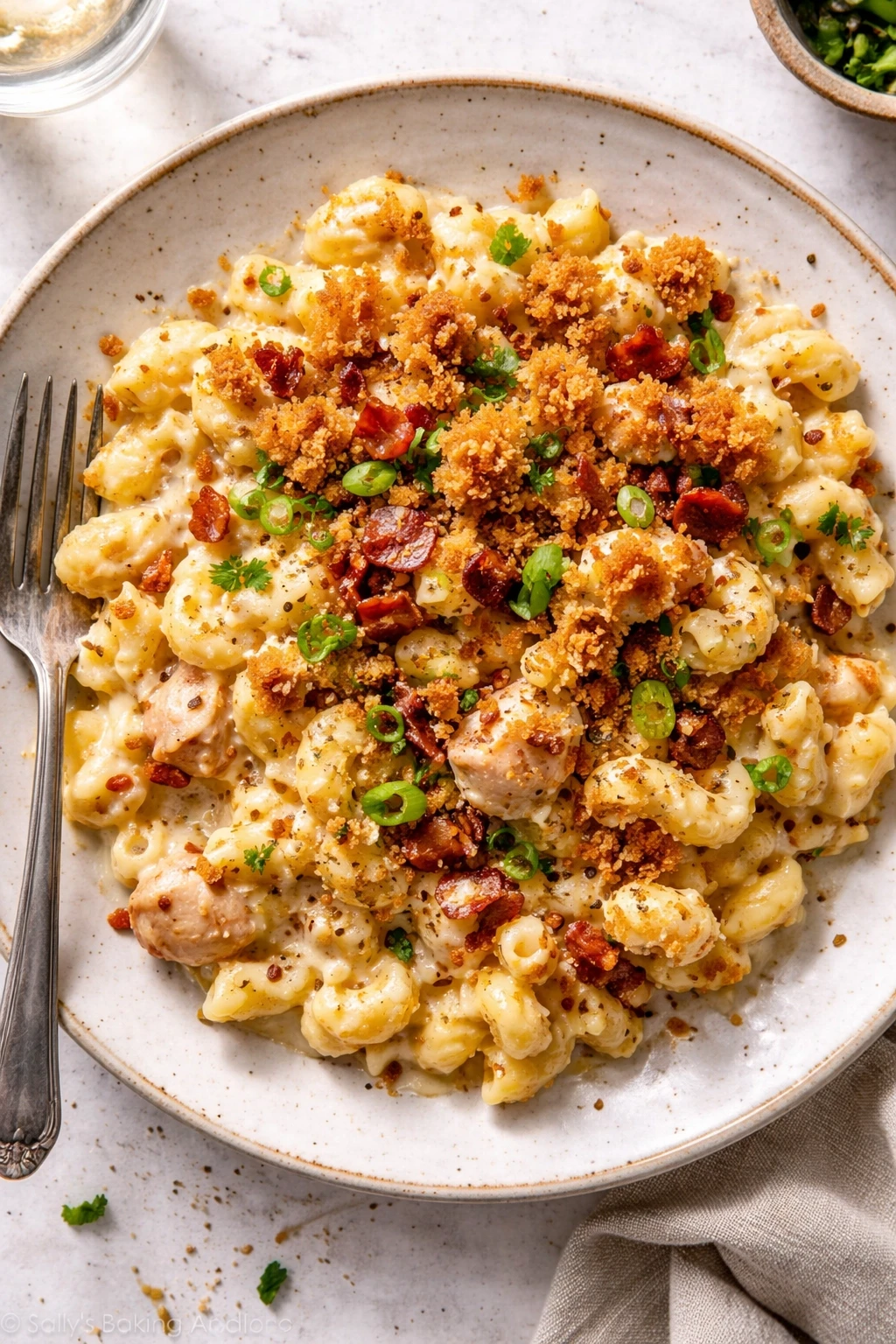
Mix crispy cooked bacon bits and chopped fresh chives into the mac and cheese right before baking. The smoky bacon adds savoriness while chives bring a fresh oniony note, boosting flavor complexity.
Note: Ensure bacon is well drained to avoid soggy topping. Add chives at the end to preserve color and brightness.
Gluten-Free Mac and Cheese
Use gluten-free pasta and substitute all-purpose flour with cornstarch for the roux. This version keeps the creamy texture and cheesy flavor but is safe for gluten sensitivity.
Note: Cornstarch needs to be mixed with a little cold milk before adding to avoid lumps. Cooking times may vary slightly.
Veggie-Packed Mac and Cheese
Stir in steamed broccoli florets or peas into the mac and cheese before topping with breadcrumbs. This adds nutrition and color, making the dish more balanced and visually appealing.
Note: Drain veggies well to prevent excess moisture. Add them gently to avoid breaking up the pasta.
Four Cheese Mac and Cheese
Add mozzarella and Parmesan to the cheddar and Gruyère blend for an extra cheesy, stretchy texture and a sharp finish. This version is richer and more decadent.
Note: Parmesan is salty and sharp, so adjust salt carefully. Melt cheeses slowly to avoid clumping.
Pro Tips
Use freshly shredded cheese instead of pre-shredded.
Pre-shredded cheese often contains anti-caking agents that prevent smooth melting, causing a grainy sauce. Freshly shredded cheese melts evenly, giving you a creamier, silkier sauce with better texture.
Warm your milk before adding to the roux.
Adding cold milk shocks the roux, which can cause lumps. Warm milk blends smoothly, ensuring a silky sauce. This simple step is key for that velvety mac and cheese you’re aiming for.
Don’t skip the broiling step for the topping.
Broiling the breadcrumb topping creates a crunchy contrast that elevates the dish. Without this, the mac and cheese can feel one-dimensional and overly creamy.
Stir the roux constantly while cooking.
Continuous stirring prevents the roux from browning or burning, which would introduce bitter flavors. It also helps cook out the raw flour taste, which is essential for a smooth, flavorful sauce.
Add cheese gradually over low heat.
Adding cheese too quickly or at high heat can cause it to clump or separate. Gradual addition allows smooth melting and emulsification, resulting in a cohesive, glossy sauce.
Use a mix of cheeses for depth of flavor.
Combining sharp cheddar with Gruyère balances sharpness and creaminess, providing complexity that single cheese recipes often lack.
Watch the broiler carefully to avoid burning.
Breadcrumbs can go from golden to burnt quickly under the broiler. Keeping a close eye ensures a perfect toasted topping without bitterness.
Common Mistakes to Avoid
Overcooking the pasta
Why it happens Many assume pasta should be very soft for baked dishes, but overcooking leads to mushy texture once combined with sauce.
Fix Cook pasta just until al dente, then drain immediately. It will finish cooking slightly when mixed with sauce. This keeps the pasta firm and prevents a gummy dish.
Adding cold milk to roux
Why it happens Skipping warming the milk causes temperature shock, leading to lumps in the sauce.
Fix Always warm milk before adding it slowly to the roux while whisking continuously. This ensures a smooth, lump-free sauce.
Adding all cheese at once
Why it happens Dumping cheese quickly can cause clumping or separation of fats and proteins.
Fix Add cheese gradually over low heat, stirring gently until fully melted before adding more.
Skipping the breadcrumb oil toss
Why it happens Dry breadcrumbs toast unevenly and can burn or remain bland.
Fix Mix breadcrumbs with olive oil to ensure even browning and a crispy, flavorful topping.
Leaving topping under broiler too long
Why it happens Broilers cook fast and unevenly, so crumbs can burn if unattended.
Fix Watch the dish closely, broiling in short intervals until golden brown.
Nutrition
Per Serving:
Nutritional values are estimates and may vary based on specific ingredient brands and quantities used.
Storage & Tips
Room Temperature
This mac and cheese can safely sit out for up to 2 hours covered with foil or plastic wrap. Beyond that, bacteria growth risks increase, so refrigerate promptly.
Refrigerator
Store leftovers in an airtight container for up to 3 days. The sauce thickens when cold; reheat gently on the stovetop or microwave with a splash of milk to restore creaminess.
Freezer
Freeze in a freezer-safe container for up to 2 months. Wrap tightly to prevent freezer burn. Thaw overnight in the fridge before reheating for best texture.
Reheating
Reheat on stovetop over low heat with a splash of milk, stirring frequently to loosen the sauce. Alternatively, microwave in short bursts, stirring between. Avoid high heat to prevent curdling.
Make Ahead
Prepare the cheese sauce and cook pasta up to 1 day ahead. Store separately in the fridge. Combine, top with breadcrumbs, and broil just before serving for fresh texture.
FAQ
Can I use different types of cheese in this recipe?
Absolutely! While sharp cheddar and Gruyère create a classic flavor, you can experiment with cheeses like fontina, mozzarella, or Monterey Jack. Just keep in mind that cheeses melt differently — softer cheeses make creamier sauces, while harder ones add sharpness. Avoid pre-shredded cheese with anti-caking agents for best melting.
How do I prevent my mac and cheese from becoming gummy?
The key is to cook the pasta al dente and avoid overmixing once combined with the sauce. Also, adding cheese gradually over low heat prevents grainy or gummy texture. Using a proper roux ensures the sauce thickens nicely without being gluey.
Can I make this recipe dairy-free?
You can substitute dairy milk with unsweetened plant milk like oat or almond, and use vegan cheese alternatives. However, the texture and flavor will differ. Using a dairy-free butter substitute and ensuring the roux is cooked well will help maintain creaminess.
Is it necessary to broil the topping?
Broiling the breadcrumb topping adds a delightful crunch and golden color that contrasts with the creamy pasta. If you skip this step, the dish will still taste good but lack that satisfying texture contrast.
Why should I warm the milk before adding it?
Warming milk prevents it from cooling the roux too quickly, which can cause lumps. It also helps the sauce thicken evenly and creates a smoother texture.
Can I prepare this recipe ahead of time?
Yes! You can cook the pasta and make the cheese sauce separately, then store them in the fridge. Combine and add the breadcrumb topping just before baking or broiling for best results.
How do I store leftovers properly?
Store leftovers in an airtight container in the fridge for up to 3 days. Reheat gently with a splash of milk to restore creaminess. For longer storage, freeze up to 2 months and thaw overnight before reheating.
What can I do if my cheese sauce is too thick or thin?
If too thick, whisk in a little warm milk to loosen it up. If too thin, cook the sauce a bit longer to reduce and thicken or add a small amount of extra cheese slowly to help thicken without clumping.
Final Thoughts
I hope you give this creamy, crispy mac and cheese a try—it’s one of my all-time favorites! Let me know how it turns out for you and if you add your own twist.